







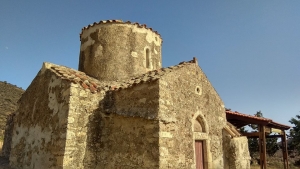
The church of Panagia Gorgoepikoos is located at the territory of the village Pigaidakia, near the beginning of the stream that ends on Karavovrissi beach in Kali Limenes. Today only the temple is preserved from the complex that till the beginning of the 20th century was a small monastery.
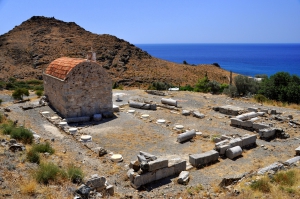
Lendas is a remote seaside settlement located in the imposing Asterousia Mountains, 74km south of Heraklion. The settlement is built on the site of the ancient city of Levena, which flourished in the Greco-Roman years, as the seaport of Gortyn, which was then the most important city of Crete.
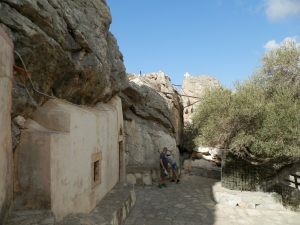
The cave church of Panagia at Vithanos is located in a panoramic position of the Loutra Gorge, near the village of Krotos. It is dedicated to Zoodochos Pigi (Life Giving Spring) and one can still see the date 20-5-1765 above the entrance.

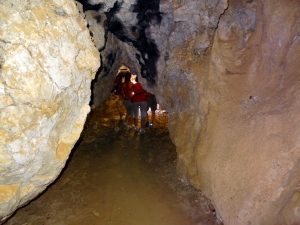
Goumenospilios is a very small cave located in Agiofarago Gorge, about 80km south of Heraklion. Its entrance is very small, but the inner is very spacious, with a lighting hole on the roof. The cave has no decor, but is nonetheless legendary.

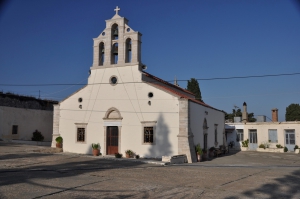
The Monastery of St. Anthony in Apezanes or Apezana is built on a rocky plateau of Asterousia Mountains, at an altitude of 440m, approximately 63km south of Heraklion. From there starts a short valley that leads from Antiskari village to the beachfront of Platia Peramata.
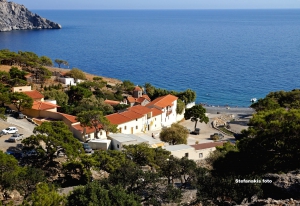
Koudoumas monastery is located at the exit of Katarraktis gorge in Asterousia Mountains, 80km south of Iraklion and only 40m from a beautiful beach. It is one of the most secluded monasteries of Crete, as access from Heraklion requires 2.5 hours. There is a safe 24km long dirt road that starts from the village Sternes (accessible from Charakas), at an altitude of 1000m near the peak Kofinas (1231m).
\
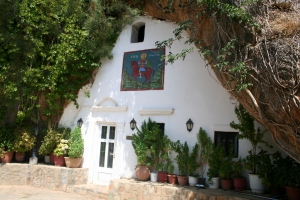
Agios Nikitas is located 65km south of Heraklion, on the east side of the wild and arid Asterousia Mountains. The monastery was originally a hermitage for monks from the monastery of Koudoumas. It is built on a high hill with breathtaking views to the Libyan Sea. The church of the monastery, dedicated to St. Nikitas (feast September 15), is built in a cave and dates back in 1640.
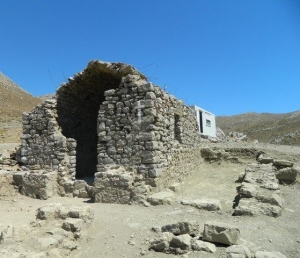
The ruined monastery of the Three Hierarchs is located at one of the most inhospitable areas of Crete, at position Lousoudi of the wild Asterousia Mountains. It was founded in the 14th century near the peak of Kofinas, at an altitude of 880m.
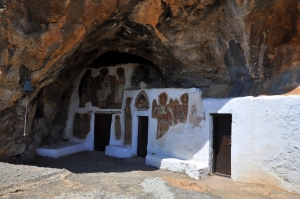
Agios Ioannis (Saint John) settlement is named after the small monastery of Saint John, which is built inside a two-level cave and has very old frescoes, dating back from 1360.
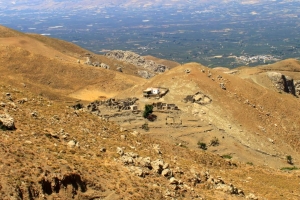
Between the village Sternes and the Monastery Koudoumas, on the wild and arid range of Asterousia, we meet the abandoned village and the church of St. Nicholas (celebrating on December 6th). The church was a dependency of the monastery Koudoumas.
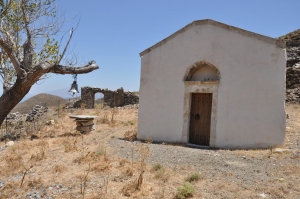
From the Byzantine monastery still stands the church of Agios Dimitrios (Saint Demetrius) with very old frescoes. In the churchyard there are the remains of the monk cells.
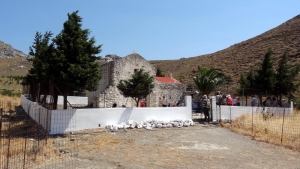
The former monastery of St. Paul (13-14th century) is located near the village Paranimfi near a spring. All around, we see traces of an ancient temple, which was looted. The church is a basilica with single nave and there are traces of frescoes.
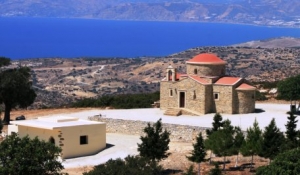
The Monastery of the Saints Eftychiani was located at hill Raxos and was dedicated to the local Saints Eftychianos, Eftychios and Kassiani. Near the ruins of the first temple, a new was inaugurated in 2009. In 2011 the monastery restarted its operation as a nunnery.
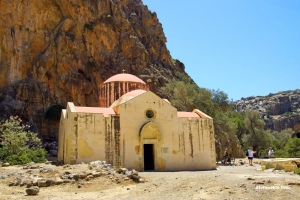
The name of the gorge Agiofaraggo means “Saints’ gorge” and indicates that it was used by many hermits who stayed here because of the isolation of the area. According to a legend, three hundred hermits lived here in absolute isolation from each other. They met only once a year at “Goumenospilio” and then they were aware of those who had died the previous year.
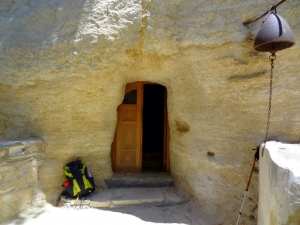
At the beginning of the route in Martsalos Gorge you will find the lovely church of Panagia Martsaliani, dedicated to the Annunciation. The church, built in a cave, was used as a catacomb at the time of Christian persecutions. Just a few centuries earlier, it came back to light by chance, when a shepherd found it and realized that it was covered by rocks.
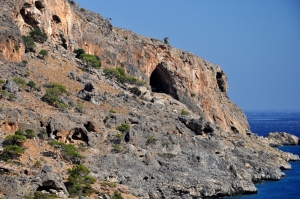
On the trail leading from Agios Ioannis to Koudoumas monastery we meet an impressive cave, shaped Δ, in which there is the small church of Saint Anthony. The cave hosts stalagmites and stalactites. One stalactite, has the shape of Saint Anthony, and a pit where there is an icon of St. Anthony. The cave was used as a residence of hermits.
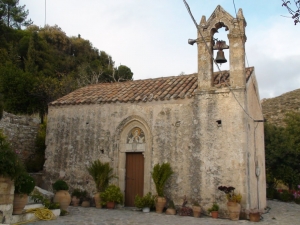
Kapetaniana village is located on the site of the former Monastery of the “Lord Have Mercy”, one of the most important centers in Crete for monasticism where arts and culture flourished. During the Ottoman Era the monastery was abandoned.
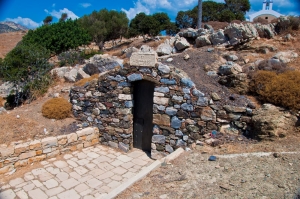
On the west of Kali Limenes, on the hill, you will meet the chapel of St. Paul, built on site of an earlier church of 1700, in honor of the Ecumenical Patriarch Bartholomew that visited Kali Limenes on November 15, 1992.
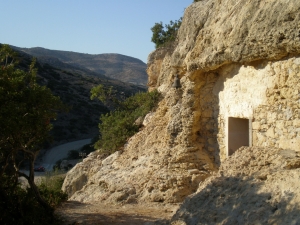
The cavernous chapel of Agia Kyriaki is located at the site of a former Minoan sanctuary. The main characteristic of the temple are the various loops inside the temple, on which the hermits and monks tied themselves during praying so as not to fall asleep. Another explanation for the existence of these loops is that during the years of the Arab rule, the cave was used as a prison and place of torture.
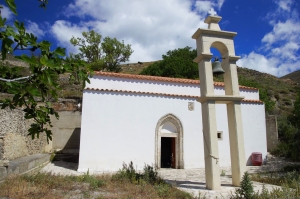
A few meters east of Ano Kapetaniana, on the road leading to Agios Ioannis, we meet the large single-room temple of Archangel Michael. While externally it looks like a modern church, inside the visitor will be impressed by the frescoes dating back to the Venetian period. Despite the damage they have suffered by time, this is still a superb specimen of that period. On the walls we also see engravings by various travelers of the era.
- 1
- 2
Also read:
- Home
 Beaches
 Nature
 Past
Past Destinations
 Highlights
 West Crete
- Central Crete
- East Crete
- Towns
- Chania Prefecture
- Chania
- Paleochora
- Kissamos
- Georgioupolis
- Chora Sfakion
- Loutro
- Rethymnon Prefecture
- Rethymnon
- Agia Galini
- Plakias
- Spili
- Anogia
- Heraklion Prefecture
- Heraklion
- Hersonissos
- Malia
- Matala
- Agia Pelagia`
- Archanes
- Kokkinos Pirgos
- Lassithi Prefecture
- Agios Nikolaos
- Elounda
- Sitia
- Ierapetra
- Makrigialos
- Palekastro
- Zakros
- Lassithi Plateau
- Get Prepared


