







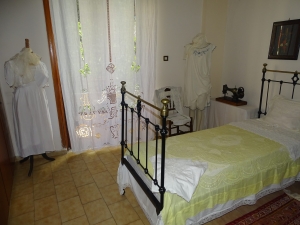
The Museum - Research and Study Center of the Asia Minor Culture in Chania was inaugurated in 2019 by the Association of Asia Minor of Chania "Agios Polykarpos" in memory of Anna Nikolidaki, in a building granted by the monastery of Agia Triada Tzagarolon.
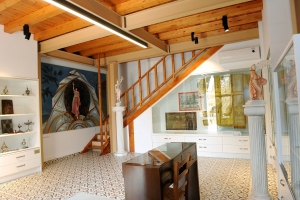
The History of Burial is a very special venue in Heraklion city. It is housed in the two-storey ossuary of the old cemetery of Saints Constantine and Helen in Heraklion, which was built in 1890.
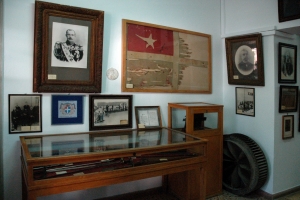
The Historical Archive of Crete was established in 1920 in Chania and operated informally until 1928, when it was recognized as a public entity. Since 1943, it is a Public Service and operates as an annex to the General State Archives.
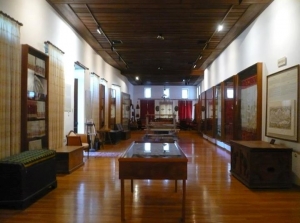
The Historical and Folklore Museum of Rethymnon was founded in 1974 and is housed in a Venetian building (17th century) that is a wonderful example of urban residence of the last phase of the Venetian occupation of Crete, in Renaissance.
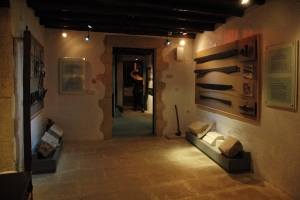
The museum was founded in 1968 and was officially opened in September 1993. It is housed in a building that is a typical sample of the local architecture and is housed on two floors: the ground floor with a balcony, internal yard, an arched house with auxiliary rooms and a mezzanine.
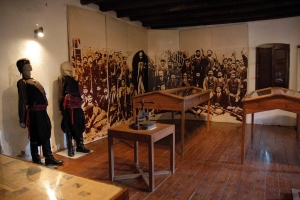
The historic village of Therisso was a seat of the Cretan rebels in 1905, under Eleftherios Venizelos, the most important Politician of Modern Greece. The headquarters of the Movement of 1905 house a relevant museum.
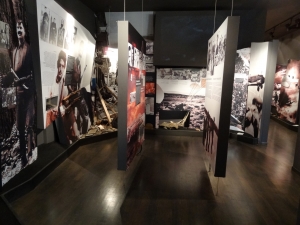
The Historical Museum of Crete was founded in 1953 by the Society of Cretan Historical Studies. It is housed in a beautiful neoclassical building that was the home of Minos Kalokerinos and a courtesy of the Kalokerinos family Institute.
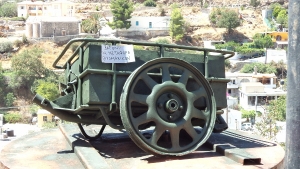
The Historical Museum of Vorizia "Spilios" is located at the village Vorizia of Heraklion prefecture and hosted in a cave (spilios) above the village. The cave, until the foundation of the museum, was used for cheese production. The museum was inaugurated on August 16, 2014.
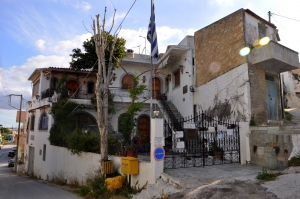
Argirakis War and Ethnological Museum houses a very important war collection of its founder, Michael Argyrakis, and is housed at Episkopi village.
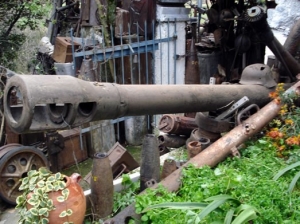
The private museum belongs to Georgios Hatzidakis who met the suffering of the German Occupation.After the war he started with a passion to collect every vestige of the battle to succeed as characteristically telling himself to keep alive the glorious memory of our ancestors and to stimulate younger to deal with their history.
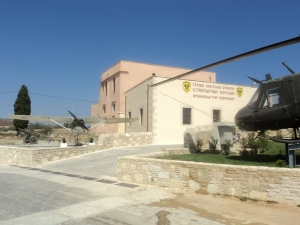
The collection of the Military Museum of Rethymnon at village Chromonastiri includes military uniforms, weapons of different eras in Greek history, medals, historical relics since 1821 and later, an exhibition dedicated to the Macedonian Struggle, library and meeting rooms.
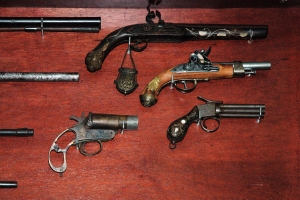
At an altitude of 450 m, 14 km south of the city of Chania, there is the settlement of Ahlades, a small hamlet of a very few residents. At this hamlet, in a plateau with nice view, and in a small tavern, the private military collection of Kostas Mavrigiannakis is housed.
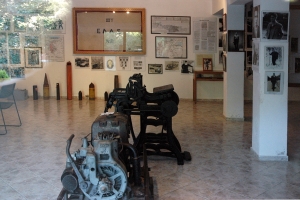
The Museum of National Resistance of 1941-1945 is located at the entrance of the village Therisso. The opening of the museum took place in May 2003 and remains open every day thanks to the voluntary offer of a lady.
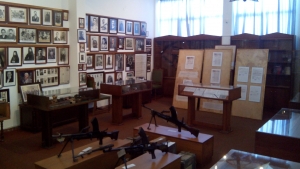
The museum is open since 1967 and was established by the Association of National Resistance Fighters – Badouvas Groups. It is housed in today’s Heraklion army recruitment office, the land of which belonged to the rebel of National Resistance, Captain Manolis Badouvas.
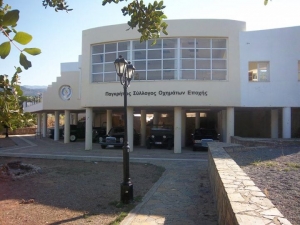
At village Exo Lakonia since 2005 operates an excellent exhibition with over 110 classic vehicles of special interest from all over Crete. The Pancretan Association of Classical Vehicles also houses a permanent exhibition of old photographs with cars and motorcycles from the wider region of Agios Nikolaos.
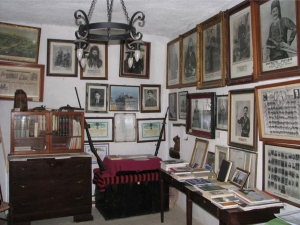
One of the places of martyrdom is Pervolia of Nine Villages by Kissamos, from where came the chieftain of Kissamos Anagnostis Skalidis, who was rightly named Karaiskakis of Crete (Karaiskakis is one of the most famous heroes of Greece that fought against the Turks).
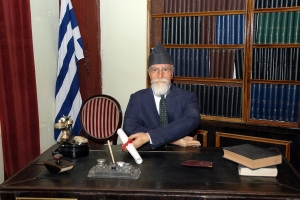
The museum is one of two wax museums that exist in Greece and is an idea of the sculptor Dionysis Potamianos. It is located at Zoniana, at the northern foothills of Psiloritis Mount.
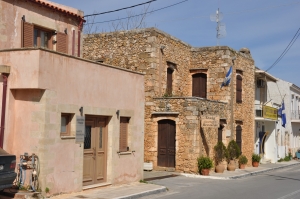
Mournies is the birthplace of Eleftherios Venizelos, the most important politician of modern Greece, and you can visit the house that he was born, which today serves as a museum.
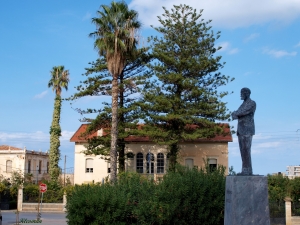
Eleftherios Venizelos lived in his paternal house, in Chalepa (Chania), for more than thirty years, from 1880 to 1910, and occasionally, from 1927 to 1935. He was particularly attached to this house. It is the house where he spent his youth, he got married and had his two children, and where his wife died.
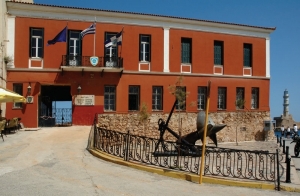
At the entrance of the port of Chania is situated the Venetian Fortress Firkas, where on December 1st 1913, the Greek flag has been hoisted, sealing the union of Crete with the motherland Greece.
- 1
- 2
Also read:
- Home
 Beaches
 Nature
 Past
Past Destinations
 Highlights
 West Crete
- Central Crete
- East Crete
- Towns
- Chania Prefecture
- Chania
- Paleochora
- Kissamos
- Georgioupolis
- Chora Sfakion
- Loutro
- Rethymnon Prefecture
- Rethymnon
- Agia Galini
- Plakias
- Spili
- Anogia
- Heraklion Prefecture
- Heraklion
- Hersonissos
- Malia
- Matala
- Agia Pelagia`
- Archanes
- Kokkinos Pirgos
- Lassithi Prefecture
- Agios Nikolaos
- Elounda
- Sitia
- Ierapetra
- Makrigialos
- Palekastro
- Zakros
- Lassithi Plateau
- Get Prepared


