









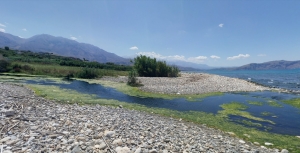
The river Mouselas flows through the valleys that form east of the White Mountains and flow into the western boundary of the large beach of Episkopi, in the large bay of Almyros that has the most rivers in Crete. It is the natural border of the prefectures of Chania and Rethymno.

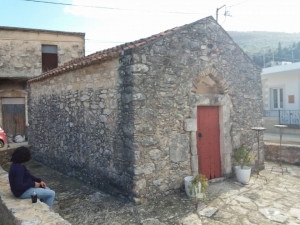
The church of Saint Nicholas (Agios Nikolaos) Maziotis is located in the village of Maza, province of Apokoronas. It is a small single naved arch-roofed temple dating back to the 13th century. Its interior has impressive frescoes by the famous hagiographer of western Crete, Ioannis Pagomenos, who is believed to be buried on the floor of the temple.
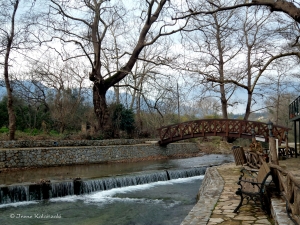
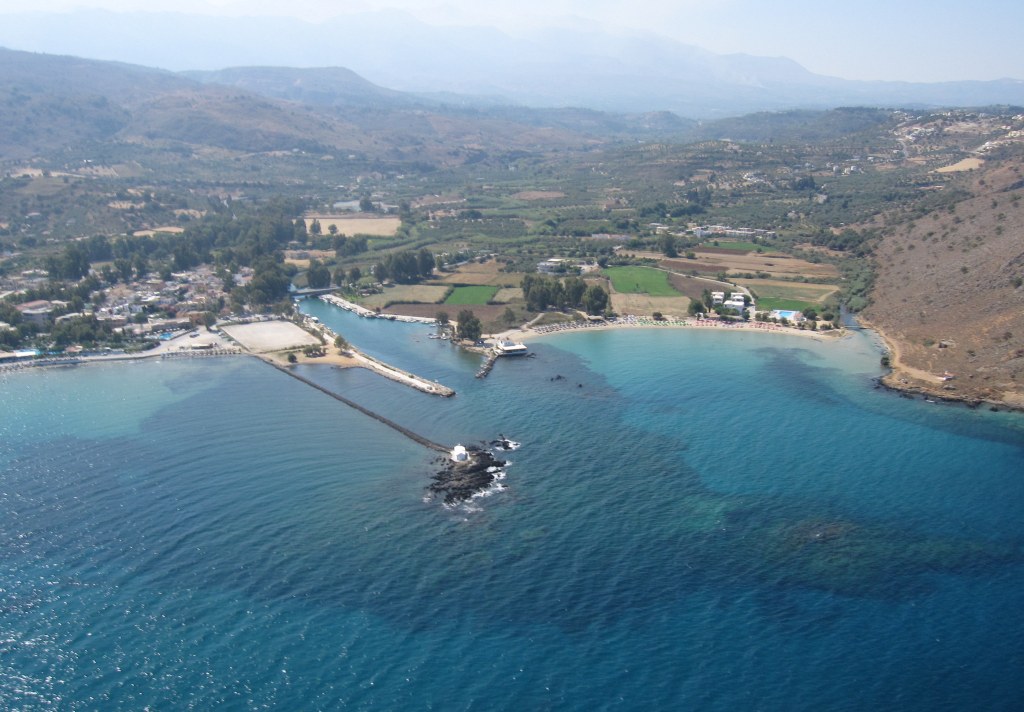
The Boutakas River is located in the province of Apokoronas in Chania, which originates from the White Mountains near Vafes village. It passes through the village of Vrysses, where there are many beautiful taverns, and flows into the beautiful beach of Kalyvaki in Georgioupolis, after being mixed with salt water.

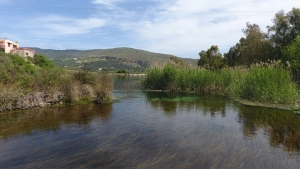
The lake and the river Almyros in the area of Georgioupolis form one of the most important wetlands of western Crete. In the lake, we find many aquatic birds and aquatic plants like reeds, myrtles, and oleanders. The lake is natural and is watered by the water of the White Mountains. The bank has been formed in order to assist in the operation of a small 300kW hydroelectric power station.

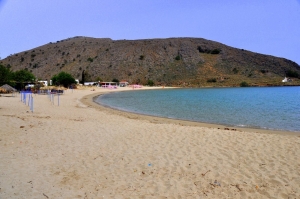
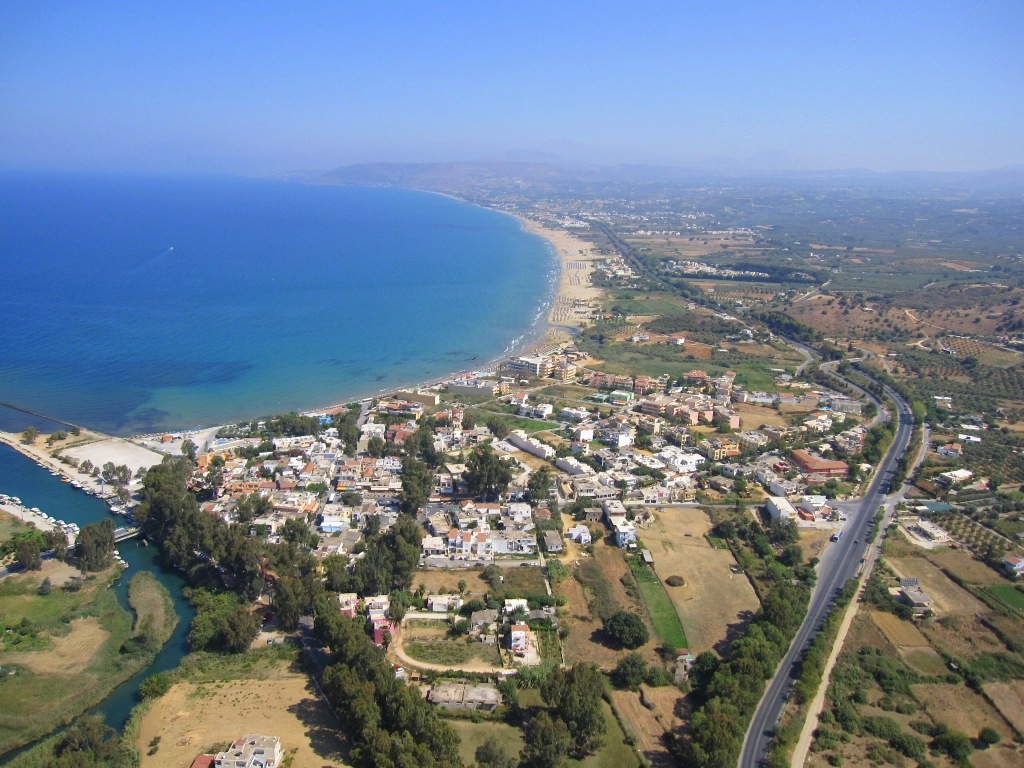
Kalivaki is the westernmost beach of Georgioupolis bay, located 38km east of Chania and 21km west of Rethymnon, near the exit of Almyros river which has water all year round lies the nice beach of Kalivaki. It is a beautiful sandy beach and water, due to the rivers is very cold.
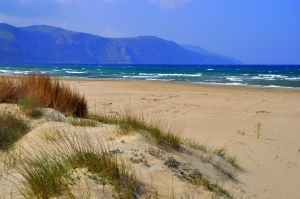
At the point where the prefecture of Rethymno meets Chania, east of Georgioupolis beaches, we find the beaches of Kavros and Kournas. The place at its greatest part is developed and only a very small part of it has been left untouched. Between this remaining virgin parts of the beach there is an extensive and very important ecosystem of dunes.
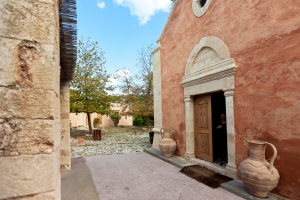
The Monastery of Saint George in Karydi (in Apokoronas Province) is located about 2km east of Vamos village. The monastery was abandoned for many years but was restored in 1996 and today it is operating normally. The monastery is unique to Apokoronas province and is the most interesting monument of folk architecture in the prefecture of Chania.
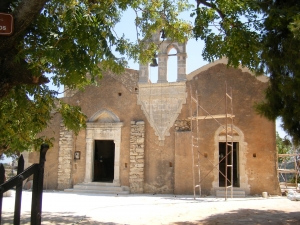
The church of Saint George at Kournas is one of the most important surviving Byzantine Monuments of Crete. It is built in a prominent position with panoramic views of the sea and probably operated as a monastery, and there are some traces of monk cells.
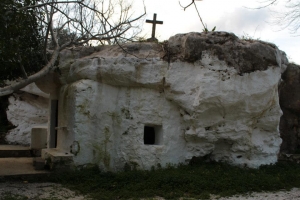
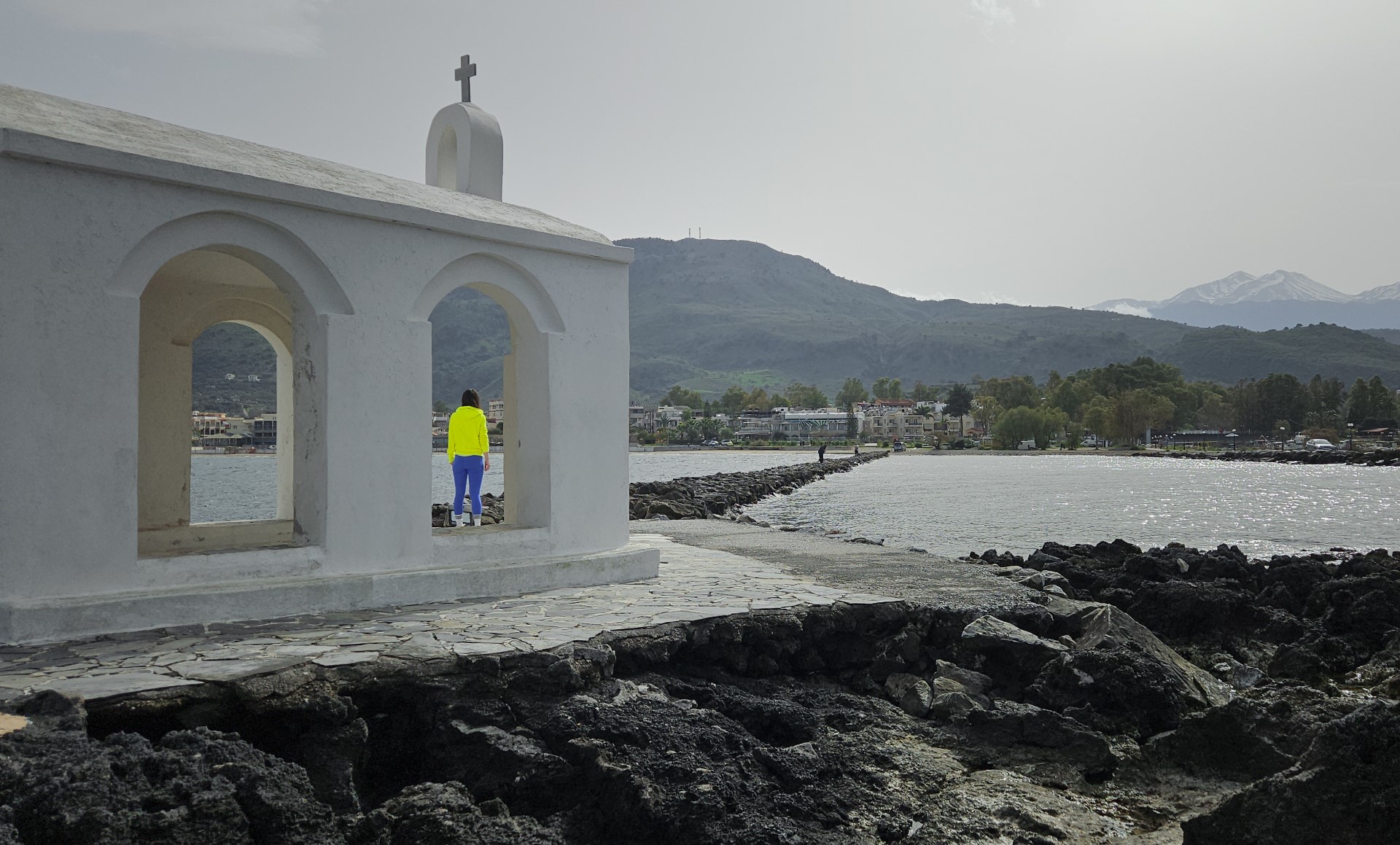
The chapel of Agia Paraskevi is accessed via the road leading to Episkopi, Rethymno, from Dramia village, Apokoronas. It is a very small cavernous rock built at the west bank of Mouselas river, that starts from Argiroupoli springs. It is a weird chapel, with irregular sides, with a unique shape in Crete.
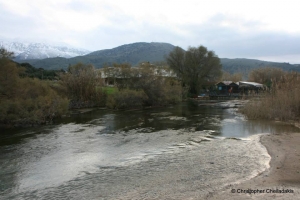
Perastikos has a large quantity of water although it is formed very close to the shore. Along its short, 50m-long course, it forms a very important wetland that hosts several bird species. Near its source, there is a bridge connecting both sides of the beach.
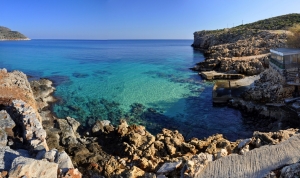
It is a rocky beach with deep-blue deep waters. There is a small harbor with a dock, from which swimmers usually dive in the crystal waters. Next to the harbor there is only one tavern, very famous for its fish dishes. The coast is not organized and is too far from accommodation choices. The sea around Omprosgialos is ideal for snorkelers.
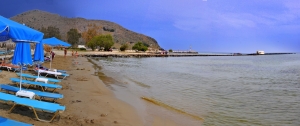
Georgioupolis is a seaside resort located 38km east of Chania and 21km west of Rethymnon. It is a small coastal town, situated in a lush valley filled with rivers and springs. The town lies on the western edge of a vast long beach with 10km length. Georgioupolis Beach stretches 2km to the east, starting from the river Almiros and ending in Kavros Beach, which is a natural extension of the first beach.
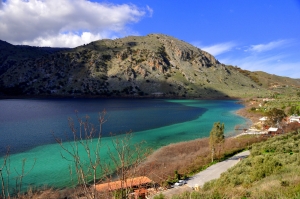
Lake Kournas and its surroundings constitute a very important ecosystem for Greece. Kournas is one of the very few areas of Crete where plenty of fresh water is stored throughout the year. For this reason, it is protected under the Natura 2000 program.

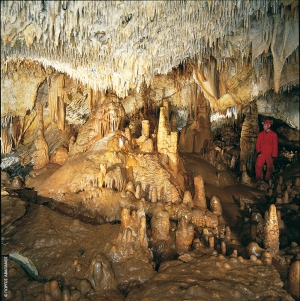
The cave of Kournas is located at position Keratides, west of Kournas village, and is one of the most beautiful caves in Chania prefecture. Descending into the main room is a bit tedious, but the rich cave décor with beautiful colors and formations will excite anybody.
Also read:
- Home
 Beaches
 Nature
 Past
Past Destinations
 Highlights
 West Crete
- Central Crete
- East Crete
- Towns
- Chania Prefecture
- Chania
- Paleochora
- Kissamos
- Georgioupolis
- Chora Sfakion
- Loutro
- Rethymnon Prefecture
- Rethymnon
- Agia Galini
- Plakias
- Spili
- Anogia
- Heraklion Prefecture
- Heraklion
- Hersonissos
- Malia
- Matala
- Agia Pelagia`
- Archanes
- Kokkinos Pirgos
- Lassithi Prefecture
- Agios Nikolaos
- Elounda
- Sitia
- Ierapetra
- Makrigialos
- Palekastro
- Zakros
- Lassithi Plateau
- Get Prepared


