







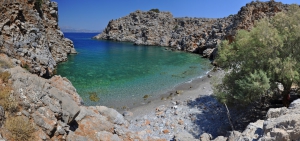
To get there you should follow the dirt road that crosses the green meadows west of Kavoussi, known as Lakos Ambelion position, till the entrance to the gorge. From here begins a short path, not particularly difficult, leading after 10 minutes on the beach of Agriomandra. Just before you reach the beach you will see several small caves in the rocks.

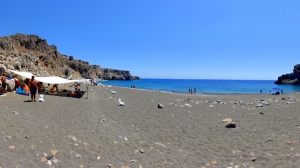
Trafoulas or Dragon Bay is located 4km east of Lendas and 69km south of Heraklion. It is a completely isolated beach of south Crete, which is formed at the exit of a small canyon on the Cape Trafoulas or Trahilas. According to the legend, this beach was visited by King Minos and his men, while the neighbouring Loutra beach was the bathing beach of Minos's wife, Pasiphae, and her female followers.

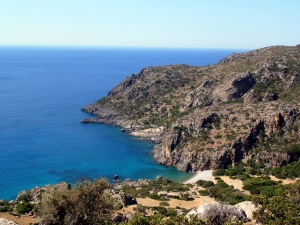
This amazing hike is about 16km long and takes about 5-6 hours. The trail is clear and well-marked with the typical E4 back-yellow signs. It crosses the archaeological site of Lissos, where you can find water from the local spring. It isn't too difficult but plenty of water, sun protection, and steady shoes are recommended.

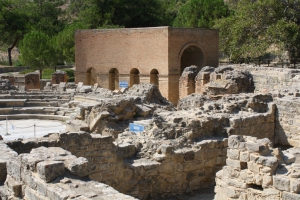
The archaeological site of Gortys (or Gortyna) is located 45km south of Heraklion, near the village of Agii Deka and next to the road connecting Agii Deka with Mires. The town covered a large area along the river Mitropolianos (or Litheos) with vast olive groves.

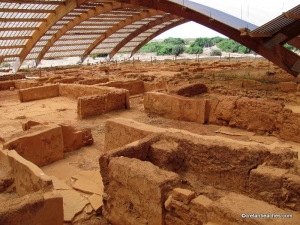
The archaeological site of Malia is located 3km east of Malia, next to the wetland of the area and very close to the beach. It was an important Minoan city and housed the third largest Minoan palace, after Knossos and Phaestus. According to mythology, Sarpedon reigned here, who was brother of Minos and son of Zeus and Europa. Sarpedon was expelled by his brother Minos and then took refuge in Lycia in Asia Minor.
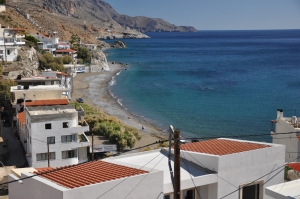
Tris Ekklisies (i.e. three churches) is a secluded seaside village located 64km south of Heraklion, amid the wild and inhospitable landscape of Asterousia Mountains. The surrounding area, one of the most isolated in Crete, is difficult to access, but has some amazing beaches. To get to Treis Ekklisies you have to drive through a rough dirt road, about 10km long, from the village Paranymfi.

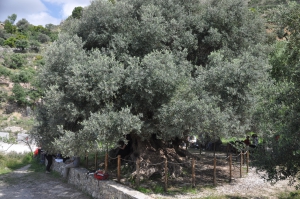
The legendary olive tree in Azorias is located 1km south of the village Kavoussi and very close to the homonymous archaeological site of Azorias. This olive tree is a natural monument; it is the oldest olive tree in the world! Indeed, it is grafted on a rootstock of a wild olive tree, making it the oldest sample of grafting in the world.

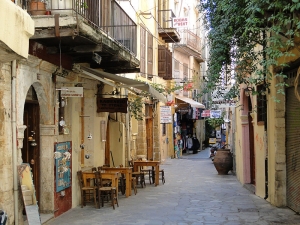
The old town of Rethymnon is a preserved Renaissance city that bears elements from both the Venetian and the Ottoman Era. In the old town there we meet the street markets of Arkadi and Antistaseos Streets. Above the old town we meet the imposing fortress of Fortezza that once protected Rethymnon. The picturesque narrow alleys housemany restaurants and taverns with traditional music.
Also read:
- Home
 Beaches
 Nature
 Past
Past Destinations
 Highlights
 West Crete
- Central Crete
- East Crete
- Towns
- Chania Prefecture
- Chania
- Paleochora
- Kissamos
- Georgioupolis
- Chora Sfakion
- Loutro
- Rethymnon Prefecture
- Rethymnon
- Agia Galini
- Plakias
- Spili
- Anogia
- Heraklion Prefecture
- Heraklion
- Hersonissos
- Malia
- Matala
- Agia Pelagia`
- Archanes
- Kokkinos Pirgos
- Lassithi Prefecture
- Agios Nikolaos
- Elounda
- Sitia
- Ierapetra
- Makrigialos
- Palekastro
- Zakros
- Lassithi Plateau
- Get Prepared


