Zakros
Ano Zakros is a small and peaceful town at the easternmost edge of Crete, approximately 38km from Sitia. It is the centre of the community of Zakros in the historic province of Sitia, while its coastal settlement and harbour is Kato Zakros.
The abundant freshwater springs played a decisive role in the development of Zakros. Their waters irrigate a remarkably green area with extensive olive groves amid the dry landscape of Eastern Crete. The village developed into an important settlement of watermills that served the needs of the entire province of Sitia. Unlike other parts of Eastern Crete, where windmills prevailed because of the scarcity of running water, Zakros was primarily known for its watermills.
Watermills, fulling mills and traditional olive presses once operated along the watercourse, processing grain, woollen textiles and olives. Three of the old watermills have been restored and now house the Museum of Water and Hydraulics in Zakros.
Zakros lies within the Sitia UNESCO Global Geopark and along the European E4 trail. The most important attractions in the area include the Gorge of the Dead, the beaches of Kato Zakros and Xerokambos, the Minoan Palace of Zakros and the numerous caves of the wider region.
The village also hosts the Natural History Museum of Zakros, presenting the flora, fauna and geological heritage of the Sitia Geopark.

Kato Zakros is a traditional fishing village located 107km east of Agios Nikolaos and 40km east of Sitia. It is the picturesque harbor of Zakros village (located 7km on the west), situated in a fertile valley with olive groves surrounded by rough mountains. The area is one of the most remote areas of Crete and is ideal for those seeking tranquility, away from the bustling daily life of cities.
Read more ...
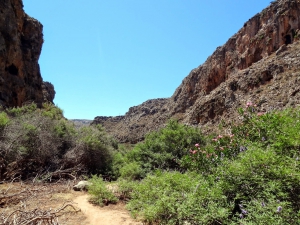
The beautiful Gorge of Kato Zakros (or the gorge of the Dead) starts in a short distance from Ano Zakros, nearly 100km southeast of St. Nicholas, and ends at Kato Zakros. The beauty of the landscape, the historical importance of the gorge and its accessibility, attract many visitors every year.
Read more ...

The Minoan Palace of Zakros lies in a remote part of eastern Crete, close to the modern settlement of Kato Zakros. Its coastal position made it an important harbour and a maritime gateway connecting Minoan Crete with the Eastern Mediterranean.
Read more ...

The Zakros’ Natural History Museum is located at the Polykentro building, lying along the main road that crosses Epanos Zakros village. The Museum is dedicated to the natural environment of the Park. The flora, fauna, and geology of the area is presented through small dioramas (reconstructions of ecosystems), staffed animals, posters and displays of rocks and fossils.
Read more ...

This part of the E4 path offers nice seascapes and is not too hard. From the organized beach of Kato Zakros, the course runs northwards, alongside the rocky coast. It comes by the Cave of Pelekita and the ancient quarry of Pelekita, from where Zakros Palace material was extracted, and finally reaches the beautiful beach of Karoumes, at the exit of Chohlakies gorge.
Read more ...
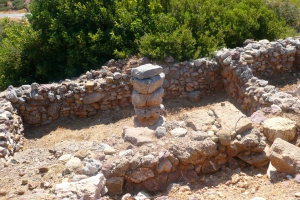
The Minoan villa of Zakros was discovered in 1965 by N. Platon and I. Sakellarakis. It was a rural villa with complete facilities for wine production, very similar to modern ones, and big jars for storing wine. The wine press is exhibited in the Archaeological Museum of Sitia.
Read more ...
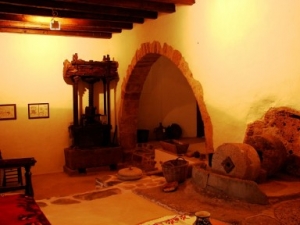
Next to the lush green Springs of Ano Zakros one can visit the Museum of Water and Hydraulic housed in three restored watermills since 2007.
Read more ...

From Ziros, the E4 European trail heads northeastwards and soon enters a dirt road that leads to ruined historic settlement Skalia. From Skalia we walk north and east, we pass a small plateau and then descend to Ano Zakros springs.
Read more ...