







Pyrgos (Monofatsi)
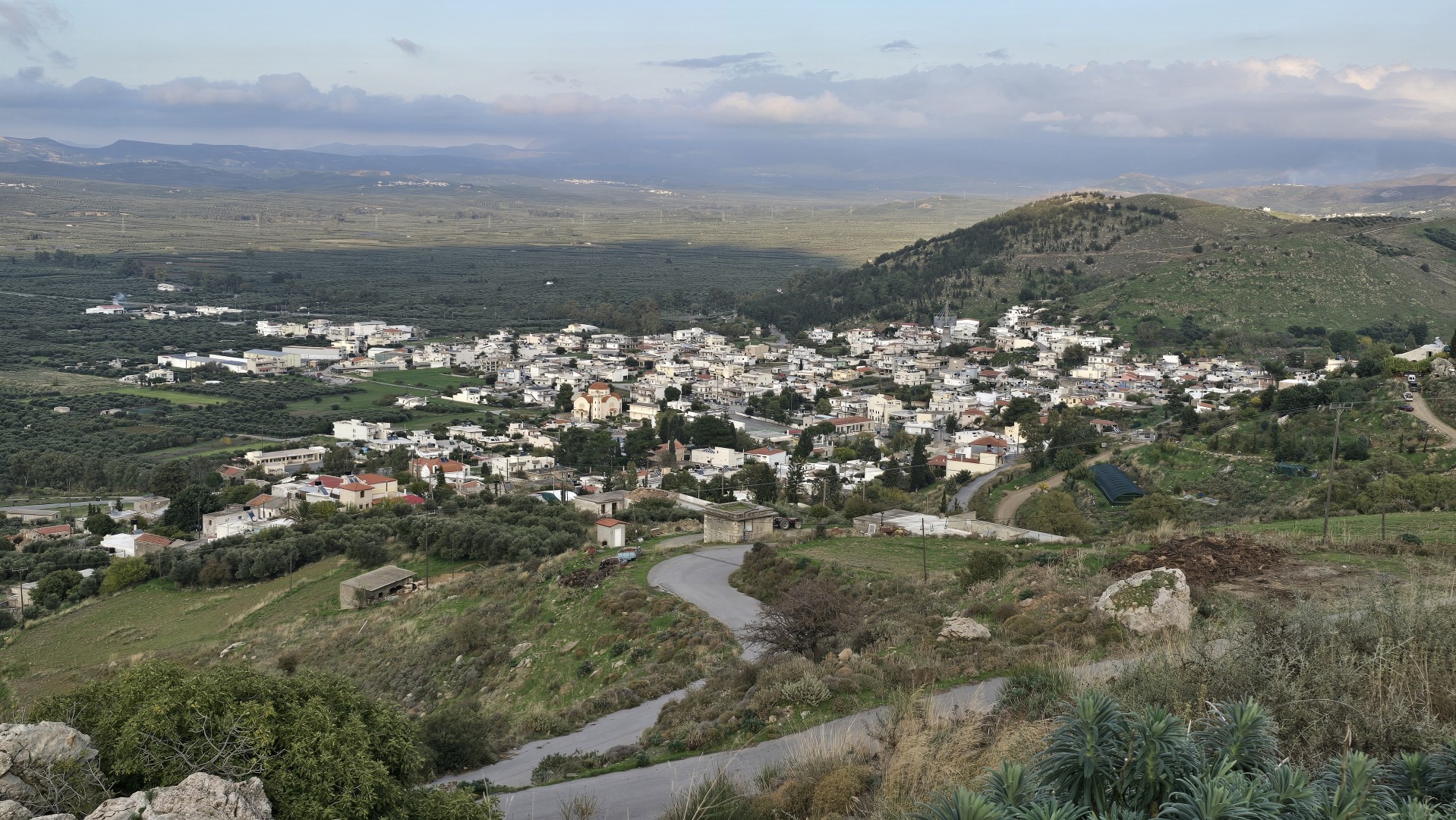
Pyrgos Monofatsiou is a historic small town and the former capital of the province of Monofatsi, in the southern hinterland of Heraklion. It lies at an altitude of approximately 290 metres, at the northern foothills of the Asterousia Mountains, surrounded by olive groves, vineyards and agricultural land. It is one of the most important rural centres of the region.
The name of the settlement derives from an old fortified tower that once stood at a site known as Apano Pyrgos. The earliest known written reference dates back to 1271, when Pyrgos, together with the settlements of Gypsia and Agiornous, formed a feudal estate belonging to the Latin Patriarchate of Constantinople, which was leased to Jacopo Mudazzo. The settlement was later recorded as Pirgo by Francesco Barozzi in 1577 and in the census of Castrofilaca in 1583. During the Ottoman period, Pyrgos retained its importance as a centre of the historic province of Monofatsi, whose name derives from the Venetian fortress of Bonifacio.
The commercial importance of Pyrgos for the surrounding villages is reflected in its historic market, established in 1953. It served as a meeting place for producers, merchants and residents of the wider region. A particularly interesting feature was its livestock market, where farm animals were bought and sold.
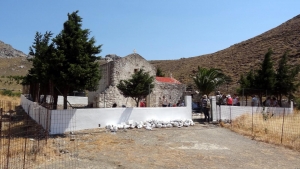
The old churches of Pyrgos are of particular interest, especially the Church of Saints George and Constantine, which preserves valuable frescoes. Originally a single-aisled church dedicated to Saint George, it was later extended with a southern aisle dedicated to Saint Constantine and a northern aisle, which no longer survives and was probably dedicated to Saint Helen. Old graves have been uncovered within the church grounds, bearing witness to the centuries-long use of the site.
Other important churches include those of Saint Irene, Saint Raphael, the Transfiguration of Christ, Saint Paraskevi and Prophet Elijah. In the western neighbourhood of Kalogeriko, there was once a monastery dedicated to Prophet Elijah, of which some remains survive.
East of the settlement lies the well-known Pyrgos grove, a green wooded area created through the efforts of local residents, which has become a distinctive recreational spot in the region.
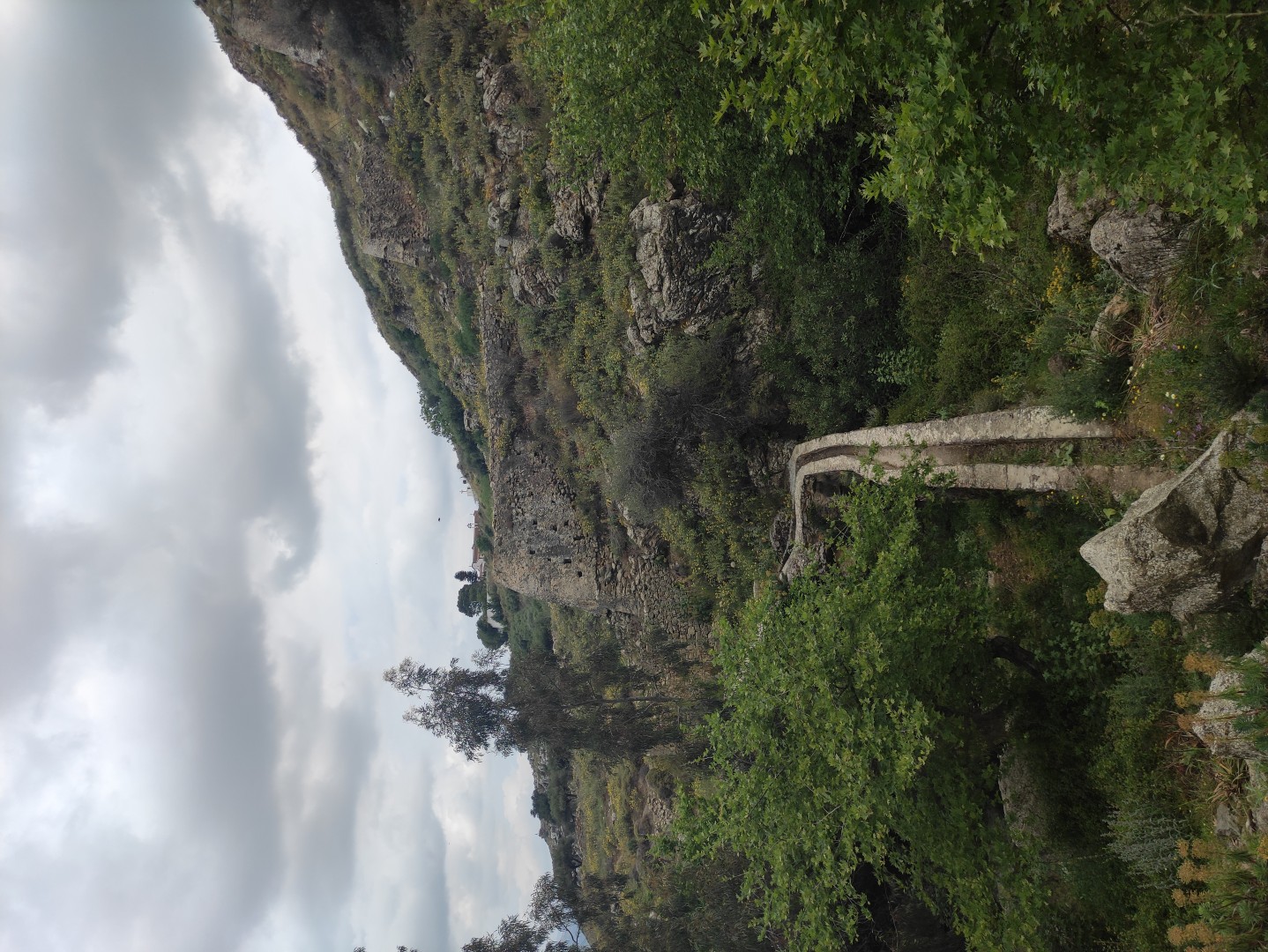
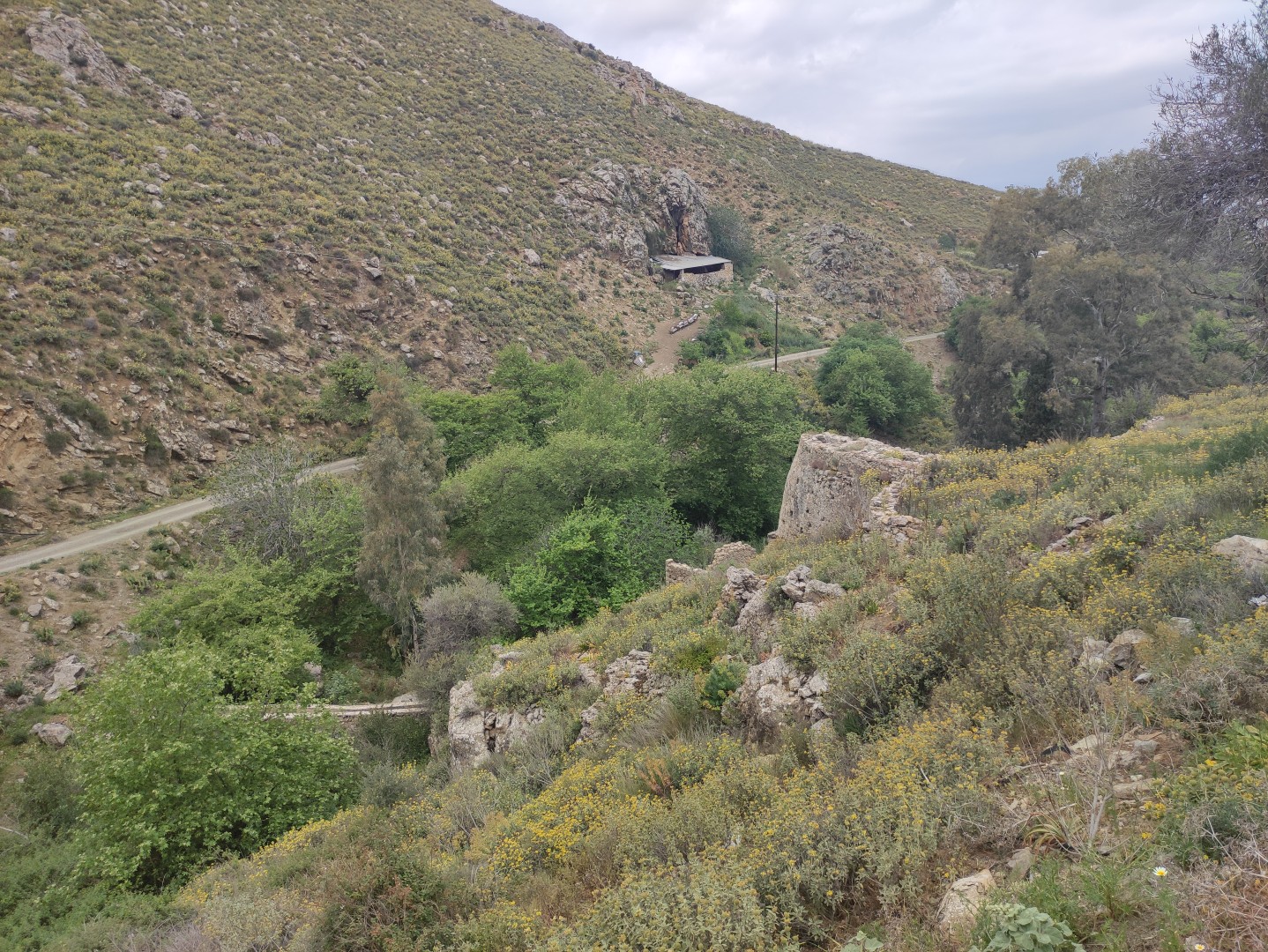
Of particular historical interest is the area of Karavoi, between the hills of Kakoplago and Kefala, where the remains of an extensive complex of old watermills survive. At least ten flour mills operated here, although some accounts suggest that there were as many as eighteen. The mills successively used the same water from the spring of Saint Mamas, channelled through an elaborate network of watercourses and conduits. They were equipped with horizontal waterwheels of the Byzantine type. The earliest installations probably date back to the Venetian period, while the network expanded during Ottoman rule, playing an important role in the agricultural economy of the region. Their ruins are now valuable monuments of Crete's pre-industrial heritage.
The small settlements of Prinias and Mournia are also associated with Pyrgos. They retain the rural character of the Asterousia hinterland and form part of the historical identity of the wider area.
Pyrgos retains its character as an important rural centre of southern Crete. Its Byzantine churches, the old watermills of Karavoi, the wooded grove and the surrounding settlements offer visitors an insight into the history, religious heritage and natural landscape of the region.
 Stay nearby
Nearby places of interest
Straight-line distances
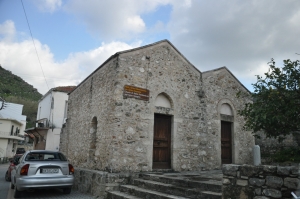 0.2 km
Saints George and Constantine Church at Pirgos
3.093
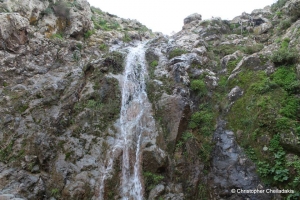 1.7 km
Riktra Waterfalls at Rotasi
4.143
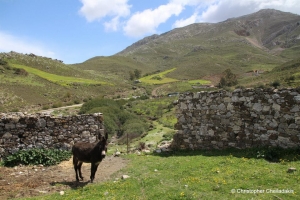 2 km
Saridakis settle at Rotasi
3.722
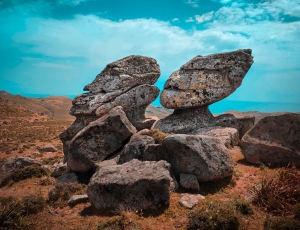 3.2 km
The anthropomorphic rocks of Paranymfi
2.917
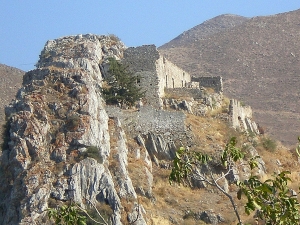 3.3 km
Fort Harakas
6.076
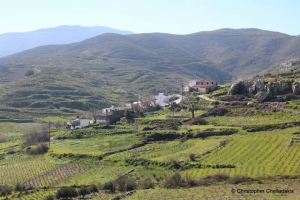 3.7 km
Amygdalos at Asterousia Range
4.190
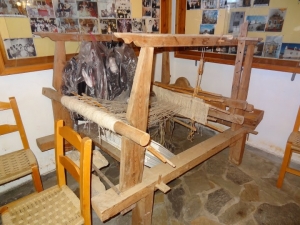 4 km
Folklore Museum of Ethia
4.884
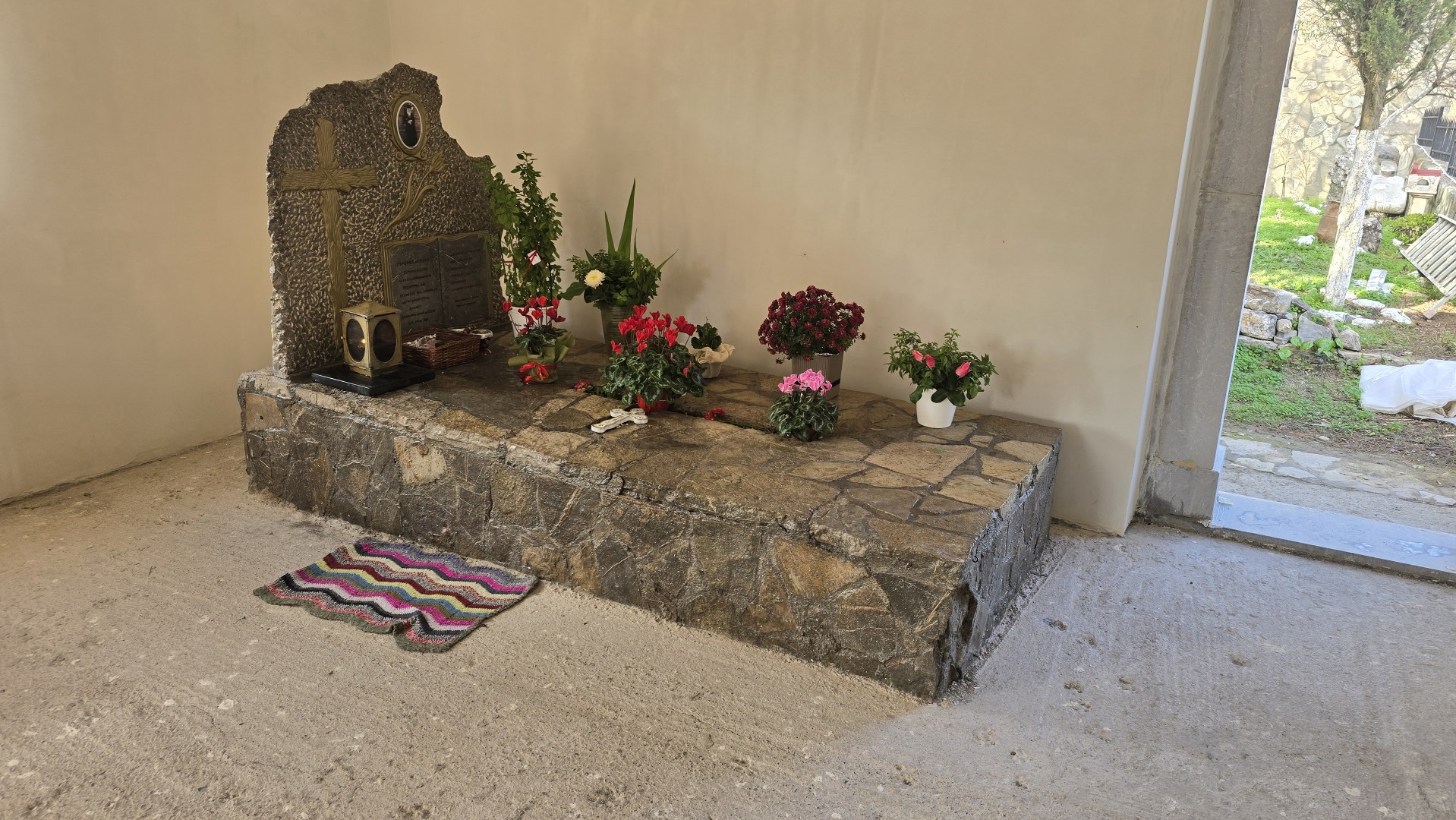 4.1 km
The Tomb of Saint Eumenios Saridakis in Ethia
67
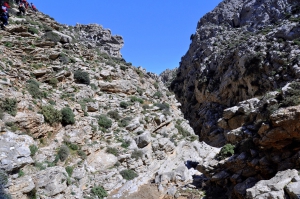 4.4 km
Vorno Gorge (Ethiano)
5.981
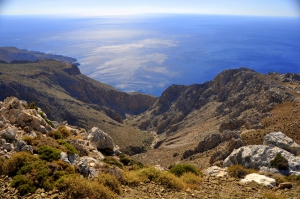 4.5 km
Pervola Gorge
7.353
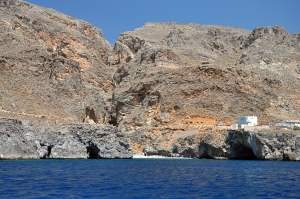 5.1 km
Mesosfini Gorge
7.914
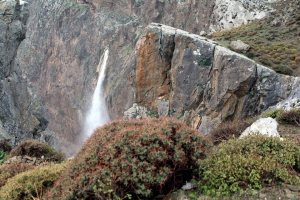 5.4 km
Ambas Gorge
13.856
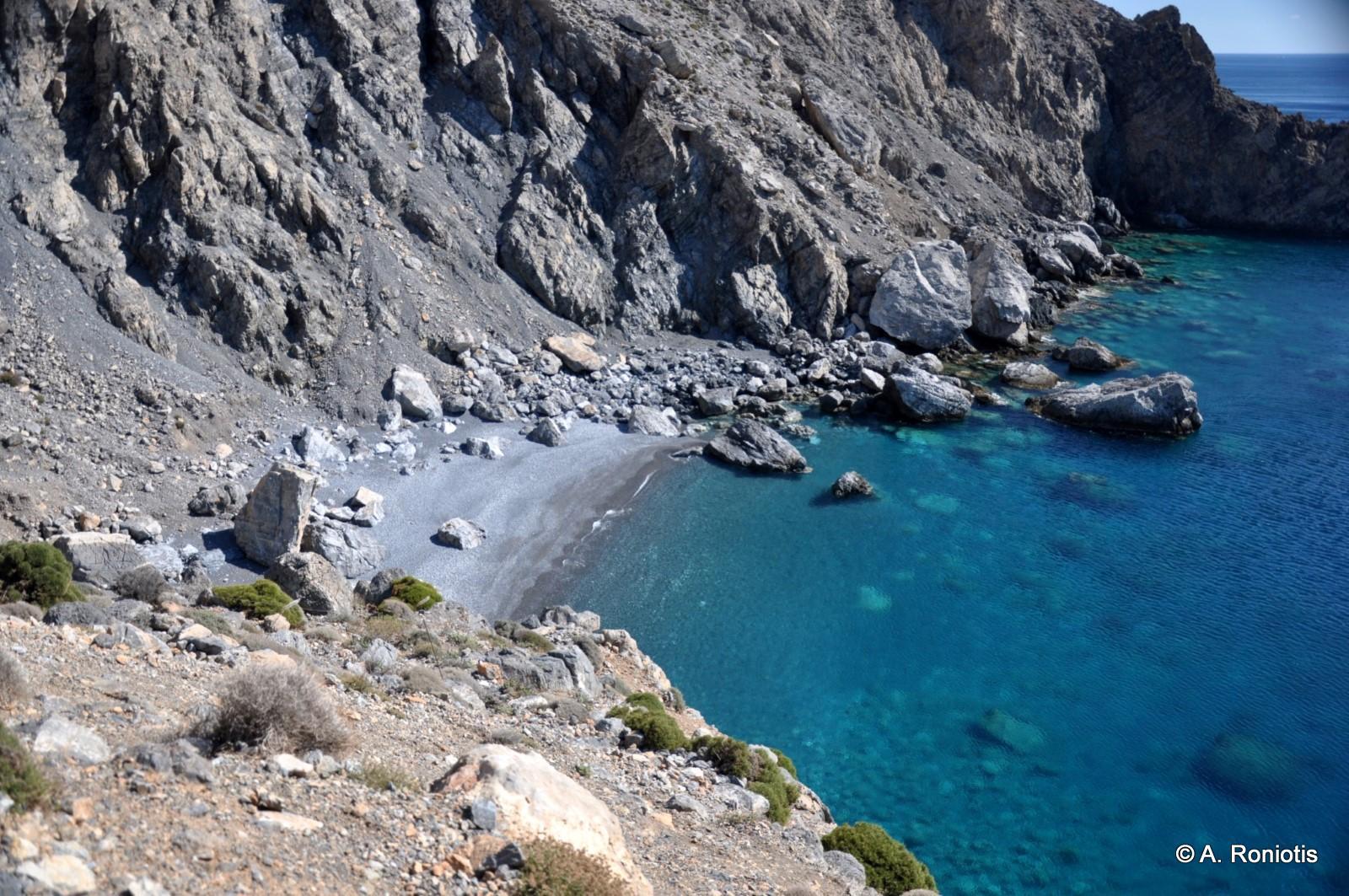 5.6 km
Plysimo beach
737
 5.6 km
Voidomatis beach
12.746
 5.7 km
Krygia Vlychada beach
2.096
 5.8 km
Agia Paraskevi Gorge (Voukolias)
3.527
 5.8 km
Saint Demetrius monastery at Achendrias
4.618
 6 km
Saint Paul Monastery at Paranimfi
4.980


