
Koufi Petra Monastery near Neapolis
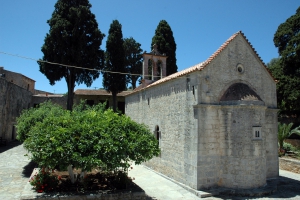
The monastery of the Virgin Mary «of the hollow stone» (Greek: Panagia Koufis Petras) is dedicated to the Annunciation. It is located west of Kremasta Monastery and at a short distance from Neapolis.





Neapolis is a historic town in the province of Mirabello, built in a fertile valley of dense olive groves, old churches, neoclassical buildings and attractive gardens.
Neapolis is located approximately 54 km east of Heraklion and 15 km west of Agios Nikolaos, in the green basin of Mirabello. Its position on the natural passage connecting central and eastern Crete contributed considerably to its economic and administrative development.
During the Venetian period, the area was associated with a small settlement known as Kares, while the later settlement became known as Kenourgio Chorio or “New Village”. This name was already recorded in Venetian sources of the 16th century. In 1868, Adosidis Pasha established the administrative seat of Lasithi here and renamed the settlement Neapolis. The town remained the capital of Lasithi until 1904, when the administrative seat was transferred to Agios Nikolaos.
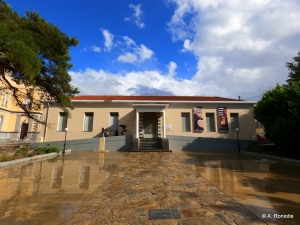
The administrative past of Neapolis is reflected in its old public and neoclassical buildings, including the courthouse, the former secondary school, the hospital and the offices of the Metropolis of Petra and Cherronissos. The Historical and Folklore Museum of Neapolis is housed in the building of the town’s first secondary school and presents the daily life, history and traditions of Upper Mirabello. The town is also home to the Iliakios Municipal Library.
The imposing Metropolitan Church of Megali Panagia, the largest church in eastern Crete, dominates the central square. Around the square are cafés and shops where visitors can also taste soumada, the traditional sweet almond drink served in Crete on festive occasions.
It is also worth walking through the narrow streets of the Agios Dimitrios neighbourhood to see the old aqueduct and the Tower of Maslum Karakasis, locally known as the Seraglio of Adosidis Pasha. A short distance southwest of the town lies the Pashaligo Grove, a lush setting with flowing water and ruined watermills. The remains of the tower of the Venetian lord Filippo Pasqualigo also survive in the area.
Near Neapolis stands the church known as Agios Georgios the Bloodstained. Its name is connected with a local tradition according to which, in 1770, during the revolt of Daskalogiannis, Ottoman forces entered the church during vespers and killed the priest and members of the congregation.
About 2 km northeast of Neapolis, on Mount Kadistos near the chapel of Saint Anthony, lie the remains of ancient Dreros.
The most important monument at Dreros is the Temple of Apollo Delphinios or Pythios, one of the earliest known Greek temples. Inside it archaeologists discovered the celebrated “Dreros Triad”, three hammered bronze figures dating from the 8th century BC and identified as Apollo, Artemis and Leto. They are now exhibited in the Heraklion Archaeological Museum. Dreros has also yielded important legal inscriptions, including some of the earliest surviving examples of written Greek legislation.
The old Monastery of Megali Panagia existed before the Ottoman conquest of eastern Crete. In 1819, Bishop Ioakim Klontzas of Petra secured permission to rebuild its ruined church. The small single-naved church of Megali Panagia Fermalina, which survives beside the present cathedral, was constructed at that time.
A local tradition associates its construction with a three-member committee that travelled to Constantinople to request permission to build the church. According to the story, the men were imprisoned in Heraklion but escaped execution when the executioner died shortly before the appointed day. They were then granted permission to complete the church within forty days. Christians from the surrounding provinces reportedly gathered to help, passing building stones from the quarry from hand to hand.
The present monumental cathedral is a later structure. Its foundation stone was laid in 1889, construction continued over the following decades and the church was completed in 1927. It should therefore not be confused with the small church of 1819 to which the tradition of the forty days refers.









 Beaches
 Nature
 Past
 Destinations
 Highlights
 West CreteCentral CreteEast CreteChaniaPaleochoraKissamosGeorgioupolisChora SfakionLoutroRethymnonAgia GaliniPlakiasSpiliAnogiaHeraklionHersonissosMaliaMatalaAgia Pelagia`ArchanesKokkinos PirgosAgios NikolaosEloundaSitiaIerapetraMakrigialosPalekastroZakrosLassithi Plateau


