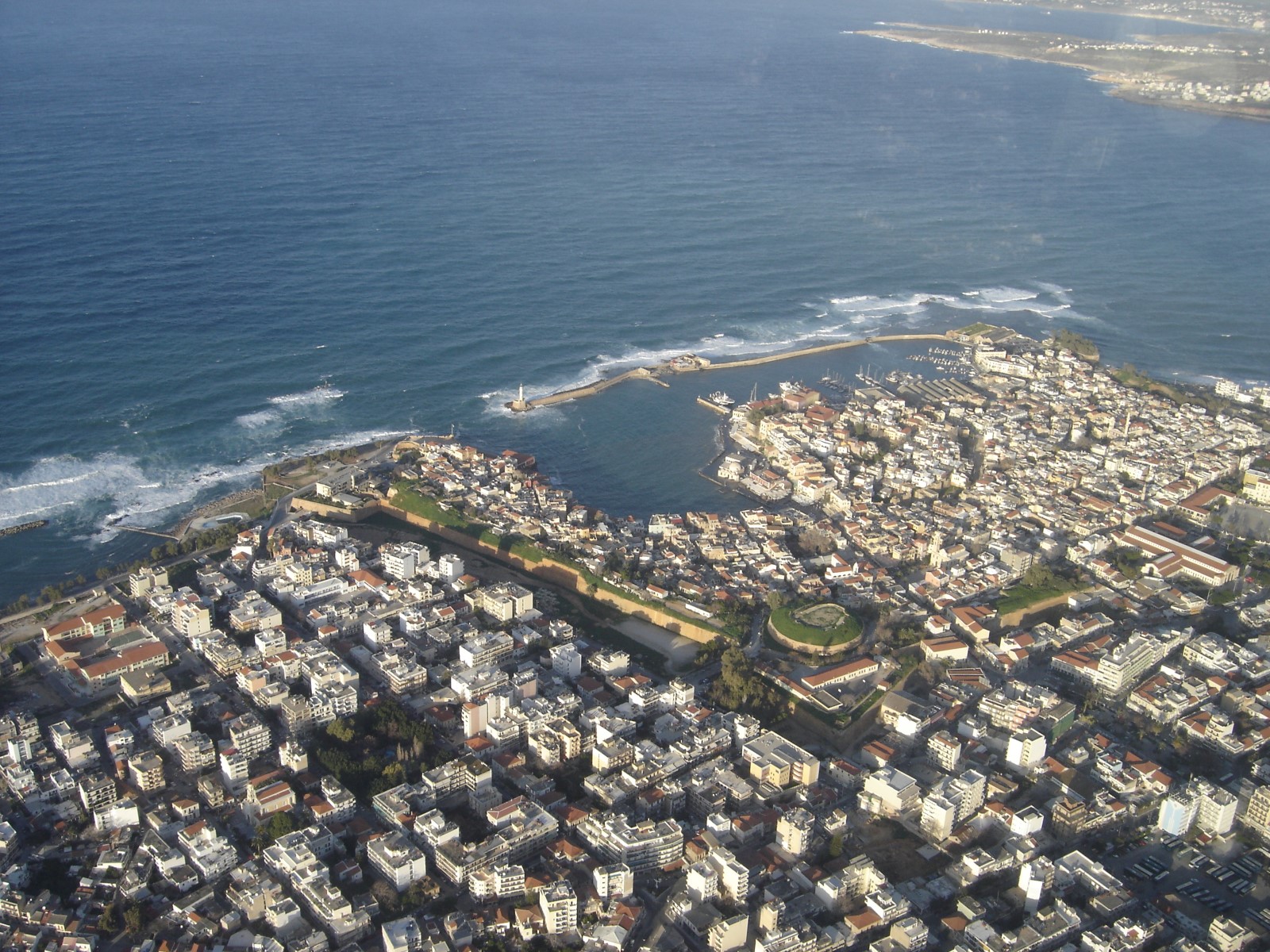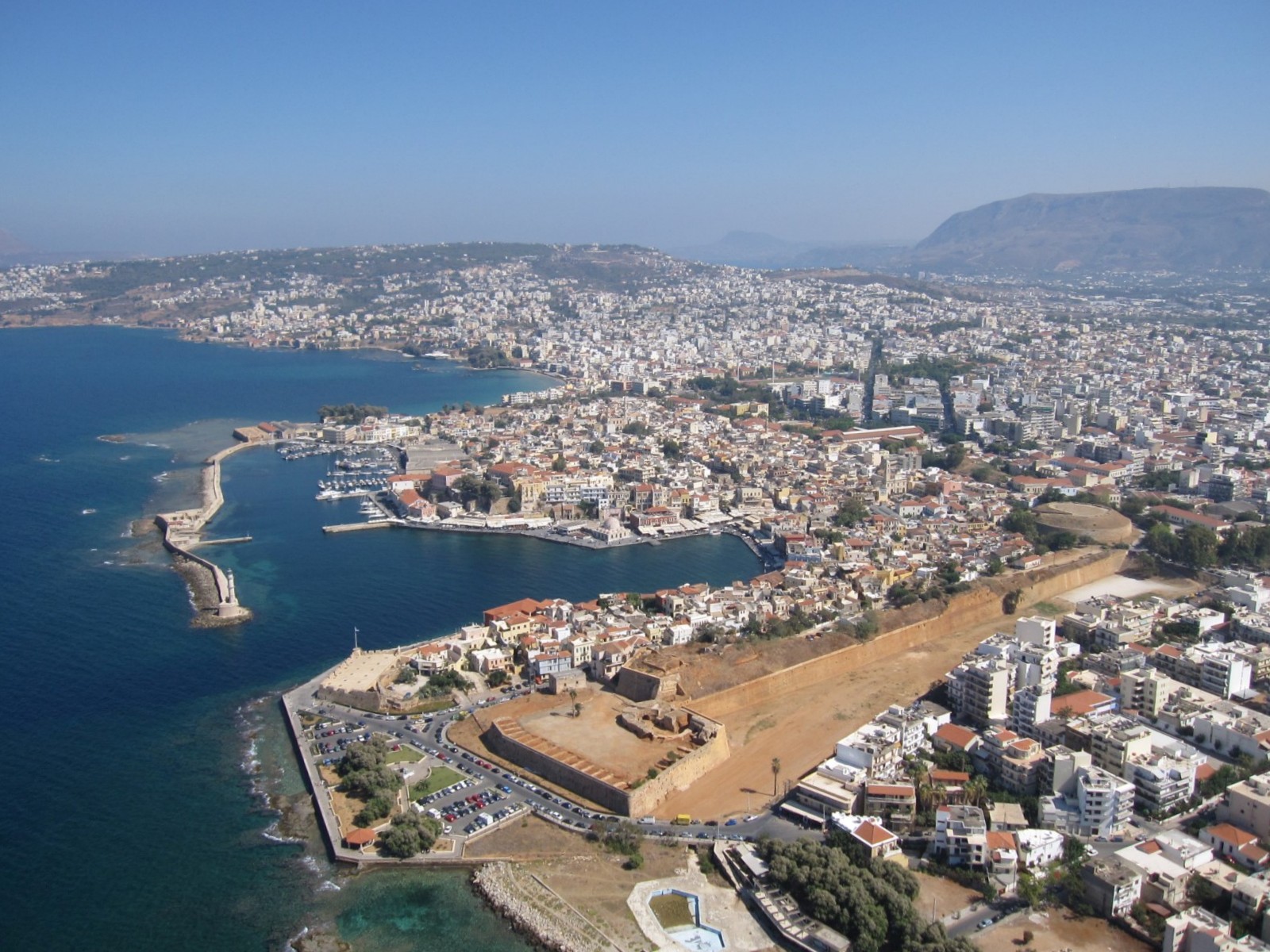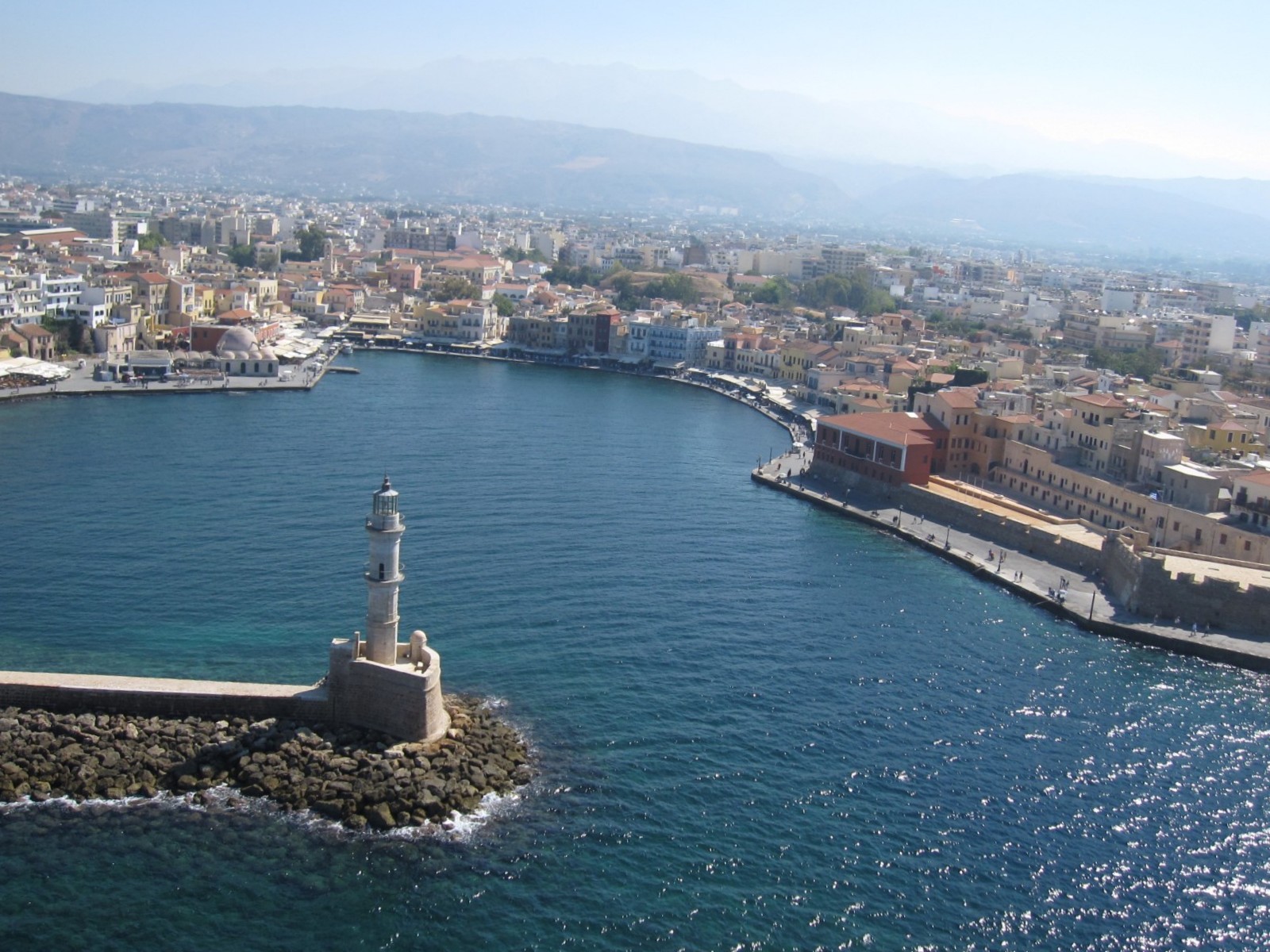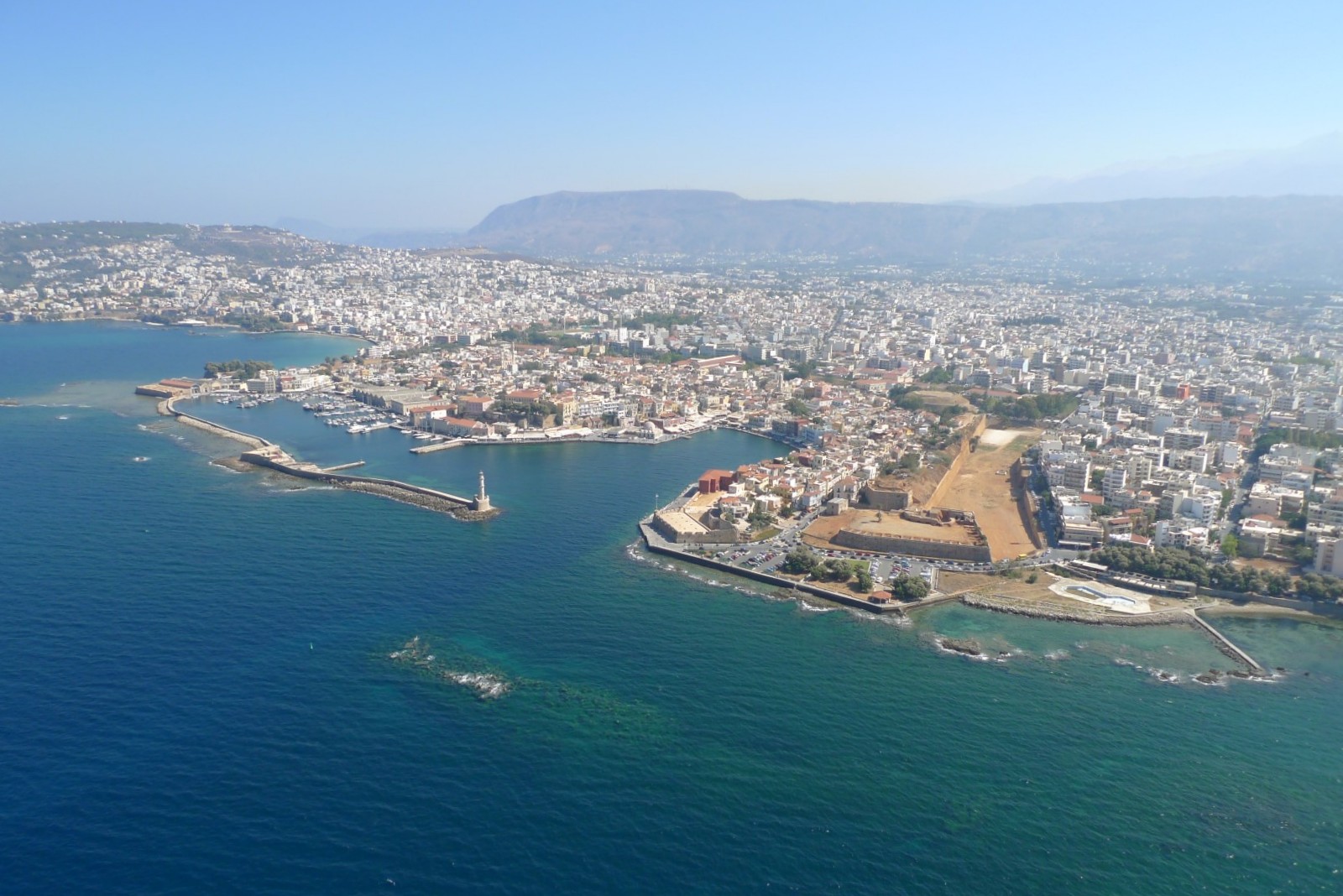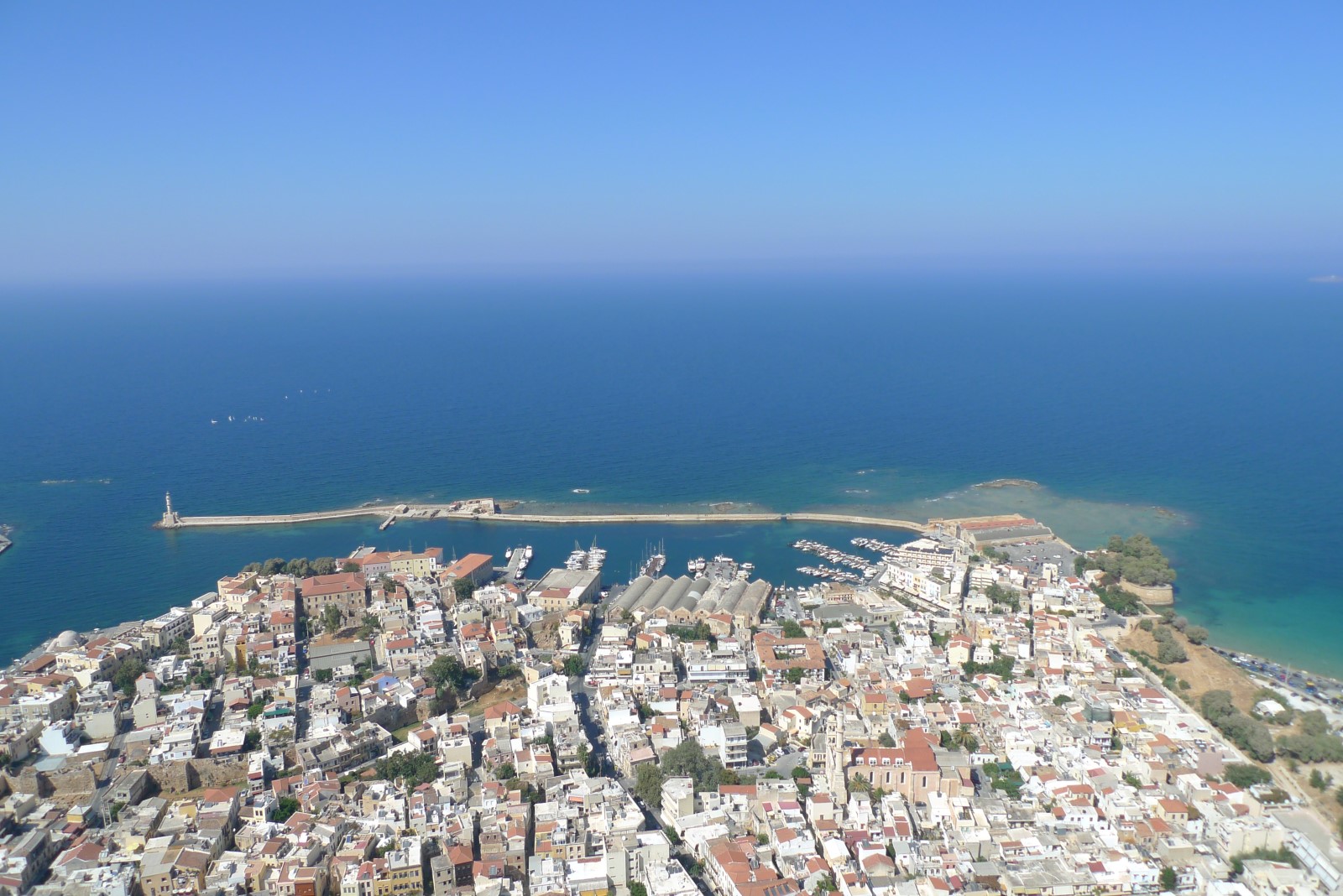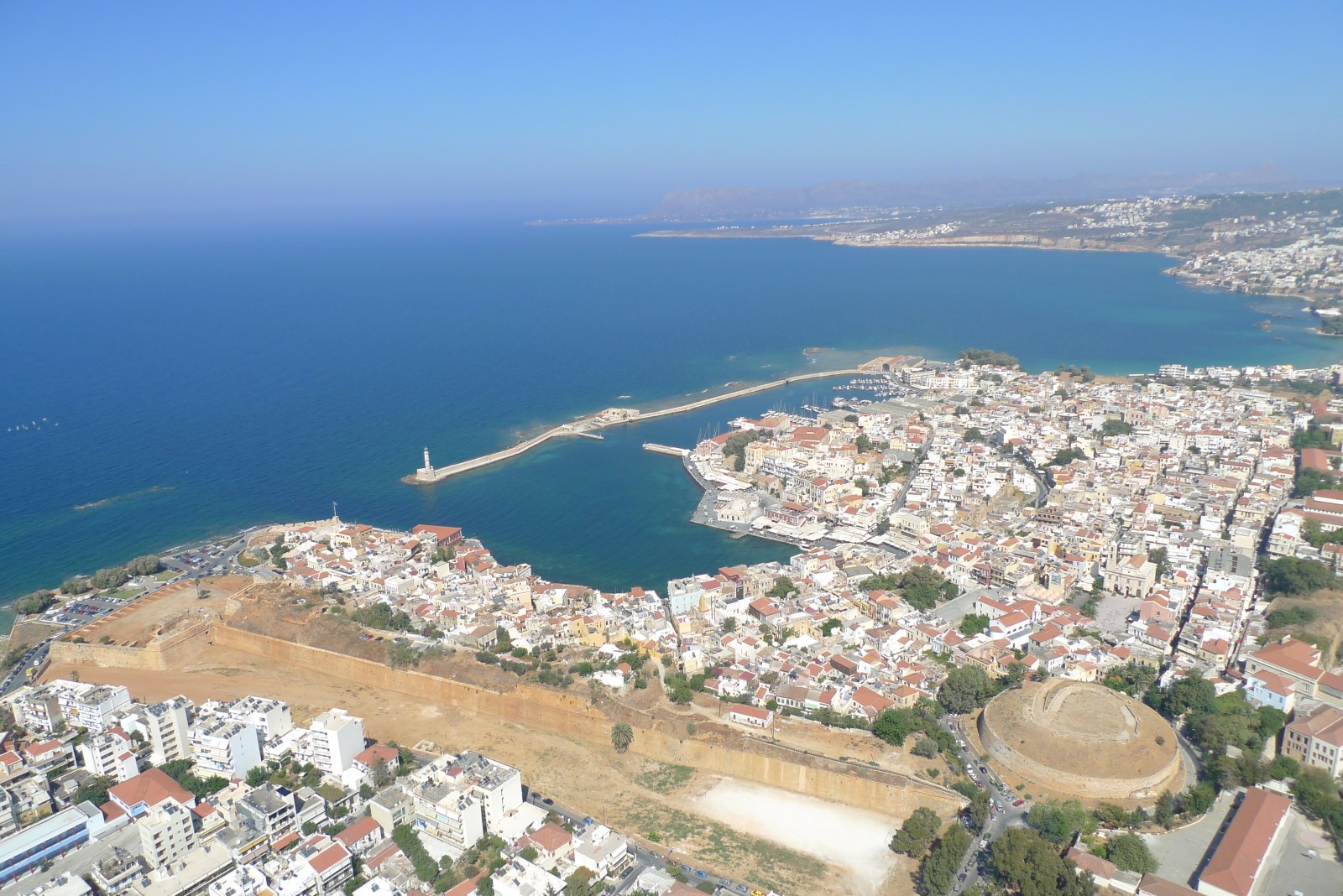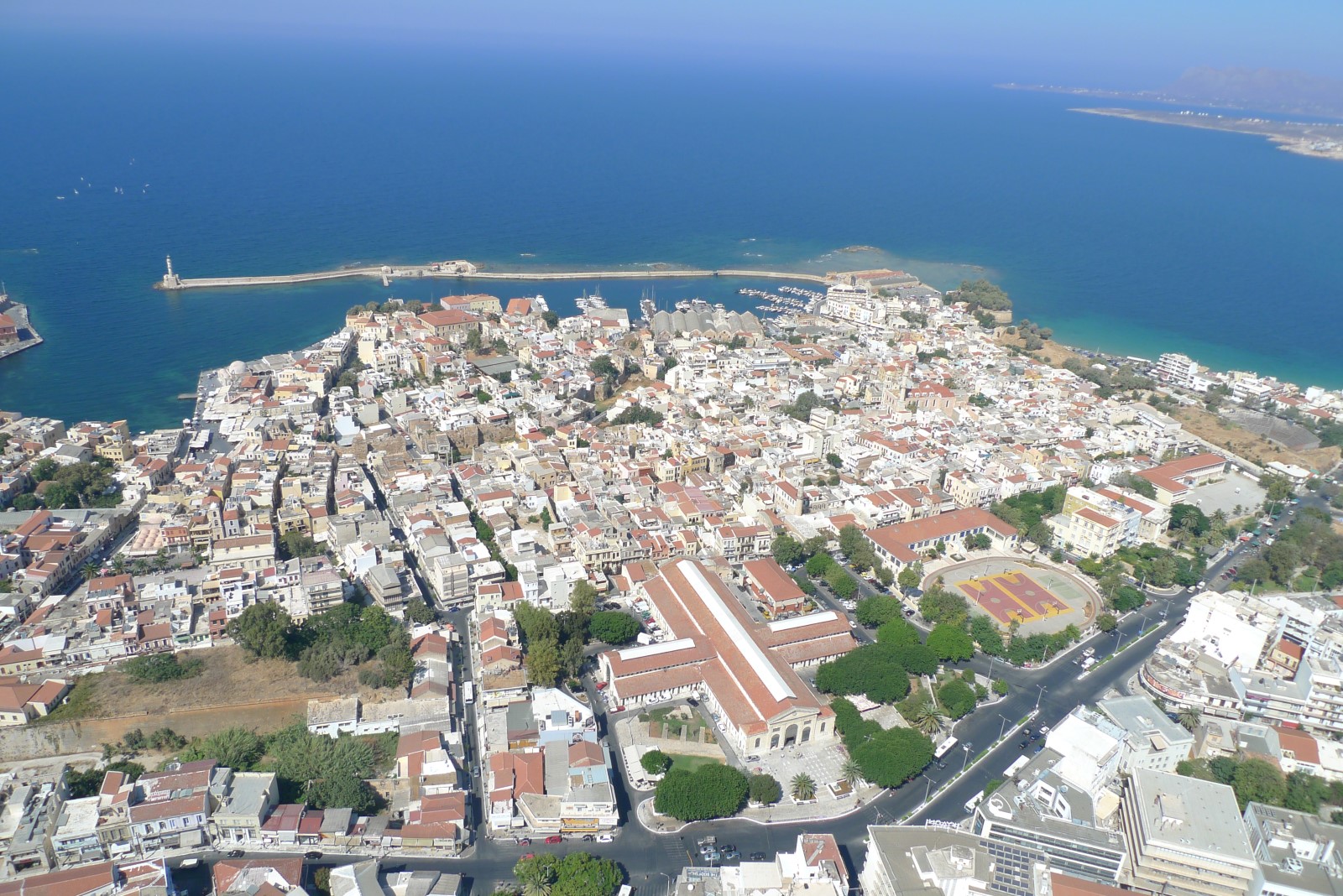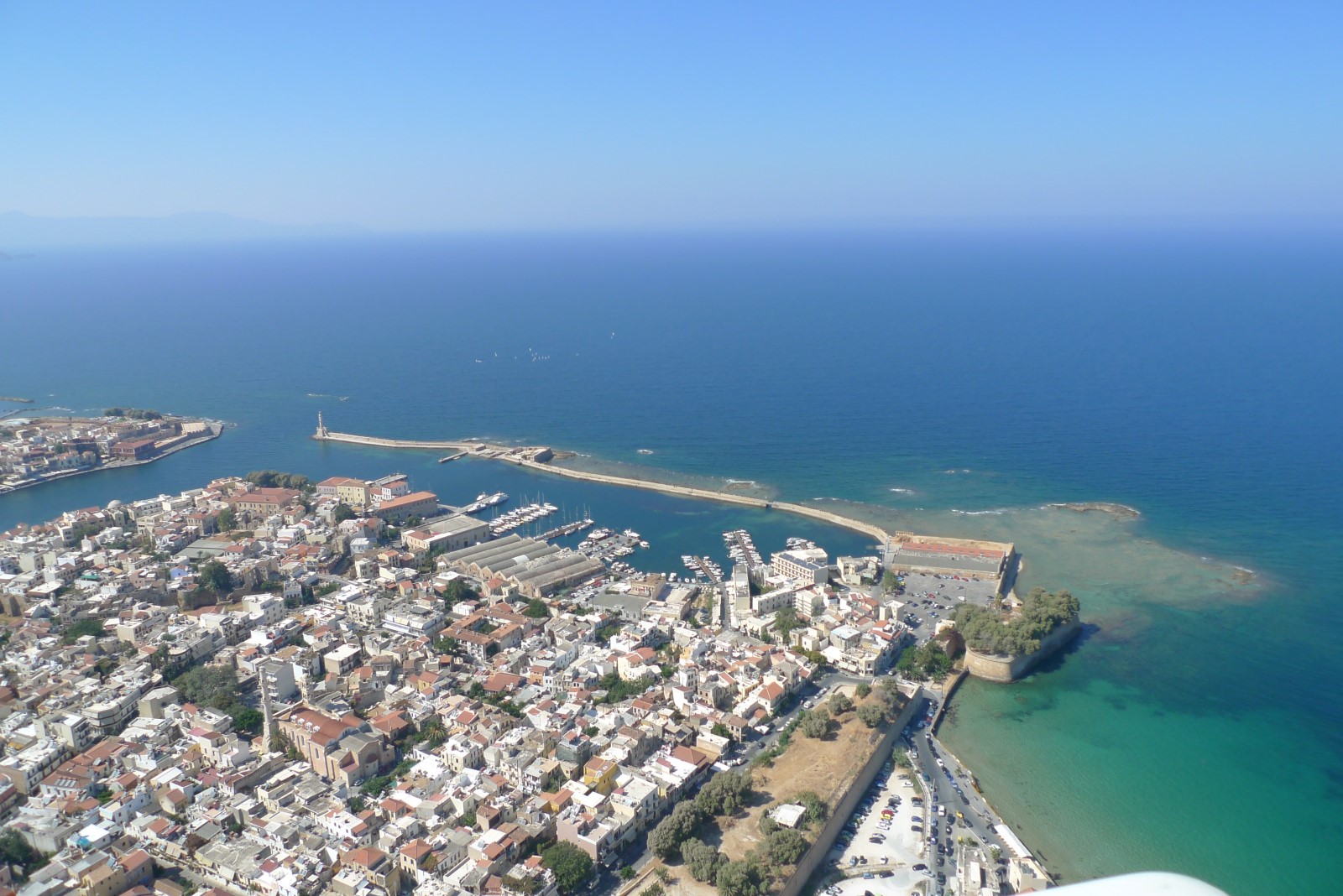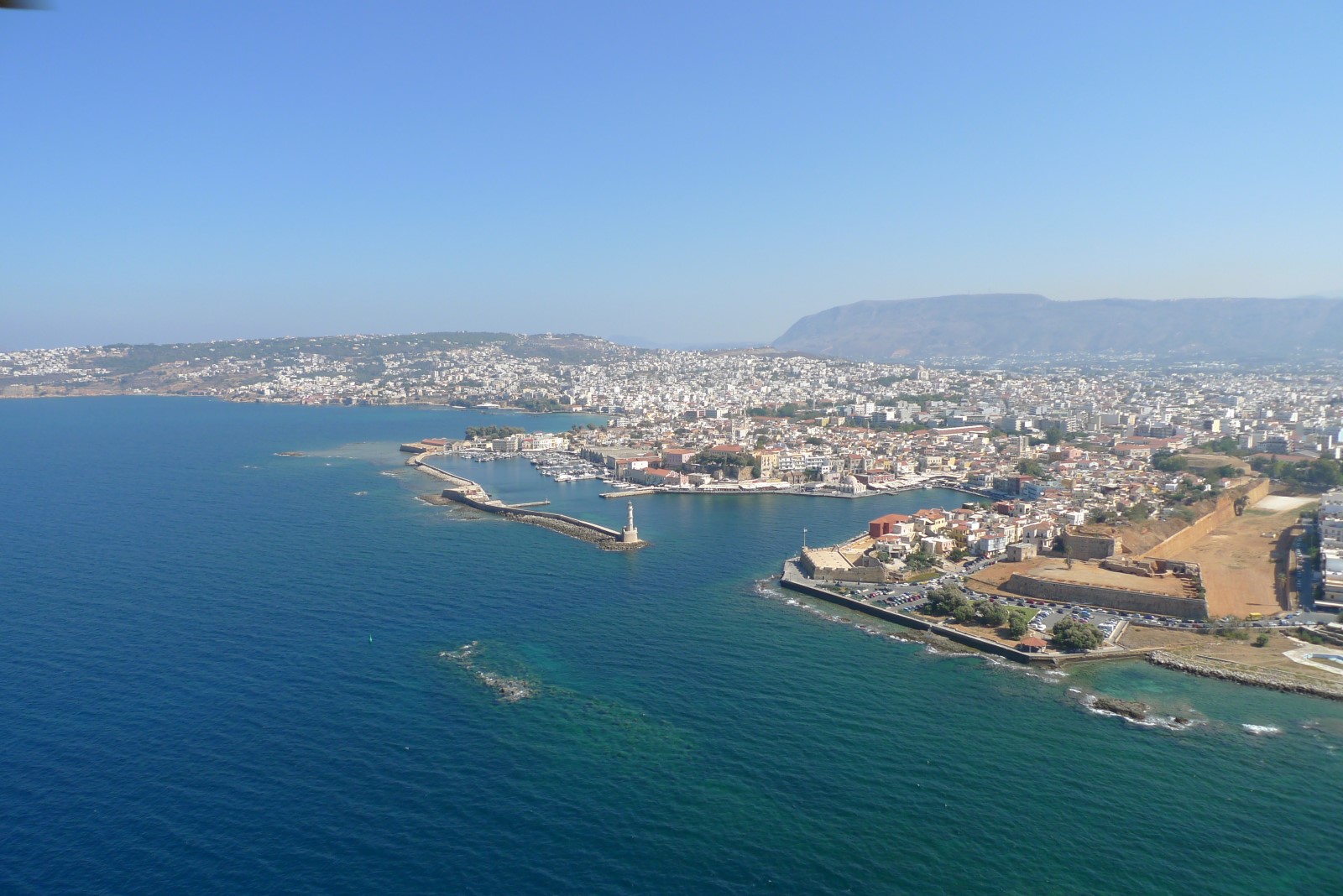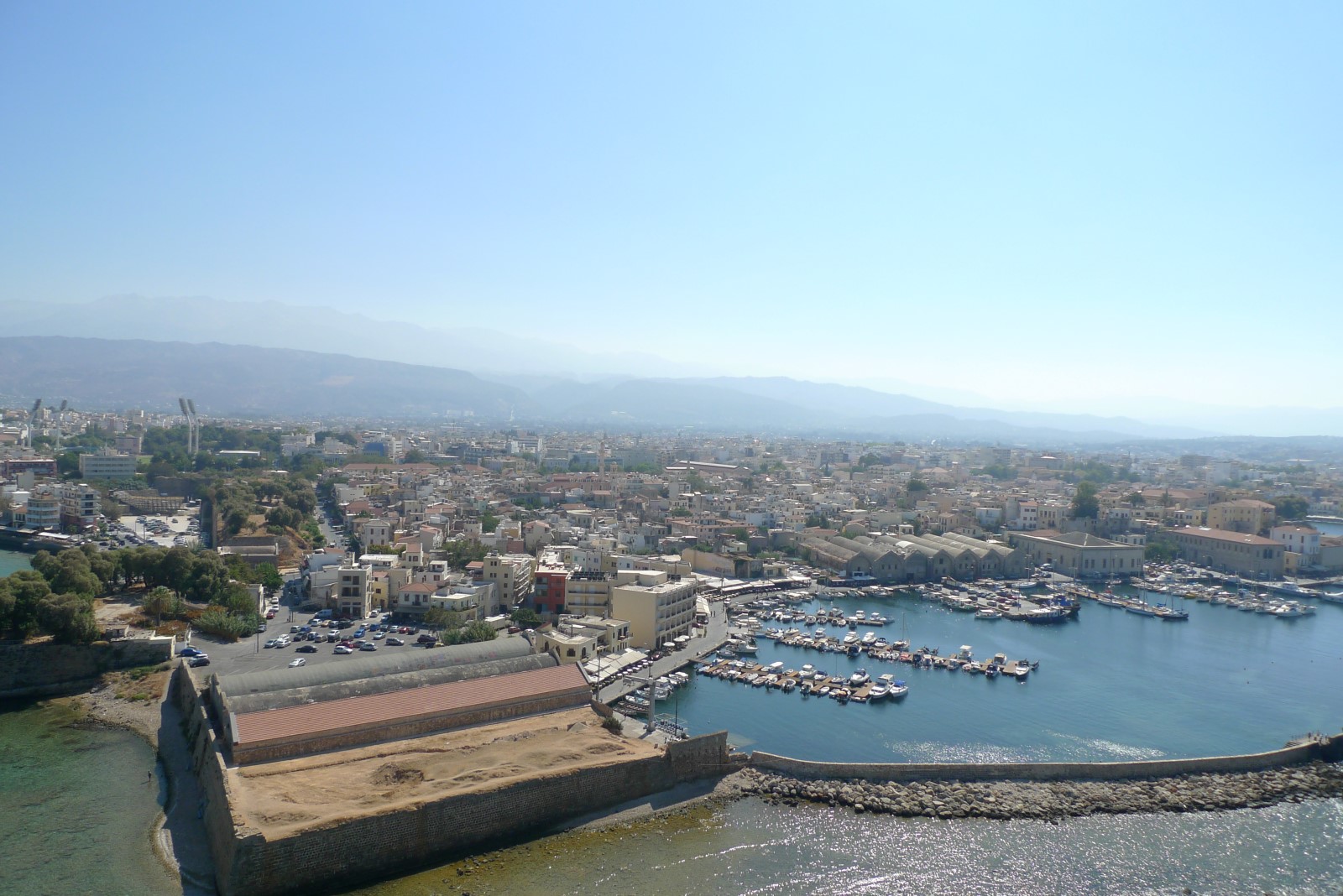

Chania, the principal city of western Crete, stands at the eastern end of the Gulf of Chania, on the site of ancient Kydonia. The city remained inhabited during the Early Byzantine period, until Crete was conquered by Andalusian Arabs between 824 and 827 AD. Following the Byzantine reconquest of the island in 961, the settlement was rebuilt, although it did not immediately regain its former importance. Because of its strategic position, the Byzantines fortified the hill now known as Kastelli. The Venetians systematically rebuilt and resettled the city in 1252. They initially occupied the Byzantine fortress on Kastelli Hill, where they constructed the Cathedral of Santa Maria, the palace of the rector—the Venetian governor—and residences for the city’s officials. New suburbs, known as borghi, gradually developed at the foot of the hill and were inhabited by craftspeople, merchants and other residents. These suburbs were destroyed in 1266 by Genoese forces under Obertino Doria. The need to extend the defences beyond the Byzantine fortress soon became apparent. The local feudal lords petitioned the central Venetian authorities for a new defensive enclosure that would surround the entire expanding city. Construction was approved in 1336 and was completed approximately twenty years later. These were the first extensive walls of La Canea, the Venetian name for Chania. The early walls were relatively low and gradually became inadequate against the development of artillery. In 1536, the distinguished Veronese military architect Michele Sanmicheli prepared plans for a new system of fortifications surrounding the older city. The main construction phase continued until 1568, while later additions and improvements were undertaken by other Venetian engineers and officials, including Giulio Savorgnan and Provveditore Generale Renier. The construction reportedly required 13,936 periods of compulsory labour imposed on the inhabitants of Crete. Each period consisted of twelve or eighteen days of work for people from the mountainous and lowland regions respectively. The labourers were initially paid between four and eight soldi, but later worked without payment and received only basic food. The total cost of the Walls of Chania, together with the construction of the fortresses on Thodorou Islet, is estimated to have reached 87,000 ducats. The new enclosure had an almost square plan and a total perimeter of approximately 3,085 metres. A moat about 1,942 metres long, 10 metres deep and up to 50 metres wide extended along its landward sides. Powerful bastions stood at the four corners of the fortifications and were reinforced by additional outer defensive works: The northwestern corner was occupied by the San Salvatore Bastion, also known as Venier or Gritti, together with the Rivellino San Salvatore. The southwestern corner was defended by the Schiavo or San Dimitrio Bastion and the Lando cavalier. The southeastern corner was occupied by the Santa Lucia Bastion and its associated outer fortification. The northeastern corner was protected by the Sabionera or Mocenigo Bastion and the Rivellino Michel. The bastions were connected by powerful straight sections of wall known as curtains. Because the southern curtain was particularly long, it was reinforced at its centre by a piattaforma, approximately where the building of the “Chrysostomos” Literary Association stands today. The defensive works of Della Mantona and San Giovanni were located in the same area. On the harbour side, the city was defended by coastal fortifications and the harbour breakwater. The necessary earthworks were carried out during the administration of Rector Leonardo Loredan. The main southern entrance was the Retimiota Gate, or Gate of Rethymno, from which the road to Rethymno began. The Sabionera, or Gate of the Sand, stood on the eastern side, while the Porto San Salvatore opened to the west. Unlike the gates of Candia, these entrances were not adequately covered by the neighbouring bastions, creating an important weakness in the defensive system. An inventory compiled in 1630 records that the fortress of Chania was equipped with 319 cannons, 30,695 cannonballs and 413,274 pounds of gunpowder. Despite this formidable arsenal, the military engineer Del Monte had already identified serious defensive weaknesses in 1591. He argued that the sharp angles of the walls left certain sectors exposed, that the earthworks were too narrow and that some of the outer defences were too small. He even proposed abandoning Chania and rebuilding the city near ancient Aptera, overlooking Souda Bay, but Venice never accepted the proposal. After a siege lasting approximately two months, the Ottomans captured Chania on 22 August 1645, having opened a breach near the Schiavo Bastion. They repaired the damaged sections and later renovated and modified parts of the defensive system. The Sabionera Gate became known as Kum Kapi, while the Retimiota Gate was renamed Kale Kapısı, meaning Castle Gate. The Mosque of Hussein Pasha was built inside the latter, and signals for opening and closing the gate were given from its minaret. The last Ottoman soldiers departed from Chania through Kale Kapısı on 3 November 1898. In front of the gate lay the present-day Kotzambasi Square, where executions were carried out during the Ottoman period. Among those executed there was Melchizedek Despotakis, Bishop of Kissamos, who was hanged in 1821. The fortifications remained in relatively good condition until the early 20th century, when large sections were demolished to allow the expansion of the modern city and the construction of new roads and buildings. Almost nothing survives from the southern side today, but substantial remains can still be seen along the western and eastern sections, including the Schiavo Bastion, the Lando cavalier, the San Salvatore or Firkas Bastion, the Sabionera fortifications and parts of the moat.
Read more ...