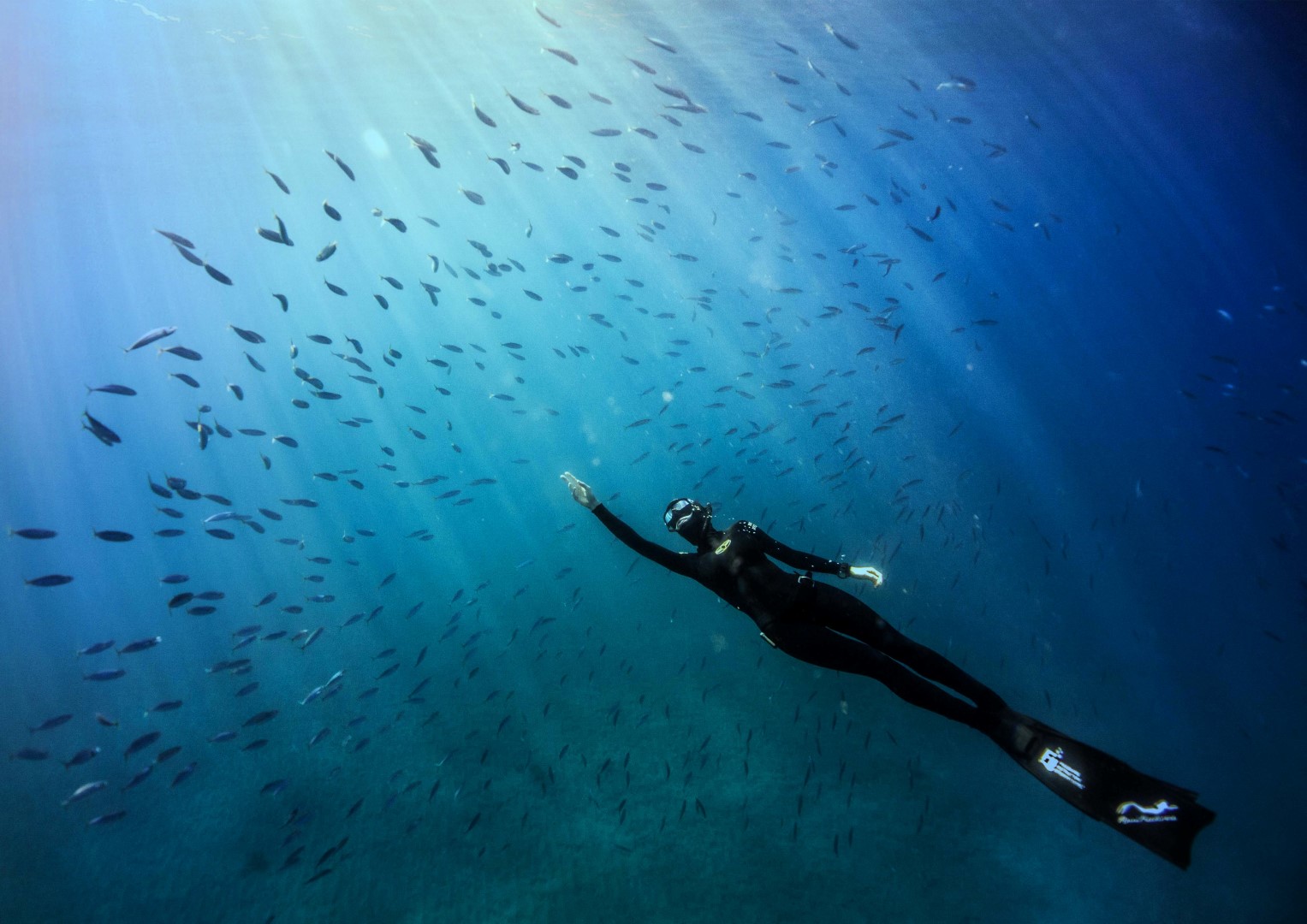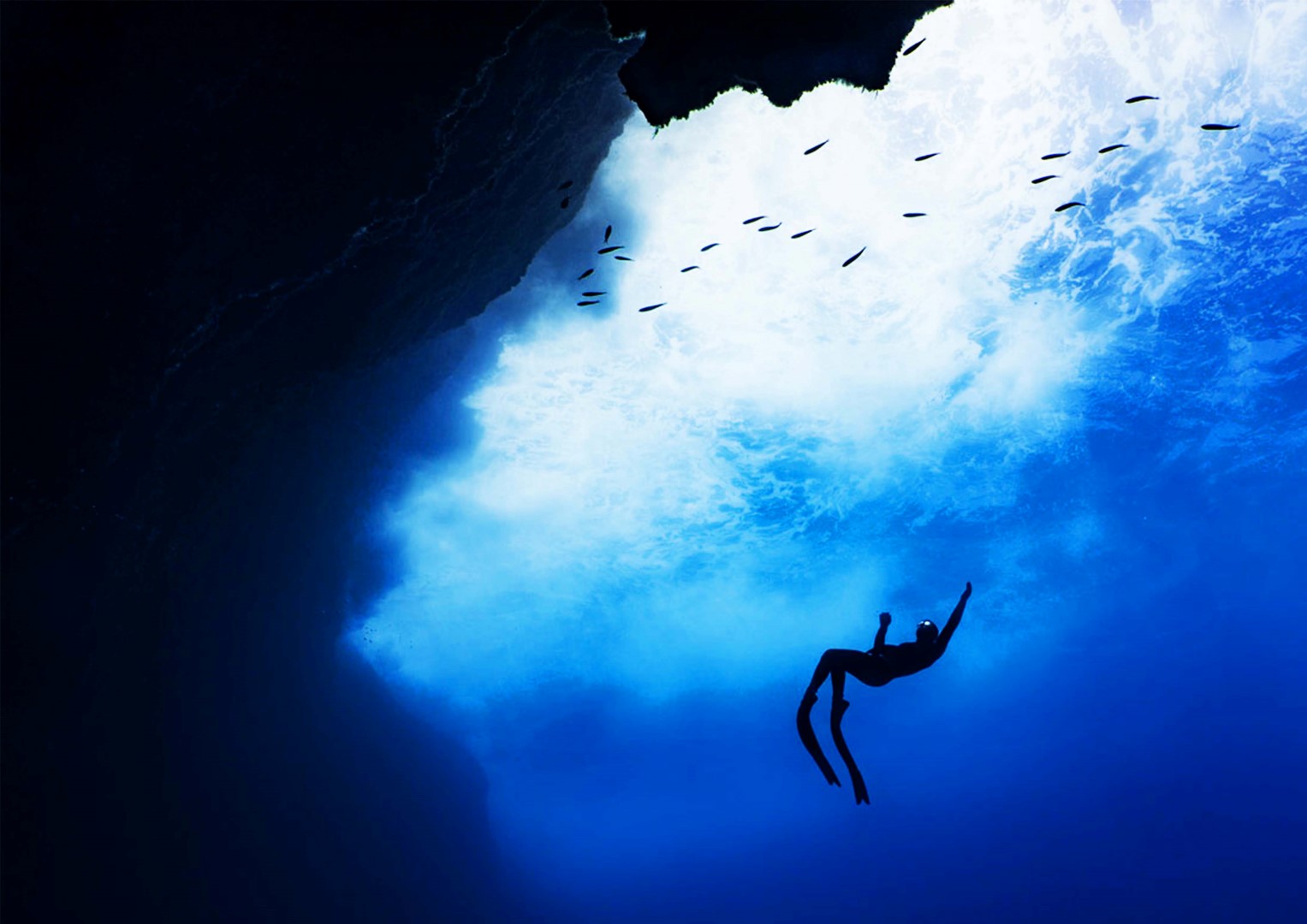



Freediving in Crete
Freediving is the exploration of the underwater world on a single breath, without the use of breathing apparatus. It combines physical activity with concentration, relaxation and direct contact with the sea. From a short descent with a mask to a properly organised deep dive, freediving depends on breath control, efficient technique and, above all, strict safety procedures.
Humans, like marine mammals, possess a mammalian diving response. When the face is immersed and the breath is held, the body activates several physiological reactions that help conserve oxygen. This response, however, does not eliminate the risks of hypoxia and loss of consciousness, particularly when a diver tries to extend a breath-hold beyond safe personal limits.
Despite its frequent portrayal as an extreme pursuit driven by adrenaline, freediving requires relaxation, correct equalisation, efficient movement and an honest awareness of personal ability. The safest introduction for a beginner is a structured course with a certified instructor, beginning in controlled conditions before progressing to open water.
Freediving in Crete
The relationship between the people of Crete and breath-hold diving goes back many generations. It was traditionally associated with gathering shells and sponges, fishing and the everyday life of coastal communities. Today freediving is practised as a sport and as a way to enjoy underwater observation, physical exercise and recreation. Spearfishing is a related but separate activity and is subject to its own rules and restrictions.
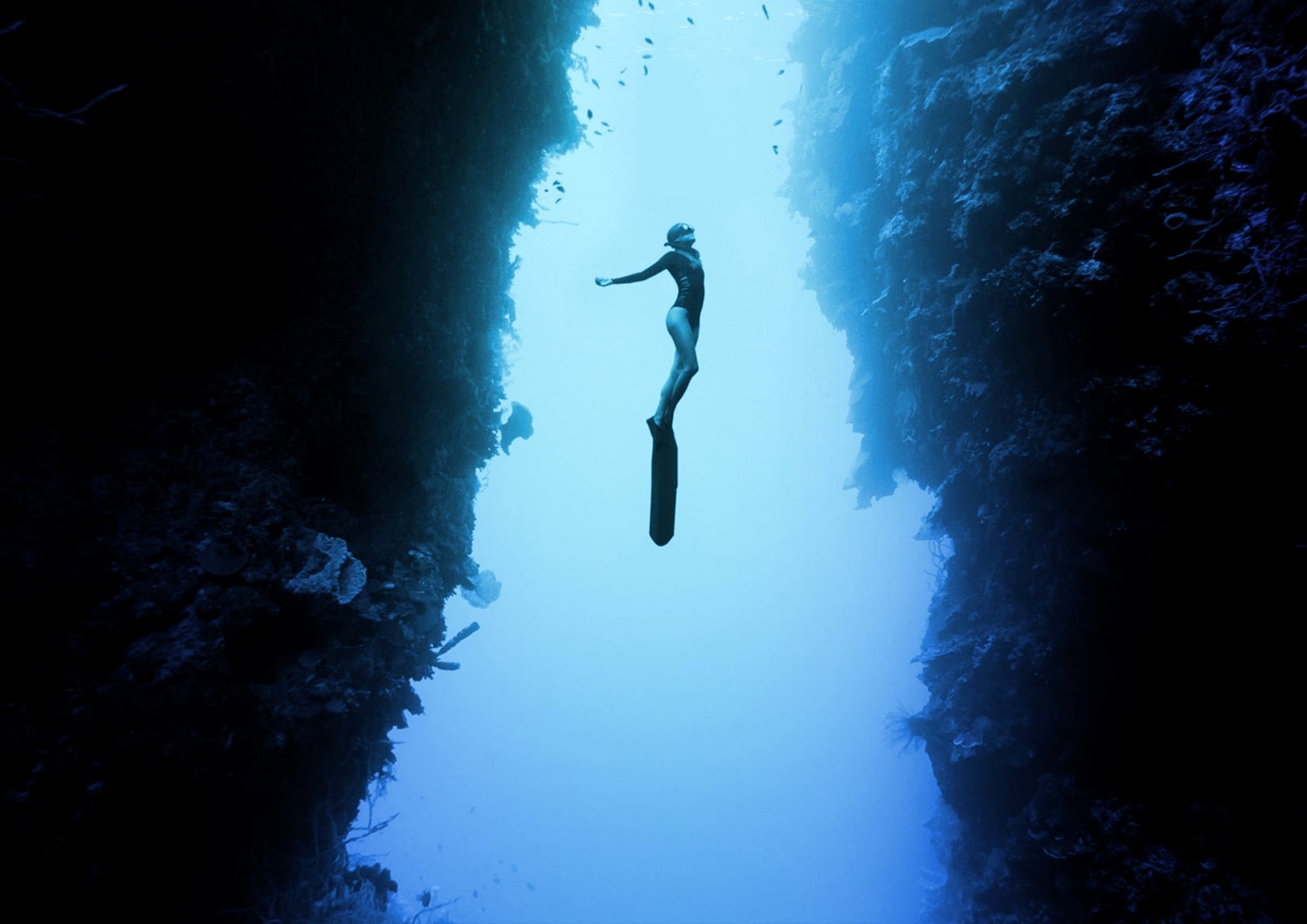
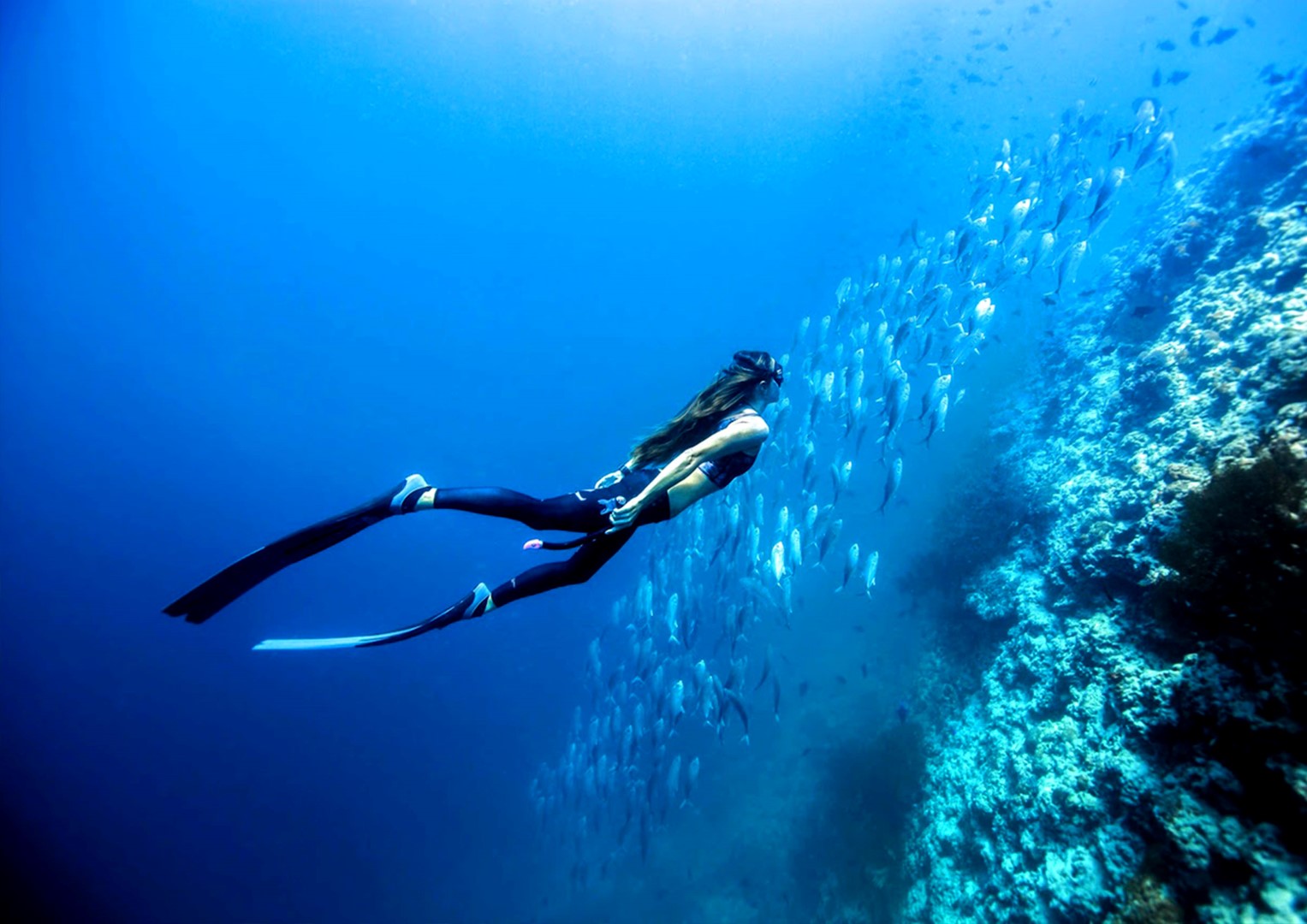
Crete’s long coastline, clear water, rocky shores, underwater caves and varied seabed make the island an appealing freediving destination. Conditions can nevertheless differ greatly between sites. Depth, currents, waves, visibility, boat traffic and the difficulty of entering or leaving the water must always be assessed before a dive.
Where to freedive in Crete
The bay of Agia Pelagia is one of the best-known training areas in Crete. Its succession of coves provides access to different depths, with several locations protected from the prevailing northerly winds. Depending on the exact site and weather conditions, the wider bay can serve both beginners and experienced freedivers.
In eastern Crete, notable areas include the bay of Elounda and the shores of Mirabello Bay. Near Heraklion, the island of Dia has rocky shores and clear water, but access requires a boat and careful assessment of sea conditions. Along the southern coast, possible locations include Kali Limenes, Agios Pavlos and Schinaria.
In western Crete, interesting coastal areas can be found near Sougia, Chora Sfakion and Paleochora. Many locations are remote and should not be treated as organised diving sites. Divers need to understand the entry and exit points, local sea conditions and emergency procedures before entering the water.
Essential freediving safety
Never freedive without a properly trained buddy who actively supervises the dive and knows how to respond to an emergency. The presence of swimmers or a lifeguard somewhere on the beach is not a substitute for dedicated one-to-one supervision. Repeated dives require adequate recovery intervals at the surface, and no diver should chase a particular depth or breath-hold time.
Hyperventilation before a dive must be avoided. It reduces carbon dioxide levels and delays the natural urge to breathe without providing a comparable increase in available oxygen. This can lead to a hypoxic blackout with little or no warning. A clearly visible surface buoy and dive flag should be used, particularly in areas with boat traffic, and the divers must maintain effective communication throughout the session.
Beginners should not attempt deep dives, underwater caves or remote sites without a certified instructor. Weather, currents, equipment and local restrictions should be checked before every session. Anyone with a medical condition or taking medication should seek advice from a doctor familiar with diving medicine before participating.
More information about freediving lessons in Crete
.jpg)