




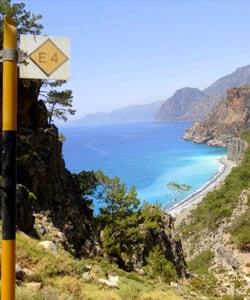





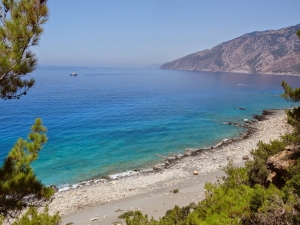
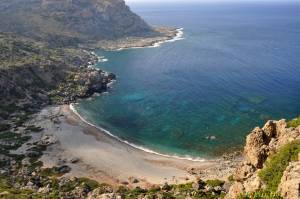
Agios Pavlos (Saint Paul) is one incredible beach at Opiso Egiali area, 3km east of Agia Roumeli and 6km west of Loutro, in the exit of the wild Eligia Gorge. The beach is totally secluded from civilization, since the only possible to come here is by boat or by long trekking. The closest harbors are Agia Roumeli and Loutro. Walking from Agia Roumeli takes 50'-60', on an easy path that runs beside the sea.

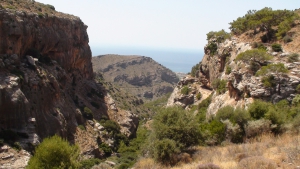
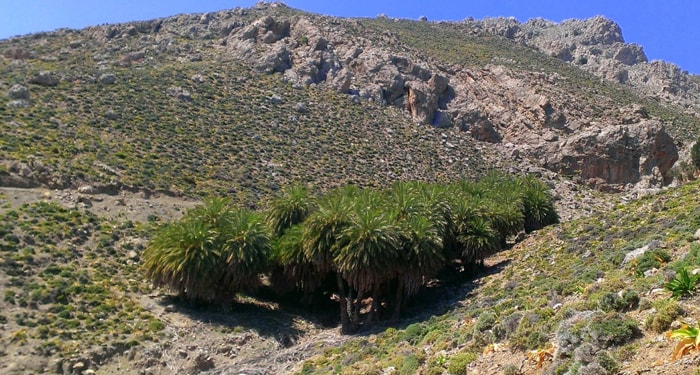
The Gorge of Pefki (Pefki means Pines) is one of the most beautiful small gorges of Crete, with amazing rock formations shaped by the natural forces and with lush vegetation. The length of the gorge is 4.5 km and the elevation difference of the entering point and the exit reaches 300 meters.The gorge starts south of the village Pefki and ends in Aspros Potamos dorp, 2km north of Makrigialos.

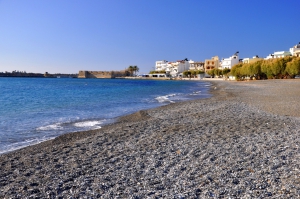
Ierapetra is located 35km southeast of Agios Nikolaos and is the southernmost city of Greece. It is built in one of the warmest areas of Crete, which makes it very popular for holidays, even until the end of autumn. The wider area of Ierapetra is famous for its beaches, stretching along a vast beachfront. Almost all of them are covered by the characteristic fine black pebbles, which do not stick in the leg, and the sea is usually flat.

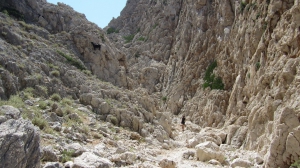
Avlaki gorge is located near the monastery Gouverneto, 16km east of Chania city. It is one of the most important gorges in Crete with a particular religious value, as many monks and hermits found shelter in its caves. Inside the small canyon there is the deserted Katholiko monastery, perhaps the oldest monastery in Crete. Thus, the gorge is also called Katholiko Gorge.

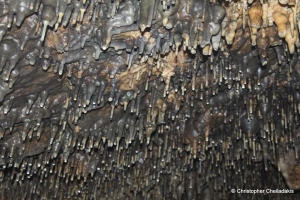
The Cave of St. John the Hermit or Xenos in Avlaki Gorge, in Akrotiri, is located just a few hundred meters away from Arkoudospilios. This is located near the abandoned Katholiko Monastery and Gouverneto monastery. Similarly to Arkoudospilios this was a riverbed with a total length of about 135 meters, forming a horizontal room. Its rich decoration is characterized by large stalactites and stalagmites.
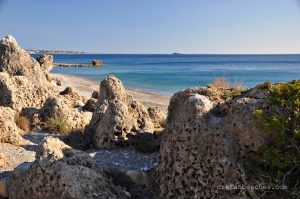
The Coves of Paleochora are consecutive small bays that start 1.5 km west of Paleochora (80km south of Chania) and extend 2.5 km to the west, till Cape Grammenos. The beaches are a complex of adjacent coves with crystal clear waters and spectacular pebbles. The main road, connecting Paleochora and Koundoura, runs along the coves. For this reason, they are not preferred by nudists.

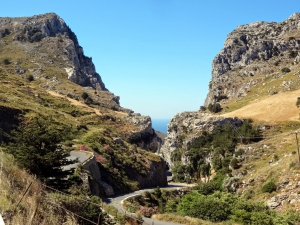
The gorge of Kotsyfos starts at Kannevos village and ends at Plakias. The starting point is very narrow with a width of about 10m, which gradually increases and reaches 600m. The total length is 1800m, and the almost vertical sides that reach a height of 600m. Inside the gorge, there is a small temple built inside a rocky cavity dedicated to Saint Nicholas.




- Home
 Beaches
 Nature
 Past
Past Destinations
 Highlights
 West Crete
- Central Crete
- East Crete
- Towns
- Chania Prefecture
- Chania
- Paleochora
- Kissamos
- Georgioupolis
- Chora Sfakion
- Loutro
- Rethymnon Prefecture
- Rethymnon
- Agia Galini
- Plakias
- Spili
- Anogia
- Heraklion Prefecture
- Heraklion
- Hersonissos
- Malia
- Matala
- Agia Pelagia`
- Archanes
- Kokkinos Pirgos
- Lassithi Prefecture
- Agios Nikolaos
- Elounda
- Sitia
- Ierapetra
- Makrigialos
- Palekastro
- Zakros
- Lassithi Plateau
- Get Prepared


