








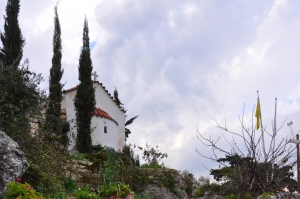
Outside the walls of Paliani Monastery in Venerato there is the cemeterial church of Saint John the Theologian (John the Apostle). The single-nave arched-roofed church was frescoed in the middle of the 14th century by the painter Georgios.

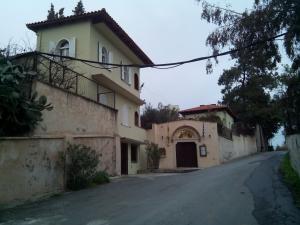
The Holy monastery of St. Theodore is located on the road that leads to the University Hospital of Heraklion. The nunnery was founded by Timothy Tzannis in around 1980.
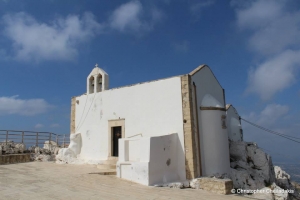
The Monastery of Christ the Savior or fendis Christos served as a Venetian monastery and was well known to all travelers coming to Jiouktas, to see the place where the ancients placed the tomb of Zeus.
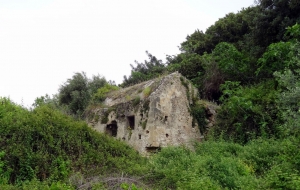
Here we meet the ruins of Panagia nunnery at position Karydaki. It was a two-aisled church with a transverse narthex. From a spring next to this monastery, the famous Morosini fountain in Candia (now Heraklion’s Morosini fountain at Lions square) was watered after running through a giant aqueduct system of that era.
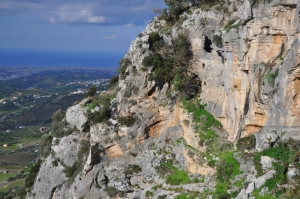
Many believed that somewhere in Jiouktas lived once the Apostle Paul. Indeed, within walking distance from the church of Christ there are the remains of a very interesting building that is connected to the hermitage of St. Paul.
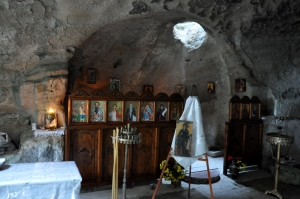
The temple is one of the many in Crete dedicated to Saint Anthony, the "saint of the caves". It is a catacomb carved in the soft limestone of the area. Probably, it is the residue of an ancient temple or grave formed after widening a pre-existing cave. We should not overlook the existence of the several Minoan sacred caves on Mount Youchtas.
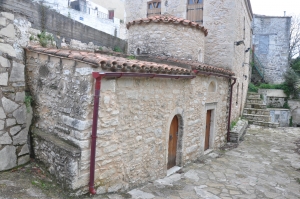
The Byzantine church of Agia Paraskevi at village Siva is a small single-nave church with a dome. Remarkable are the frescoes dating from the early 14th century, and there are parts of wall paintings of older periods.
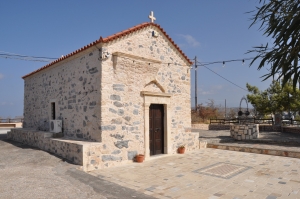
Atop Aorakia hill we meet the Church of All Saints. It was built in the Venetian Era (before 1669) and bears traces of frescoes.
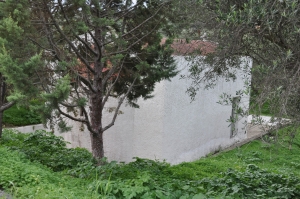
In the middle of the road that connects Kallithea to Knossos, we meet the deserted hamlet of Sellopoulo, on the bank of Keratos river, known to archaeologists due to the domed tomb found here. Below and next to the road we see the single-aisled church of Agia Paraskevi, bearing damaged frescoes dating from the Venetian era.
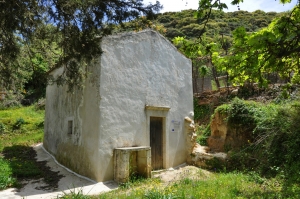
The very old church of Michael the Archangel is located south of Archanes, bearing frescoes of 1315. A mural depicts the founder of the church holding a model of the church and there are depictions of sinners in hell.

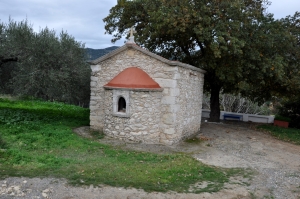
The church of Agia Paraskevi is located next to a green ravine, at a site that overlooks the south side of Arhanes town. What makes this church very important, are the few but very important frescoes preserved on its walls dating back from the medieval age.
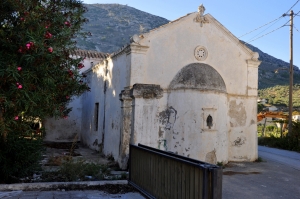
The district of Agia Triada (Holy Trinity) at Arhanes takes its name after the church of the Holy Trinity of the 14th century. The frescoes of the church have been restored.
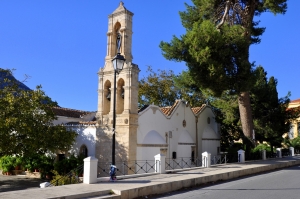
The Venetian church of Virgin Mary (Panagia Kera or Faneromeni) is located near the entrance of the town of Archanes. The name Faneromeni (Revealed) is taken after a legend that writes as follows: Once a girl called Maria saw a light at the point where the miraculous icon of the Virgin Mary was hidden. The girl then built the first temple.
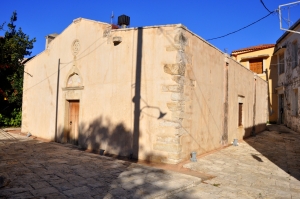
The church of St George is a three aisled basilica with a raised middle aisle. Its foundation dates back from the 13th to 14th century and is the largest frescoed church of Archanes. During the last renovation (18th-19th century) the gradients of the roof were decreased and altered its form.
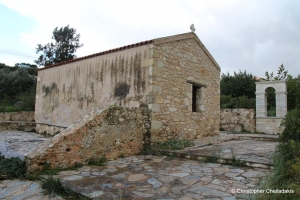
Kyra Eleousa is located amidst of a green and fertile slope. The temple courtyard hosts a well with spring water that never dries up. According to tradition Kyra Eleousa Spilia served as a small monastery till the Ottoman Era. It is true that in the last years of the Venetian era, the suburbs of Heraklion (Candia) on the so-called area of Parakandia housed about 40 active monasteries.
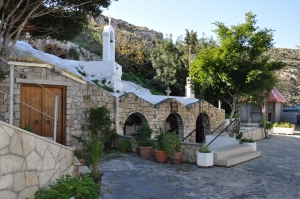
Next to the beach of Florida, Karteros bay, we meet the cavernous chapel of St. John the Baptist (celebr. August 29) and Saint Nikon the Metanoite (Repent) (celebr. November 26). There are impressive modem frescoes by the Saints of Crete, drawn by Takis Moshos from Monembasia.
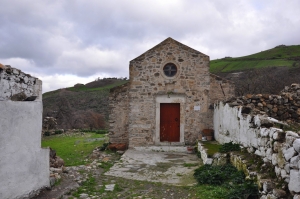
Near Karkadiotissa, at the deserted today settlement Agalantes and amid an area with huge oak trees, operated the Venetian monastery of Astratigos (Michael Archangel). The monastery is a dependency of the monastery Saint George Epanosifis. Despite the long siege of Candia by the Ottomans, this monument has not suffered the devastation experienced by most monasteries around Temenos province and the 15th-century frescoes have survived in relatively good condition.
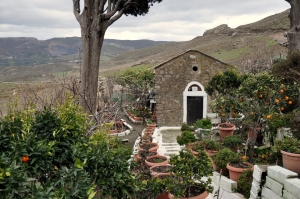
Between Karkadiotissa and the monastery of Saint George Epanosifis, on the main road, we meet the old monastery of Saint Anthony (Agios Antonios), which now does not operate. The monastery that 0operated during the Venetian Era is a dependency of the monastery Epanosifis and is built at the point where small waterfalls are formed in winter.
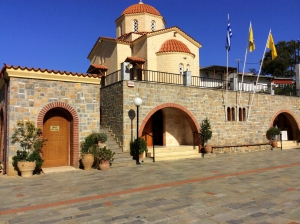
The Holy Monastery of Santa Irene Hrysovalantou in Heraklion is located on the southern outskirts of the city. It was founded as a male monastery on April 14, 2002 by father Methodios Samaritakis. It currently has a few monks engaged in the production of wax and incense, and the management of the House of Elders that hosts elderly people.
Also read:
- Home
 Beaches
 Nature
 Past
Past Destinations
 Highlights
 West Crete
- Central Crete
- East Crete
- Towns
- Chania Prefecture
- Chania
- Paleochora
- Kissamos
- Georgioupolis
- Chora Sfakion
- Loutro
- Rethymnon Prefecture
- Rethymnon
- Agia Galini
- Plakias
- Spili
- Anogia
- Heraklion Prefecture
- Heraklion
- Hersonissos
- Malia
- Matala
- Agia Pelagia`
- Archanes
- Kokkinos Pirgos
- Lassithi Prefecture
- Agios Nikolaos
- Elounda
- Sitia
- Ierapetra
- Makrigialos
- Palekastro
- Zakros
- Lassithi Plateau
- Get Prepared


