
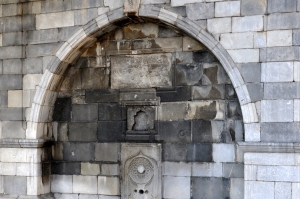
Hanialis Fountain in Heraklion
The Hanialis Fountain, dating from 1709, was originally incorporated into the exterior of the Hanialis mansion on present-day Zografou Street. It now stands beside the exit of Saint George Gate on Ikarou Avenue.





During the Venetian period, numerous wells and cisterns existed within the walls of Candia, but the lack of an abundant and reliable supply of fresh running water remained one of the city’s most serious problems. In the mid-16th century, the Bembo Fountain was constructed and spring water was brought into Candia. The problem was addressed more effectively later by the Venetian General Proveditor Francesco Morosini, who commissioned an extensive water-supply system approximately 15 kilometres long. The aqueduct carried water from springs in the area of Archanes and Mount Juktas to the heart of the city, terminating at the celebrated Morosini Fountain in today’s Lions Square, which was inaugurated in 1628.
Following the Ottoman conquest of Candia, many additional fountains were built to supply residents and offer drinking water to passers-by. Among them were the sebils, charitable public fountains that provided water free of charge in accordance with the Islamic tradition of benevolence. Many Venetian and Ottoman fountains were destroyed or substantially altered during later changes to the city, but the surviving examples remain important monuments to the history and architecture of Heraklion.


 Beaches
 Nature
 Past
 Destinations
 Highlights
 West CreteCentral CreteEast CreteChaniaPaleochoraKissamosGeorgioupolisChora SfakionLoutroRethymnonAgia GaliniPlakiasSpiliAnogiaHeraklionHersonissosMaliaMatalaAgia Pelagia`ArchanesKokkinos PirgosAgios NikolaosEloundaSitiaIerapetraMakrigialosPalekastroZakrosLassithi Plateau


