Georgioupolis is a popular seaside resort in the province of Apokoronas, approximately 38 km east of Chania and 21 km west of Rethymno.
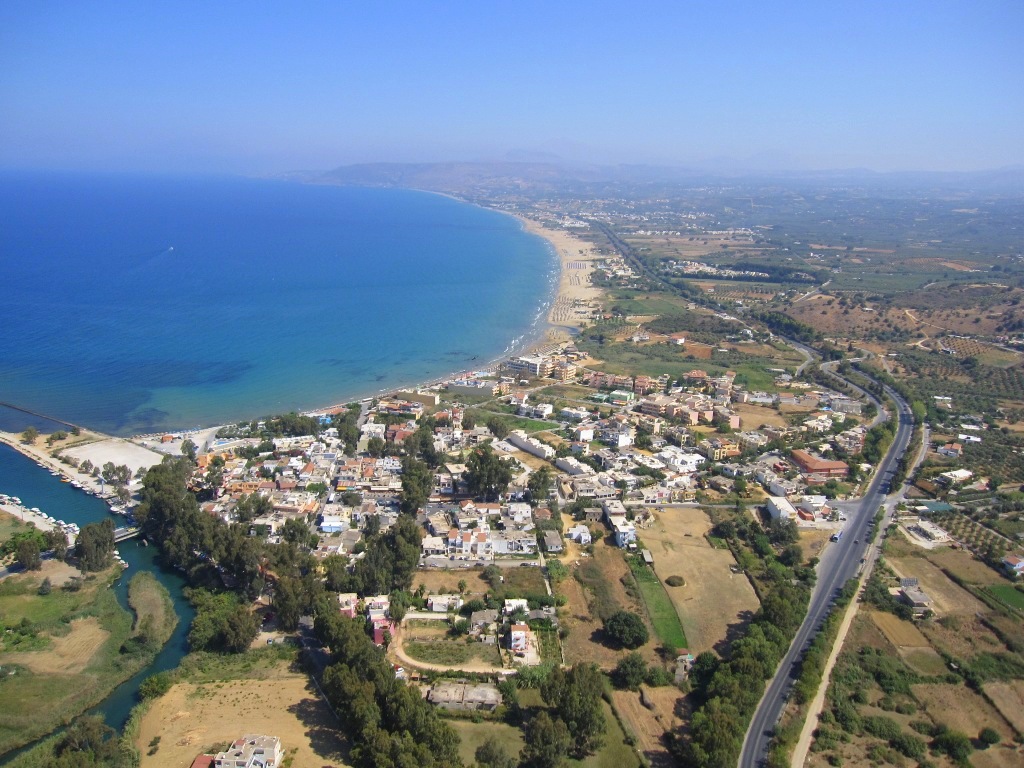
The small coastal town stands at the head of Almyros Bay, surrounded by a fertile green plain with rivers, springs and wetlands. The local economy is now based mainly on tourism, although agriculture and beekeeping remain important traditional activities.
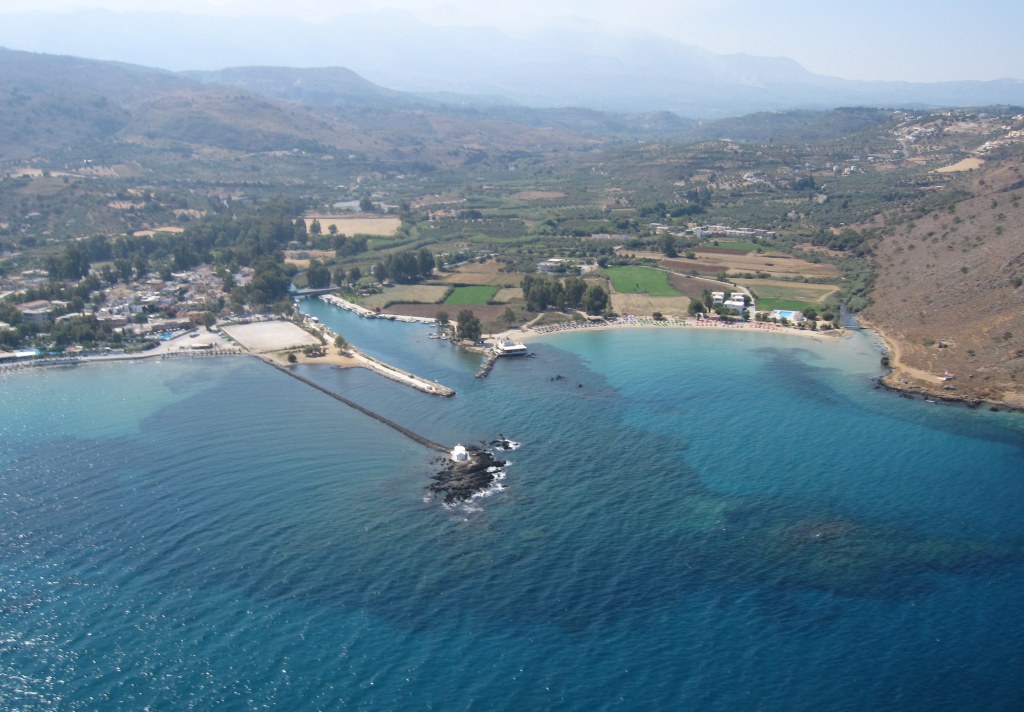
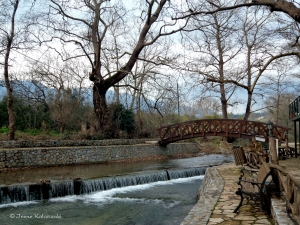
The Almyros River reaches the sea beside the town after passing through an important wetland with rich vegetation and birdlife. The river and the surrounding springs help the plain remain green even during the warmest months.
One of the characteristic features of Georgioupolis is its central road and square, shaded by large eucalyptus trees. Tavernas, cafés and small shops surround the square, while the picturesque fishing harbour lies near the mouth of the Almyros River.
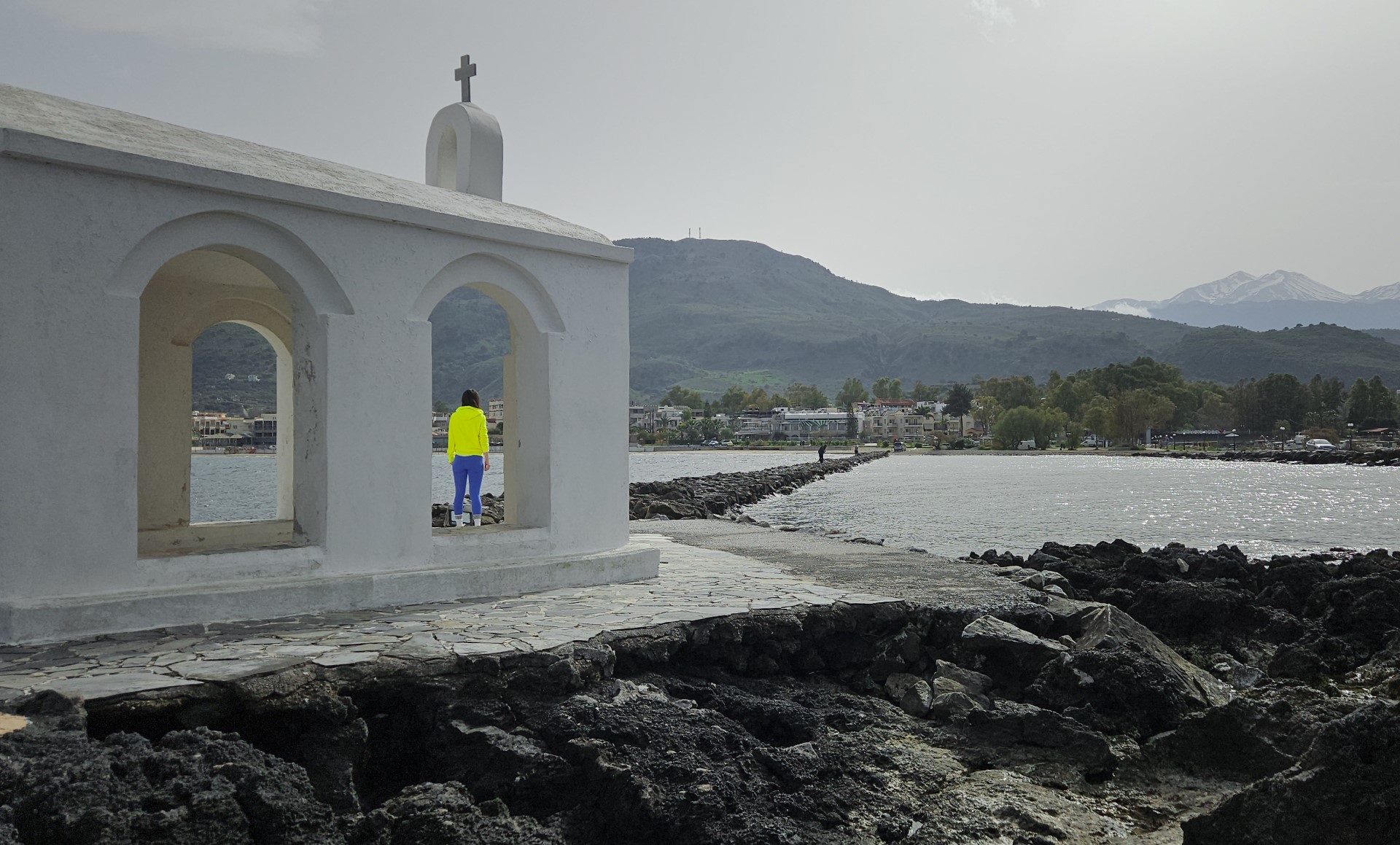
The best-known landmark is the whitewashed chapel of Agios Nikolaos. The church was originally built on a small rocky islet, which was later connected to the shore by a long stone pier. Seen from a distance, the chapel appears to float on the sea and has become one of the most recognisable images of northern Crete.
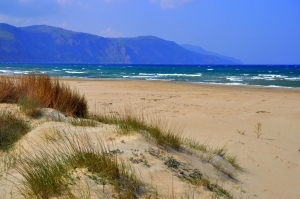
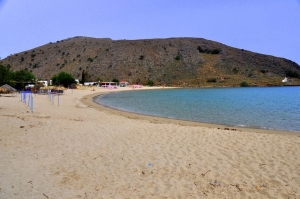
East of the town stretches the long sandy beach of Georgioupolis, continuing towards Kavros and the area of Kournas. Its length, shallow waters and organised facilities make it especially popular with families and visitors staying in the wider area.
A short history
The area has been inhabited since prehistoric times, as indicated by Minoan finds and a tomb discovered on Kastellos Hill. The ancient town of Amphimalla or Amphimallion later developed around the hill of Venou or Kefala. It is generally identified as the harbour of ancient Lappa, located at present-day Argyroupoli.
Architectural remains and objects associated with ancient worship have been discovered in the surrounding area. During the Byzantine period, Saint John Xenos was active here and is associated with the foundation of the Monastery of Saint George at nearby Dramia, as well as with the development of viticulture and beekeeping.
In the early 13th century, the Venetians recognised the strategic importance of the bay and its fertile plain and constructed two small forts. They were known locally as Kastellakia or Paliokastela and in Venetian sources as Castello dell’Almiro. At least one survived into the Ottoman period, until it was destroyed by Cretan revolutionaries in 1821. The Ottomans did not rebuild it.
The establishment of the modern settlement began in 1880, when Miltiadis Papadogiannakis settled in the area and attempted to drain the marshes and transform them into cultivable land. The new settlement was initially named Armyroupoli or Almyroupoli after the Almyros River and began attracting more residents after 1893.
Hundreds of eucalyptus trees and other species were planted during the development of the settlement, and several survive today. In 1899, Almyroupoli was renamed Georgioupolis in honour of Prince George of Greece, the first High Commissioner of the autonomous Cretan State from 1898 to 1906.