Water has always been a precious resource on Crete, particularly in areas with few natural springs and long periods of drought. To supply their settlements, irrigate crops and water their animals, local communities constructed wells, cisterns, fountains and troughs, drawing on knowledge accumulated over many generations.
Wells were dug wherever underground water could be reached. Their shafts were generally lined with stone to retain the surrounding soil and protect the water. In some areas, groups of wells were created to serve the shared needs of villagers, farmers and shepherds.
In the driest regions, cisterns collected and stored rainwater. Water was gathered from roofs, courtyards or specially prepared surfaces and channelled into the reservoir through stone or ceramic conduits. Many cisterns were underground or covered, often with vaulted roofs, helping keep the water cool and reducing evaporation.
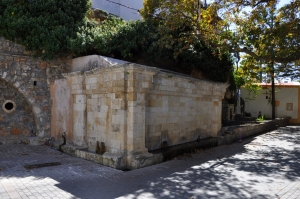
Public fountains were built in squares, at monasteries and crossroads, near springs and along old routes. They were supplied either by nearby springs or through conduits and aqueducts. Besides providing water for residents, many incorporated stone troughs for animals and basins for washing clothes. Some were decorated with reliefs, inscriptions, arches or carved stone frames and are notable examples of vernacular, Venetian or Ottoman architecture.
Village fountains were not merely water-supply structures but important centres of social life. Residents met there, exchanged news, filled their water vessels and performed everyday tasks. Numerous Cretan place names and settlement names remain associated with springs, wells and historic fountains.
Many of these structures are no longer used, having been replaced by modern water-supply networks. They nevertheless remain valuable monuments of traditional architecture and bear witness to the ingenuity with which Cretan communities managed one of the island’s most essential natural resources.