Religious Monuments
The arrival of Saint John the Hermit in Crete of the Early Christian Times was the beginning of a great ascetic tradition that continues to the present day. Hundreds of hermits secluded in the most remote parts of the island, forming ascetic communities that later evolved to thriving monasteries. Hundreds of countryside monasteries, most of which don't operate today, are dispersed throughout the island.
A special sample of hermitage is the Monastery Katholiko at Akrotiri Cape in the caves of which hermits lived their monastic life away, from worldly pleasures. Equally important were the religious sites of the secluded peninsulas Gramvousa and Rodopos, where several small monasteries developed.
The greatest hermitage of all was the naturally isolated, and impassable range of Asterousia in southern Heraklion. Hundreds of caves from Saint Nikitas to Cape Lithino still host hermits. Relations between them were so limited that in Agiofarago and Martsalo they gathered only once a year, in cave Goumenospilio and counted how many of them survived each year.
In eastern Crete, the north province of Mirabello is the largest field of asceticism with dozens of small monastic establishments. Here hermits built small monasteries, where they usually lived alone.
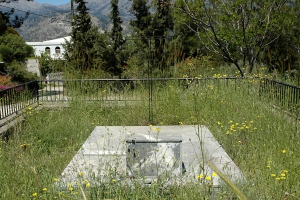
The Monastery of Panagia Exakousti is located in the beautiful green location Malles, near Ierapetra. Today it serves as a female convent. The nuns operate a workshop with textiles, a tailor and needlework shop and other souvenirs.
Read more ...
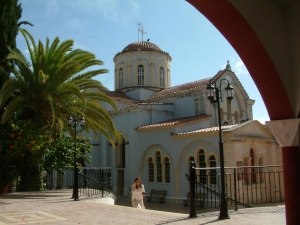
The Monastery of Panagia Kalyviani is located at an altitude of 80m around 60km south of Heraklion, next to Mires and Kalyvia villages. It is a relatively new monastery which was built on the ruins of an older one.
Read more ...
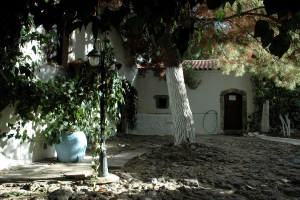
The monastery of Diskouri is located 43km east of Rethymnon and is considered one of the oldest monasteries in Crete. Its age is evidenced by the nearby richly decorated Byzantine church of St. John the Baptist.
Read more ...
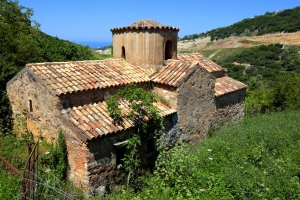
The church was recently restored by the Archaeological Service and is now open to the public. The temple was built in the Middle Byzantine period on the site of an earlier basilica of the 3rd AD century, parts of which were later incorporated the church. On the sides four rooms were built, so the final shape of the temple is rectangular.
Read more ...
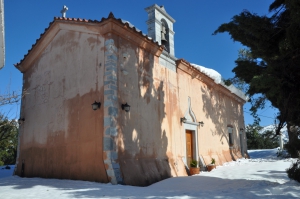
The Monastery of Panagia Kroustallenia is built on a small hill covered with oak trees near the villages of Agios Konstantinos and Marmaketo in Lassithi Plateau. It is one of the most historical monasteries of Crete and is always worth a visit.
Read more ...
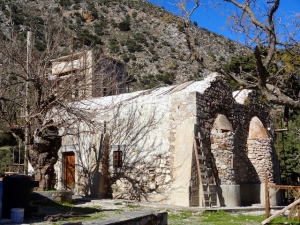
The monastery of Agios Georgios in Vrachasi is located 1km southwest of the village Vrachasi, near Neapolis. The monastery has actively participated in the revolutionary movements against the Turks, during which it suffered tremendous damages.
Read more ...
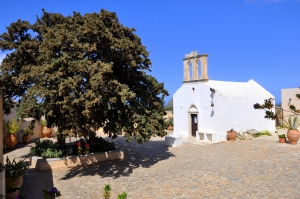
The monastery of Kera Eleoussa is located next to the village Voritsio and belongs to the monastery of Agarathos. The monastery is built on a hill at three different levels, because of the slope.
Read more ...
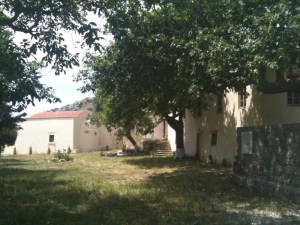
The Monastery of the Agio Pnevma (Holy Spirit) was probably founded in the 12th century and certainly at the end of Venetian rule it was already autonomous and in welfare. On June 15, 1821, the local Turks massacred the monks and burned the monastery.
Read more ...