Frescoed Churches

Crete

Frescoed Churches

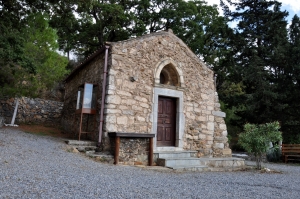
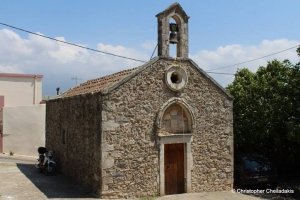
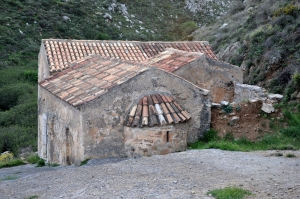
Crete can rightly be described as a vast Byzantine park, with hundreds of churches adorned with remarkable frescoes. Most of these paintings date from the period of Venetian rule, when Byzantine religious tradition continued to flourish on the island and gradually incorporated artistic influences from the West. Together, these monuments illustrate the development of ecclesiastical painting from the early Byzantine period to the renowned Cretan School of icon painting.

Entire regions of Crete, particularly the historical provinces of Kissamos, Selino and Pediada, preserve an exceptionally large number of frescoed churches. Many are small, single-nave rural chapels whose modest exterior gives little indication of the artistic treasures preserved inside. Their walls portray scenes from the life of Christ and the Virgin Mary, figures of saints and hierarchs, representations of the Last Judgement and, occasionally, rare episodes associated with the saint to whom each church is dedicated.

Fewer frescoed churches survive in areas such as the former province of Temenos, around Candia, where prolonged warfare, repeated destruction and the great Ottoman siege of the city caused extensive damage to religious monuments and settlements. Elsewhere, frescoes survived beneath layers of plaster or limewash, which sometimes protected them from deliberate destruction, smoke, humidity and the passage of time.

The scale of this artistic heritage is impressive. In the Topographical Catalogue of the Frescoed Churches of Crete, compiled by the Italian archaeologist and researcher Giuseppe Gerola in the early 20th century, more than 800 frescoed churches are recorded. Many remain scattered throughout the Cretan countryside, forming one of the richest collections of medieval ecclesiastical painting in the Mediterranean.

Saint George Sfakiotis church at Diavaide

Saint George Sfakiotis church at Diavaide

1 1 1 1 1 1 1 1 1 1 Rating 4.38 (4 Votes)
Near Diavaide there is the church of St. George Sfakiotis, bearing frescoes of the 14th century (there is an inscription of 1390). One of the frescoes represents St. George and St. Demetrius on horseback crossing the sea with octopuses, crabs, eels, and lobsters below their legs.

Read more ...

Saint Anthony Church at Avdou

Saint Anthony Church at Avdou

1 1 1 1 1 1 1 1 1 1 Rating 4.00 (2 Votes)
Saint Anthony is located at the western end of Avdou and is a small single-nave vaulted church built in the 13th - 14th century. The church bears frescoes of Emmanuel and Ioannis Fokas. It is the only case in Crete of bicolored frescoes. The painters used only the reddish - brown and blue - lilac colors.

Read more ...

Saint George church at Apostoli

Saint George church at Apostoli

1 1 1 1 1 1 1 1 1 1 Rating 4.00 (2 Votes)
On November 3rd, every year, Cretans celebrate St. George Methystis (i.e. St George that makes people drunk). On that day they first open the barrels and taste the new wine made of the grapes that were collected two months ago. Normally Saint George is celebrated on April 23 every year, but because he was always put in a special place in the hearts of the Greeks they gave him the advantage to be honored twice a year.

Read more ...

Panagia Keralimeniotissa Monastery

Panagia Keralimeniotissa Monastery

1 1 1 1 1 1 1 1 1 1 Rating 4.00 (3 Votes)
Next to Faflagos beach there was the monastery of Agios Prokopios, which was once destroyed by the Arabs. Thus, the monks decided to leave the shore and build (in 855) a new monastery dedicated to Virgin Mary, at a very well hidden place, not visible from the sea. The church of the monastery of Panagia Keralimeniotissa (i.e. Virgin Mary – The Lady of the Ports), as it is called, still stands imperious at the same point near the exit of Xerofarago Gorge.

Read more ...

Church of Panagia at Smilé

Church of Panagia at Smilé

1 1 1 1 1 1 1 1 1 1 Rating 4.00 (3 Votes)
Below the settlement Vrisses at Province Amari we meet the ghost settlement Smilé, which has been abandoned by the mid-20th century. Smilé during the Turkish occupation was inhabited by Ottomans, but nevertheless it retained the Christian church of the Virgin Mary (Panagia), which survives until today in a tragic condition.

Read more ...

Saint Paraskevi church at Galifa

Saint Paraskevi church at Galifa

1 1 1 1 1 1 1 1 1 1 Rating 4.00 (2 Votes)
Near the village Galifa, province Pediada, survives the two-aisled church of Agia Paraskevi and Agios Panteleimon. The temple dates back to the 13th century and bears great frescoes of a provincial painter, in very good condition.

Read more ...

Church of Panagia at Evangelismos

Church of Panagia at Evangelismos

1 1 1 1 1 1 1 1 1 1 Rating 4.00 (2 Votes)
At the village Evengelismos, also known as Muhtari, we meet the Church of the Annunciation of Virgin Mary, after which the village takes its name (Evangelismos means Annunciation). An inscription from ancient Lyktos is embedded in the outer wall of the temple, while the interior bears a few but excellent frescoes of the 14th century.

Read more ...

Also read:

Download Free Premium Joomla Templates • FREE High-quality Joomla! Designs BIGtheme.net