




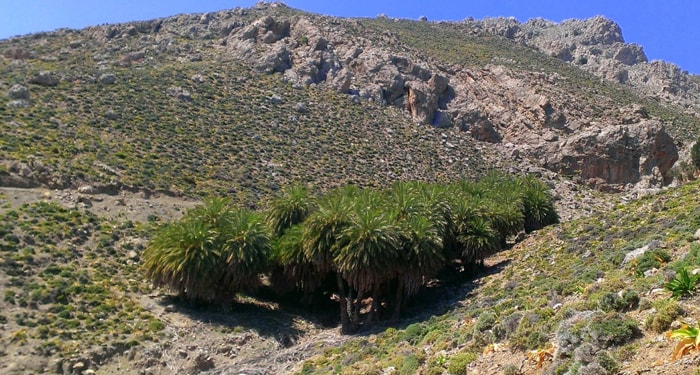
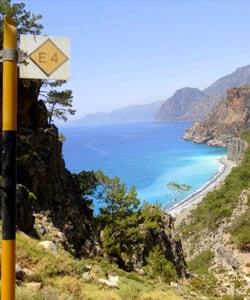





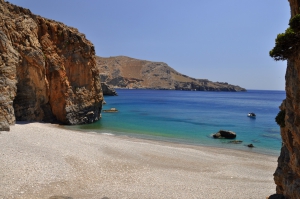
Kaminaki Beach is located 58km south of Heraklion, in the southeastern outskirts of Asterousia Mountains. The surrounding mountains form a purely Cretan landscape, with inaccessible gorges, bare rocks, steep cliffs and remote beaches accessible only on boat. The beach of Kaminaki is formed at the exit of the wild Perivoliano Gorge.

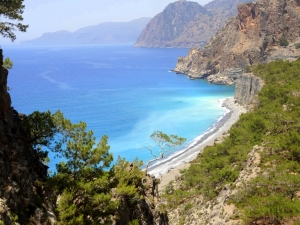
The beautiful beach Domata is located 7km east of Sougia and 58km south of Chania, at position Tseses. The beach is the ending point of the wild and rugged gorge of Klados.
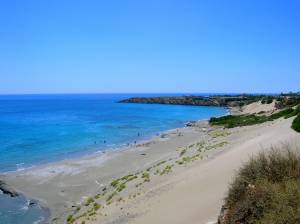
Orthi Ammos is one spectacular sandy and shallow beach, next to Frangokastelo, located 80km south of Chania, at the edge of a big valley with very warm climate. The area is not overdeveloped, in contrary to the touristic area of Frangokastelo.
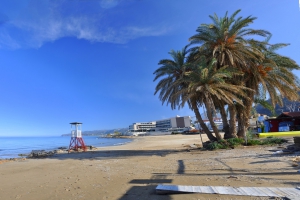
Stalis (or Stalida) is located 30km east of Heraklion, in the midway of Malia and Hersonissos. From a small seaside village set up by the residents of Mohos, Stalis is today a popular tourist resort, which is united with Malia town. The only difference with Malia is that Stalis attracts mainly families and things here are more peaceful.

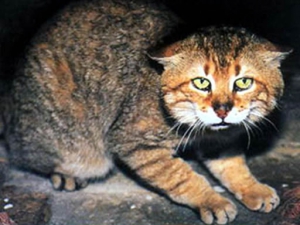
The mysterious wild cat of Crete (scient. Felis silvestris cretensis) or fourogatos is an endemic subspecies of the European wildcat. You may hear some people referring to it as the Cretan Lynx, although it’s not belonging to the same family. It is the only wild feline on the island, which is limited to a small part of Crete.

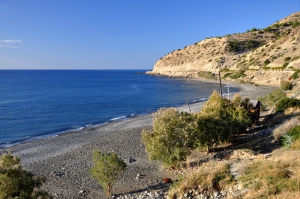
Myrtos is located 13km west of Ierapetra, in the output of a wide valley filled with greenhouses and citrus groves, crossed by the River Kryos. It is a small seaside village, which has experienced a mild form of development in recent years, which fortunately has not altered its traditional style. The village is built on the exit of the imposing Sarakina Gorge, which is worth visiting.
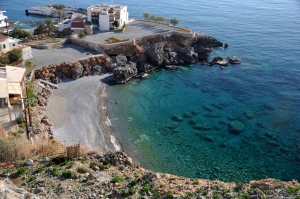
Chora Sfakíon or Sfakia is a small town on the south coast of Chania. It is the capital of the remote and mountainous region of Sfakia, and is a small town of just 278 inhabitants (2001 census). It lies on the south coast near the end of the Imbros Gorge, 74km south of Chania.






- Home
 Beaches
 Nature
 Past
Past Destinations
 Highlights
 West Crete
- Central Crete
- East Crete
- Towns
- Chania Prefecture
- Chania
- Paleochora
- Kissamos
- Georgioupolis
- Chora Sfakion
- Loutro
- Rethymnon Prefecture
- Rethymnon
- Agia Galini
- Plakias
- Spili
- Anogia
- Heraklion Prefecture
- Heraklion
- Hersonissos
- Malia
- Matala
- Agia Pelagia`
- Archanes
- Kokkinos Pirgos
- Lassithi Prefecture
- Agios Nikolaos
- Elounda
- Sitia
- Ierapetra
- Makrigialos
- Palekastro
- Zakros
- Lassithi Plateau
- Get Prepared


