




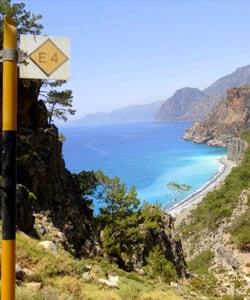
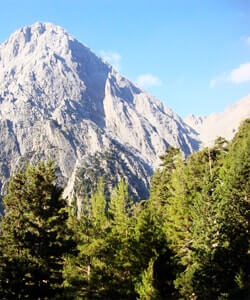





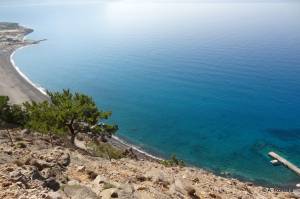
Agia Roumeli is a small secluded village, located 56km south of Chania, on a wide bay shaped at the exit of the Samaria Gorge. Thousands of visitors, descending the gorge, reach this place every day.

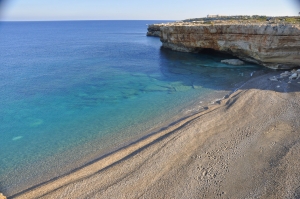
Spilies beach or “Tou Maliou to Riaki” (i.e. Malios’ stream) is located 15km east of Rethymnon city, in a fairly secluded area, just a few kilometers east of Skaleta and west of Geropotamos. It is quite unknown to most locals, though it is very close to the main road that connects Heraklion and Rethymno.
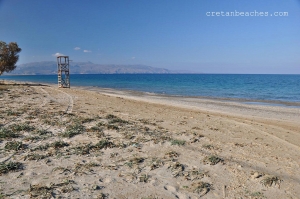
Maleme beach is sandy and the wider area is touristic. Next to the beach you will find all necessary amenities. If you are looking for a remote place to swim, you can find a quieter part of the beach at its west end, next to the old military airport.

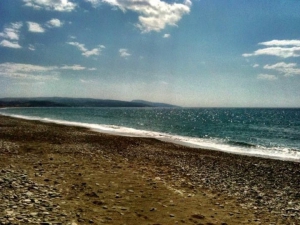
Kokkinos Pirgos (i.e. Red Tower) is located 67km west of Heraklion and close to the town of Tymbaki. The name is taken after the tower that was there and was built with reddish soil. The purpose of this tower at this point is still unknown. It is the seaside village of Timbaki, home of the port of the region and developed touristically.
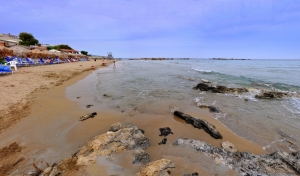
The seaside resort of Kalamaki is located 6km west of Chania and is the seaside part of Galatas village. Galatas is located in a fertile plain with citrus and olive groves.

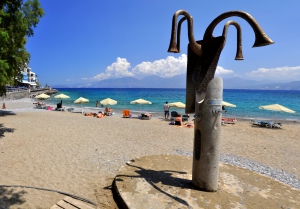
In front of the big tamarisk trees of the square Kitroplatia there is a small beach with sand and pebbles in places. Here you will find umbrellas and showers. Next to it there are many options for accommodation, food and drink. It is a perfect choice for children and anyone looking for a beautiful and clean beach, close to all amenities of a city.
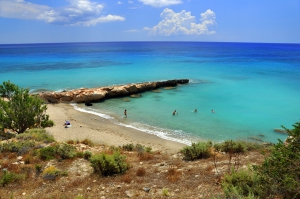
In Xerokampos the landscape is arid and truly eerie, characterized by bare rocks and steep mountains. The vegetation is limited to bushes and there are some places with a few olive groves. A small tourist destination has started developing during the last years, especially after the roads were paved with asphalt.

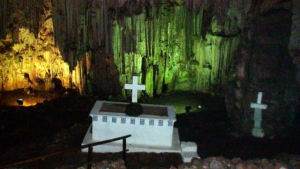
The Cave of Melidoni is located approximately 1,800 meters northwest of the homonym village of Mylopotamos. Gerontospilios, as also called, is very important due to the archaeological findings, some of which are exhibited in the Archaeological Museum of Rethymnon. Moreover, the cave has played a tragic role in the history of Cretan revolution against the Turks, in 1824.
Also read:




- Home
 Beaches
 Nature
 Past
Past Destinations
 Highlights
 West Crete
- Central Crete
- East Crete
- Towns
- Chania Prefecture
- Chania
- Paleochora
- Kissamos
- Georgioupolis
- Chora Sfakion
- Loutro
- Rethymnon Prefecture
- Rethymnon
- Agia Galini
- Plakias
- Spili
- Anogia
- Heraklion Prefecture
- Heraklion
- Hersonissos
- Malia
- Matala
- Agia Pelagia`
- Archanes
- Kokkinos Pirgos
- Lassithi Prefecture
- Agios Nikolaos
- Elounda
- Sitia
- Ierapetra
- Makrigialos
- Palekastro
- Zakros
- Lassithi Plateau
- Get Prepared


