





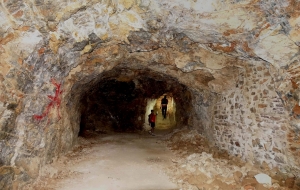
Pillboxes
Pillboxes, fortified fighting positions and artillery emplacements dating from the Second World War can still be found in many parts of Crete. Most of these installations were constructed or used by German and Italian forces during the occupation to observe and defend strategically important locations across the island.
Pillboxes were usually small structures built of reinforced concrete or stone, with narrow openings through which machine guns and other light weapons could be fired. Their thick walls protected the crews from enemy fire and shell fragments, while many were camouflaged to make them difficult to identify from a distance.
Circular or semicircular foundations for larger artillery pieces also survive on remote capes and close to harbours, airfields and coastal passages. These installations formed part of organised coastal defences and were intended to control maritime routes and repel possible naval or amphibious attacks.
The widespread presence of pillboxes and artillery positions across Crete reflects the strategic importance that the Axis powers attached to the island for the control of the eastern Mediterranean.


Aptera German pillboxes

German bunker at Spatha


