








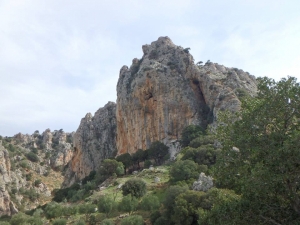
Above the steep gorge of Adrianos in the province of Mirabello rises the rocky outcrop of Fortezza. This inhospitable, steep and naturally fortified rock was chosen by the deposed Minoans to form a small town during the so-called Dark Period.
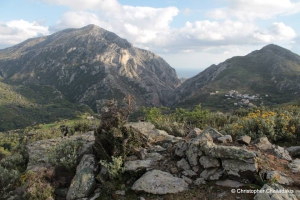
High above the village Frati in South Rethymnon and north of the settlement we meet the Fratiani Kefala hill. This is a very steep hill with cliffs at most of its sides, which has very good views to the surrounding area and was used as a shelter in tough historical times. Kefala was chosen as a place for settling the Minoans during the dark era that followed the Minoan disaster, i.e. between 1200-800BC.
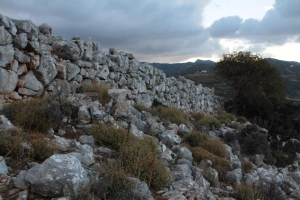
At (E)llinoperamata of Heraklion and at a short distance from the beach of Ammoudara, you will find the stone steep hill of Kastrokefala. The pyramid-shaped hill raises to an altitude of 355 meters from the sea level and has breathtaking views of the sea, the settlement of Rogdia, the once sacred pyramid mountain of Stroumboulas and the fertile plains of Heraklion.
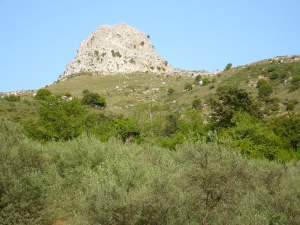
Karfi (i.e. nail) is a big rocky hill on a top of the Diktaean Mountains, with incredible views to the north coasts of Crete and Lassithi Plateau, near the Monastery of Kera Kardiotissa. Atop of it, at an altitude of 1200m, traces of a Minoan peak sanctuary have been found.
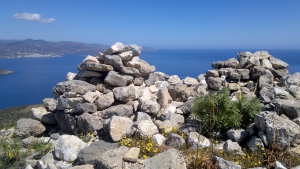
Atop a steep peak, naturally fortified and close to Kalo Chorio, we meet the ruins of the Late Minoan settlement of Vrokastro. This settlement belongs to the dozens of settlements of the darkest period of Crete (1200BC), after the destruction of the Minoan civilization, when settlements were founded on the most inhospitable and inaccessible peaks of the Cretan mountains.
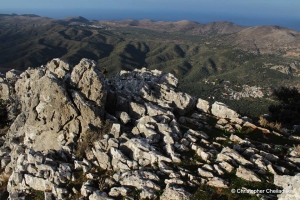
During the dark period of the post Minoan times in Crete many settlements were built on remote mountainous areas, mainly in eastern Crete (Historians call it dark period because they still don’t know the exact reason for this movement). The settlements were built on hard to access, naturally fortified places so as to protect their inhabitants from enemy attacks.
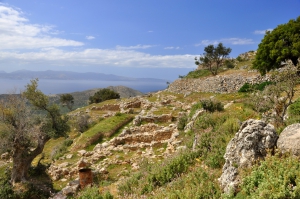
The Late Minoan settlement of Azorias is situated on a hill with two peaks 1km southwest of the village Kavoussi. The town flourished in the Archaic Period (7th - 5th century BC).
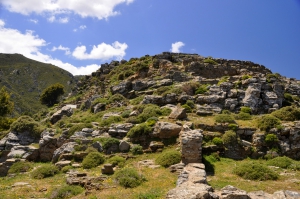
The Late Minoan settlement of Kastro is located on a steep hill, 3km south of Kavoussi, which is accessed via an ancient trail. The view of the bay of Mirabello, the wild gorge of Mesonas, Malavra mounts and the island of Psira are unique.
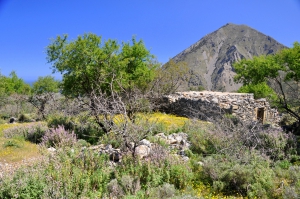
The Late Minoan settlement of Vrondas is located in an elevated position, 2km south of Kavoussi. It was inhabited during the setting of the Minoan Civilization by Minoans who moved to the peaks of the Cretan mountains so as to protect themselves from the Dorians who occupied the island.
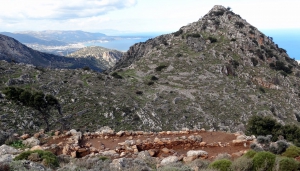
Anavlohos is rocky and steep hill east of the gorge of Selinari. At this inhospitable place no traces of post-Minoan settlement (9-6th century BC) with tanks, walls, tombs and sanctuary have been identified.
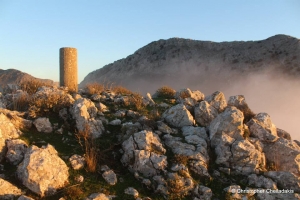
High above the village of Mirthios at Province Agios Vasilies rises the peak Kyrimianos at an altitude of 805 meters. It is an extremely rough and steep place, without trees except for some ancient cypress trees that have been left there to remind us that the mountain range that covers the valley of Agios Vasilios (Kouroupa) is the geological continuity of the White Mountains.
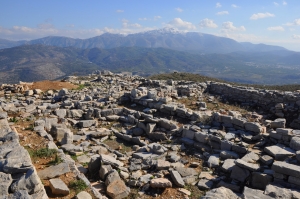
At the top of the rocky hill of the Prophet Elijah (Profitis Ilias) near Smari, at an altitude of 590m, there are the ruins of a citadel with a strong defensive wall. The place has panoramic views across the fertile planes of Kasteli and Smari. According to the archaeologist Hadjivallianou, the citadel was the actual site of ancient Lyttos mentioned by Homer. The city was inhabited from 1800 BC till 630 BC, before being abandoned by its inhabitants.
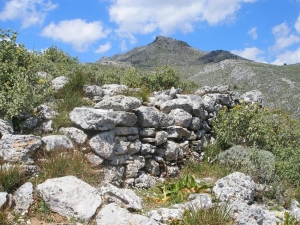
Above the ruined village of Kolokasia in the province of Sfakia, on the southeast side of Asfendou gorge, stands the steep rock Kastri. As evidenced by traces of buildings and part of a fortification wall, Kastri probably was a town built during the Dark Period, just after the collapse of Minoan civilization in the 12th century BC.
Also read:
- Home
 Beaches
 Nature
 Past
Past Destinations
 Highlights
 West Crete
- Central Crete
- East Crete
- Towns
- Chania Prefecture
- Chania
- Paleochora
- Kissamos
- Georgioupolis
- Chora Sfakion
- Loutro
- Rethymnon Prefecture
- Rethymnon
- Agia Galini
- Plakias
- Spili
- Anogia
- Heraklion Prefecture
- Heraklion
- Hersonissos
- Malia
- Matala
- Agia Pelagia`
- Archanes
- Kokkinos Pirgos
- Lassithi Prefecture
- Agios Nikolaos
- Elounda
- Sitia
- Ierapetra
- Makrigialos
- Palekastro
- Zakros
- Lassithi Plateau
- Get Prepared


