








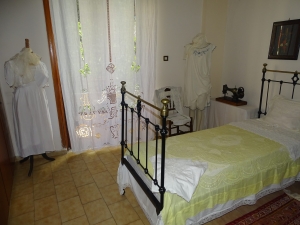
The Museum - Research and Study Center of the Asia Minor Culture in Chania was inaugurated in 2019 by the Association of Asia Minor of Chania "Agios Polykarpos" in memory of Anna Nikolidaki, in a building granted by the monastery of Agia Triada Tzagarolon.

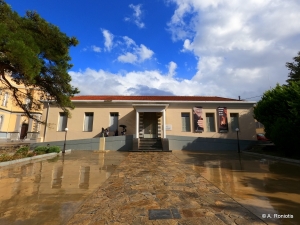
The Folklore and Historical Museum of Neapolis is housed since 2016 in the building of the First Gymnasium of Neapolis and is managed by the Cultural Folklore Society of Ano Mirabello. Its exhibition is composed of relics of the cultural tradition from the province of Mirabello that depict the everyday life after the 19th century.
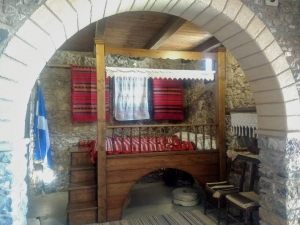
The Historical and Folklore museum of Kritsotopoula's house is located in the village of Kritsa, at Mirabelo, in the original house of Rodanthi (Kritsotopoula), reviving her amazing story. The folklore exhibition includes objects from the everyday life.
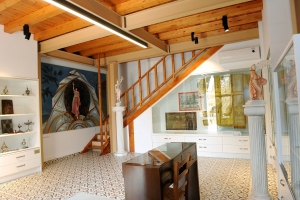
The History of Burial is a very special venue in Heraklion city. It is housed in the two-storey ossuary of the old cemetery of Saints Constantine and Helen in Heraklion, which was built in 1890.

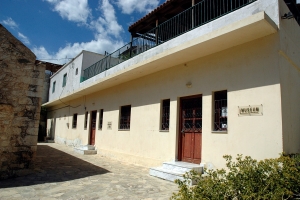
The Archaeological and Folklore Collection of Myrtos operates since 2001 and hosts mainly the collection of George Dimitrianakis. The archaeological exhibition includes some of the findings of the archaeological sites of Pirgos, Fournou Korifi, but also some other places of the region.
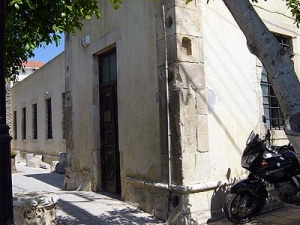
The archaeological collection of Ierapetra began to be formed in the late 19th century, when its antiquities-loving residents founded the Educational Association of Ierapetra, whose purpose was to gather and preserve the region’s antiquities, as well as to create a museum collection.
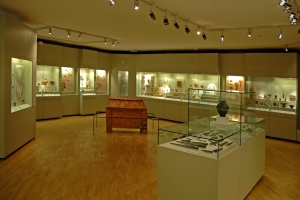
The Archaeological Collection of Malevizi exhibits about 500 ancient objects, dating all from the seasons of Cretan antiquity. The majority of the exhibits come from the collection of Metaxas, which was maintained by Nikolaos Metaxas from 1959 to 1997.
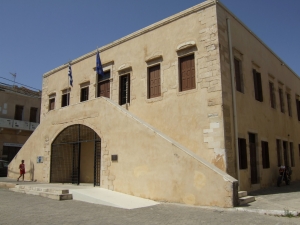
The archaeological Museum of Kissamos was founded in 2005 and is housed in the Venetian - Turkish monument known as Diikitirio ("Headquarters"). Its exhibits provide a longitudinal picture of the region's history from prehistory to late antiquity, i.e. the early Christian Times.
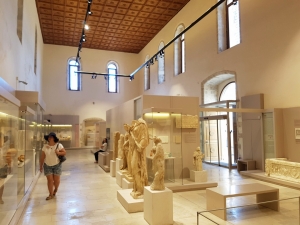
The Archaeological Museum of Rethymnon is temporarily hosted in the basilica of Agios Fragiskos (St Francis) in the old town of Rethymnon. It hosts exhibits from various excavations around the prefecture of Rethymnon which represent all periods from the Neolithic Age to the Roman period.
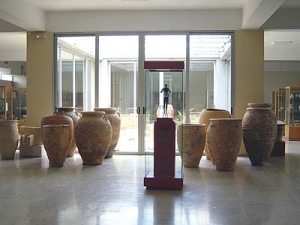
The Archaeological Museum of Sitia operates since 1984 and hosts the most important archaeological finds from eastern Crete (from Sitia, Palekastro, the islets of Mochlos and Psira, the necropolis of St. George, the palace of Zakros, the Hellenistic town of Xerokambos, Ziros, Makrigialos, Lefki island and ancient Itanos).
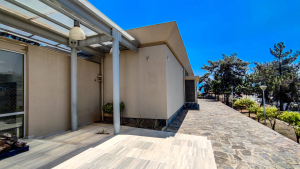
The Archaeological Museum of Agios Nikolaos was founded in 1970 and houses findings from the Neolithic Age, the Minoan Era and the Graeco-Roman Times from the Lassithi prefecture.
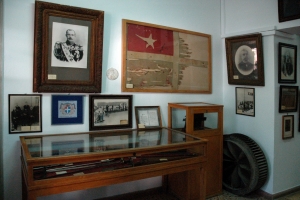
The Historical Archive of Crete was established in 1920 in Chania and operated informally until 1928, when it was recognized as a public entity. Since 1943, it is a Public Service and operates as an annex to the General State Archives.
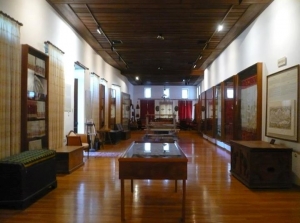
The Historical and Folklore Museum of Rethymnon was founded in 1974 and is housed in a Venetian building (17th century) that is a wonderful example of urban residence of the last phase of the Venetian occupation of Crete, in Renaissance.
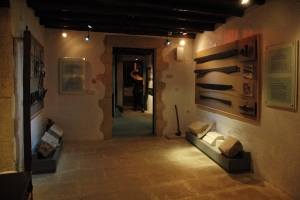
The museum was founded in 1968 and was officially opened in September 1993. It is housed in a building that is a typical sample of the local architecture and is housed on two floors: the ground floor with a balcony, internal yard, an arched house with auxiliary rooms and a mezzanine.
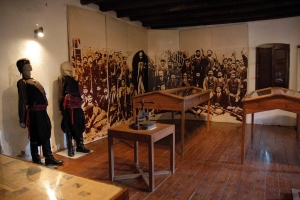
The historic village of Therisso was a seat of the Cretan rebels in 1905, under Eleftherios Venizelos, the most important Politician of Modern Greece. The headquarters of the Movement of 1905 house a relevant museum.
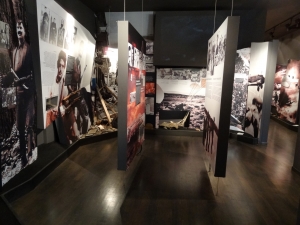
The Historical Museum of Crete was founded in 1953 by the Society of Cretan Historical Studies. It is housed in a beautiful neoclassical building that was the home of Minos Kalokerinos and a courtesy of the Kalokerinos family Institute.
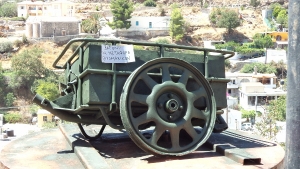
The Historical Museum of Vorizia "Spilios" is located at the village Vorizia of Heraklion prefecture and hosted in a cave (spilios) above the village. The cave, until the foundation of the museum, was used for cheese production. The museum was inaugurated on August 16, 2014.
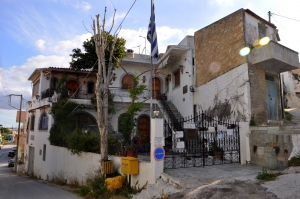
Argirakis War and Ethnological Museum houses a very important war collection of its founder, Michael Argyrakis, and is housed at Episkopi village.
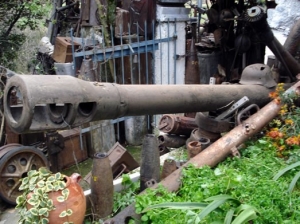
The private museum belongs to Georgios Hatzidakis who met the suffering of the German Occupation.After the war he started with a passion to collect every vestige of the battle to succeed as characteristically telling himself to keep alive the glorious memory of our ancestors and to stimulate younger to deal with their history.
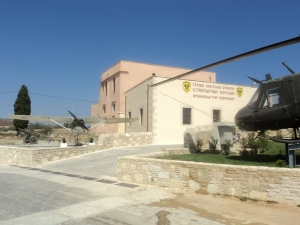
The collection of the Military Museum of Rethymnon at village Chromonastiri includes military uniforms, weapons of different eras in Greek history, medals, historical relics since 1821 and later, an exhibition dedicated to the Macedonian Struggle, library and meeting rooms.
Also read:
- Home
 Beaches
 Nature
 Past
Past Destinations
 Highlights
 West Crete
- Central Crete
- East Crete
- Towns
- Chania Prefecture
- Chania
- Paleochora
- Kissamos
- Georgioupolis
- Chora Sfakion
- Loutro
- Rethymnon Prefecture
- Rethymnon
- Agia Galini
- Plakias
- Spili
- Anogia
- Heraklion Prefecture
- Heraklion
- Hersonissos
- Malia
- Matala
- Agia Pelagia`
- Archanes
- Kokkinos Pirgos
- Lassithi Prefecture
- Agios Nikolaos
- Elounda
- Sitia
- Ierapetra
- Makrigialos
- Palekastro
- Zakros
- Lassithi Plateau
- Get Prepared


