







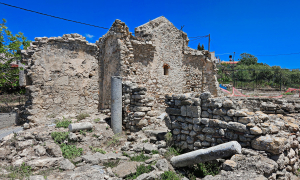
The ruined church of the Holy Trinity (Agia Triada) is located within the boundaries of the settlement of Ligortynos in the province of Monofatsi. Its use is placed from the post-Byzantine period to the Venetian period, and more specifically between the 11th and 15th centuries, with most findings dating to the 12th and 13th centuries.
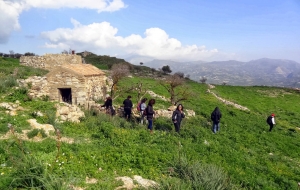
The church of Saint Anastasia is located in the southwestern part of the castle and was built, according to Gerola, on the ruins of two ancient cisterns. Due to its small size, the fragmentary iconographic program, dated to the middle of the 14th century, bears only a few frescoes.
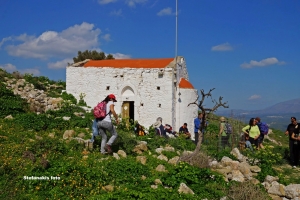
The church of the Dormition of the Virgin Mary or Pano Panagia is located in the northeast part of the castle and bears very ruined frescoes of 1467 painted by Georgios Pelegris. The painter is probably the same with the homonymous painter who worked in Chandakas (today's Heraklion) from 1456-1487.
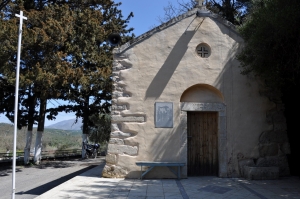
Next to the small dam of Kera in the village Ini we meet the picturesque church of Panagia Kera dedicated to Panagia Zoodochos Pigi (Life Giving Spring). The temple bears no frescoes inside. Next to the temple there is a small cave with a spring of water, which is considered holy.
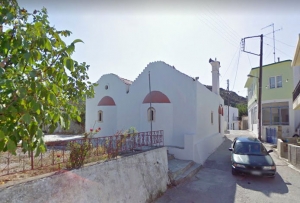
The church of Panagia in Choumeri, province Monofatsi is dedicated to Panagia (Virgin Mary) and has been restored. During restoration works, part of the 15th-century frescoes was destroeyd. Specifically, the original single-nave church was extended to the west by the addition of an aisle to the south.
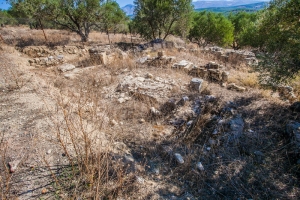
The Early Christian Basilica of Ini is located among olive groves on the site Ellinika, southeast of Kefala hill. It is a three-aisled basilica dating back to the 6th century and because of its large size (32m x 18m) it is believed to have been the seat of the Diocese of Arcadia./p>
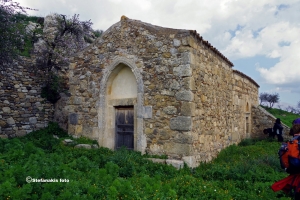
The temple ofPresentation of Mary or Kato Panagia is located near the southern part of the castle and is a small single-nave church built in two phases. The oldest, probably of the first half of the 14th century, belongs to its eastern part, and preserves little traces of frescoes of this period.
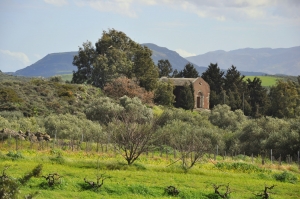
The church of Zoodohos Pigi (Life Giving Spring) is located a few meters south of Lake Damania and next to the local cemetery. The church bears frescoes of 1399 and in its current form comes after restoration works that started in 1979, as it was ruined until then.

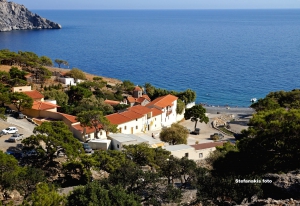
Koudoumas monastery is located at the exit of Katarraktis gorge in Asterousia Mountains, 80km south of Iraklion and only 40m from a beautiful beach. It is one of the most secluded monasteries of Crete, as access from Heraklion requires 2.5 hours. There is a safe 24km long dirt road that starts from the village Sternes (accessible from Charakas), at an altitude of 1000m near the peak Kofinas (1231m).
\
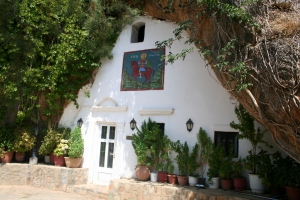
Agios Nikitas is located 65km south of Heraklion, on the east side of the wild and arid Asterousia Mountains. The monastery was originally a hermitage for monks from the monastery of Koudoumas. It is built on a high hill with breathtaking views to the Libyan Sea. The church of the monastery, dedicated to St. Nikitas (feast September 15), is built in a cave and dates back in 1640.
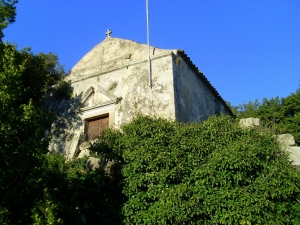
The small single-nave church of St. Anthony Eunuch is well hidden in a wooded location of Agios Thomas, next to Domaine Stratakis. The temple dates back from the Venetian Era and bears no frescoes.
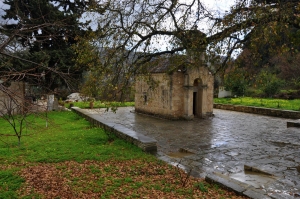
The church of Panagia Kardiotissa is located at the green position Panagia, close to Agios Thomas village. It overlooks the river Axedianos and in winter wateralls are formed at the edge of the churchyard, making it a unique landscape.
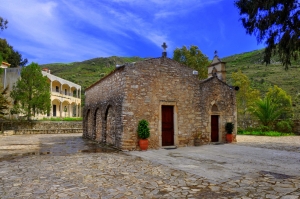
The church of Panagia Almyri (Salty Virgin Mary) belongs to the parish of Megali Vrissi and is one of the largest pilgrimages of Messara Plain. Especially, on the celebration day of the church (feast of Ascension) hundreds of people flock from all corners of Crete.
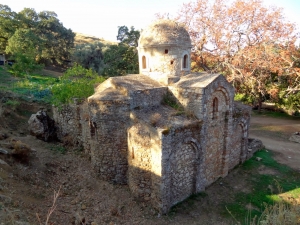
The church of St. John is located at a wooded location amid oaks near the village Roukani and is one of the most historical Byzantine monuments of Crete. The church dates back from the 11th-12th century and possibly operated as a monastery dedicated to St. John the Theologian. Today the church is dedicated to St. John the Baptist.
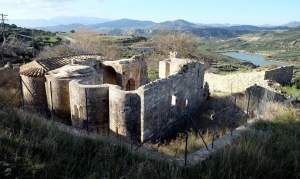
The ruined village Mikri Episkopi (i.e. Small Diocese) is located near Partira and was the seat of the Diocese of Arcadia. As expected, the village hosted an imposing temple, which has now collapsed. Columns and walls testify the importance of the temple.
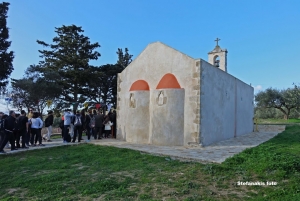
The cemeterial temple of St Nikolaos and St Charalambos at MIliarisi is very special because it is dikonchos (double-niche), a type that is rare. The type of dikonchos church differs from the two-aisled as there is a common roof for both aisles, without interference of wall between the aisles.
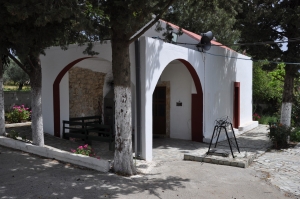
The church of Panagia at village Arkalohori is dedicated to the Birth of the Virgin. While it seems a newer church, it is Byzantine and under the plaster covering its walls it probably hides exquisite frescoes. There are some parts with frescoes that have been revealed.
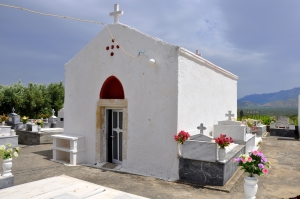
The cemeterial temple of the village Arhontiko at province Monofatsi is dedicated to the Assumption of Virgin Mary. While the exterior does not look interesting, the interior impresses the visitor with the Byzantine frescoes in relatively good condition.
According to an inscription, the frescoes date back from 1352 and were painted by Theodosios Galinos.
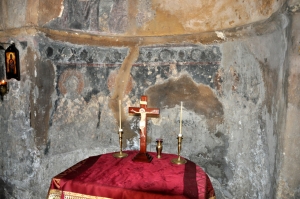
The church of Panagia (Life Giving Fountain is located at position Prinias, near village Arhontiko at province Monofatsi. The church, very old and small, bears traces of frescoes dating back to the 14th century, while you can still see the embedded vessels used to improve acoustics (sound).
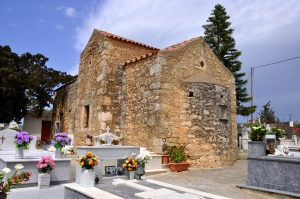
The funerary temple of Archangel Michael at Arkalohori is a cruciform temple with the main aisle being lower than its vertical aisle. Also there is a narthex with a dome. The church bears frescoes of the 13th century (the frescoes in the narthex date back from the 14th century).
- 1
- 2
Also read:
- Home
 Beaches
 Nature
 Past
Past Destinations
 Highlights
 West Crete
- Central Crete
- East Crete
- Towns
- Chania Prefecture
- Chania
- Paleochora
- Kissamos
- Georgioupolis
- Chora Sfakion
- Loutro
- Rethymnon Prefecture
- Rethymnon
- Agia Galini
- Plakias
- Spili
- Anogia
- Heraklion Prefecture
- Heraklion
- Hersonissos
- Malia
- Matala
- Agia Pelagia`
- Archanes
- Kokkinos Pirgos
- Lassithi Prefecture
- Agios Nikolaos
- Elounda
- Sitia
- Ierapetra
- Makrigialos
- Palekastro
- Zakros
- Lassithi Plateau
- Get Prepared


