








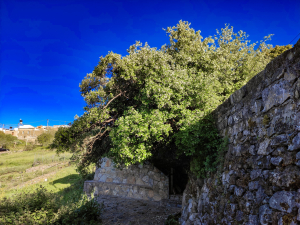
The village of Astyraki in the province of Malevizi takes its name from the ancient styrax (locally called astyrakas), a centuries-old tree that can still be found today in the courtyard of the church of Saint Constantine and Helen.

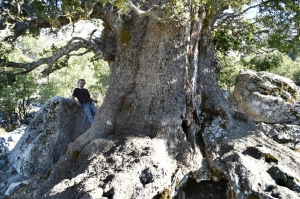
One of the oldest, if not the oldest, oak trees in Crete is located at position Theriolakos in Katharo Plateau. The perimeter of the giant tree on the ground level reaches 24m and one meter above the ground the it reaches 9m. Its characteristic feature is the tremendous hollow the trunk forms, which can fit many people comfortably.
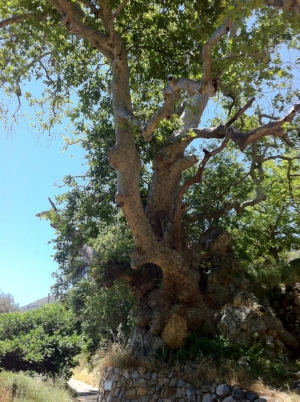
Below this plane tree, that has been declared as nature monument, the 99 Holy Fathers settled after arriving to Crete from Egypt, Cyprus and Turkey. This is located inside the monastery if the 99 Holy Fathers. They say that its branches form 99 crosses.
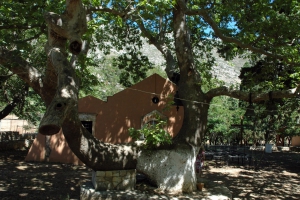
This plane tree forms a small oasis in the monastery of Saint John Giona, contrary to the arid and eerie landscape around. It is said that a weird phenomenon takes place here, as the leafs of the plane tree are from the other side than usual.
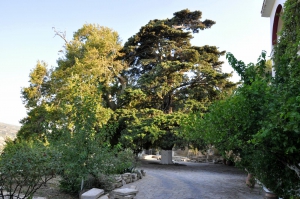
The monastery of Gorgolaini hosts two ancient trees that have been declared a nature monuments by the Greek state: a cypress and a plane tree. Both are located at the end of the garden, one next to the other.
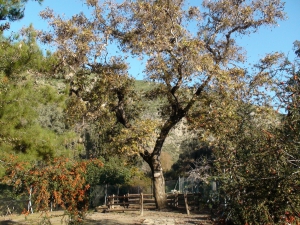
Crete hosts an extremely rare and endemic variety of plane trees (Platanus orientalis var. Cretica) with about 50 trees being reported throughout the island. The characteristic feature of this variety is that it is evergreen, unlike the common deciduous plane trees.
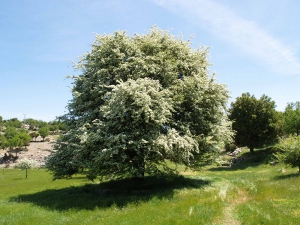
Zominthos was a small Minoan town at Psiloritis Mount with a sacred spring, which was located close to the Ideon Andron Cave and Anogia town. Besides the religious importance of the town for the ancient Minoans, today the archaeological site of Zominthos hosts a second attraction. This is a special tree that has been declared a protected monument of nature from the Greek Ministry of Culture.
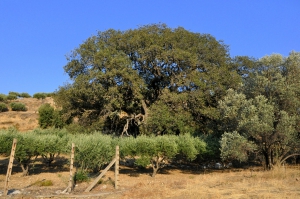
The oak of Madalenis or Manalenis is located near the village Korfes. This centenarian oak has been declared a natural monument. It is said that under the branches, that today touch the ground due to their size, assemblies of the rebels in the area took place during the Greek revolts.
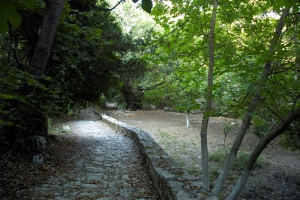
This plane tree is located in the Roman cemetery of Ancient Lappa and below the chapel of Five Virgins. Below it there is a cool spring with five taps, symbolizing the Five Virgins that were killed here by the Turks. This plane tree has been declared as a natural monument.
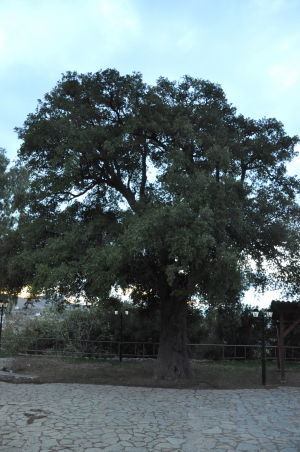
The oak tree of Ishmael or Smailis is located near the village Mathia. Under the tree, camped the men of Ismail Selim Pasha on May 19, 1867, before taking part in the great battle of Lassithi Plateau (21-29 May).
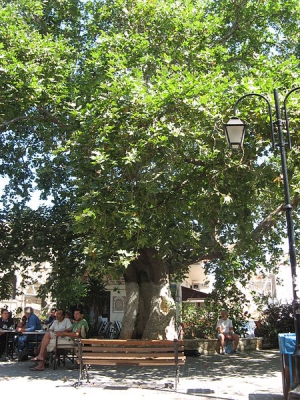
Below this plane tree, that has been declared as nature monument, the 99 Holy Fathers settled after arriving to Crete from Egypt, Cyprus and Turkey. This is located inside the monastery if the 99 Holy Fathers. They say that its branches form 99 crosses.
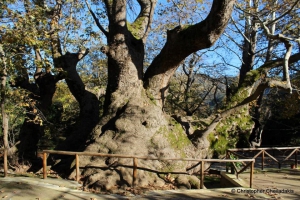
In Vlatos village, district of Kissamos, we meet one of the many huge plane trees of Crete. This specific legendary plane tree has been declared a nature monument by the Greek State.

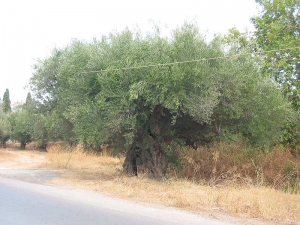
The olive tree is located on the right side of the road heading from Sitia to Piskokefalo and locals call it fourkolia, i.e. the olive tree where the Christians were drowned by hanging by the Turks. Unfortunately, the tree has been damaged severely due a car crash.
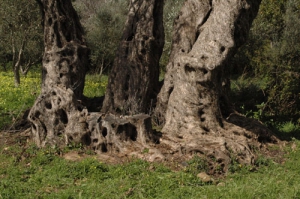
The olive tree at position Kardamiana, near Genna, has been declared by the Association of Cretan Olive Municipalities as a natural monument due to shape and relief trunk. Its variety is called throumbolia and is grafted on a rootstock of a wild olive tree.
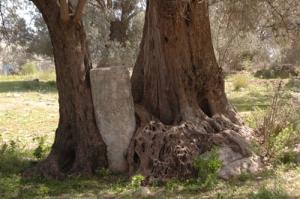
Among the villages and Agii Deka and Mitropoli there are the ruins of ancient Gortyn. Gortyn was the largest and most populous city of Crete during the Roman era. At the same place we meet an important monument of nature. This is the monumental grove of Gortyn occupying a huge area and has centuries-old olive trees. A walk through the historic grove contains many sites of archaeological interest and natural beauty. The tour starts on the main street to Mires. Everywhere around we find piles of stones that once were parts of buildings, scattered fragments of ancient walls, scattered pieces of pottery and fallen pillars.
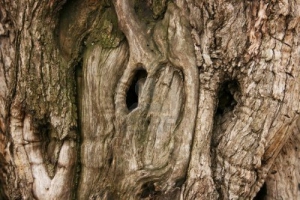
This olive tree has been declared by the Association of Cretan Olive Municipalities as a natural monument because of shape, relief trunk and its connection with historical events. It is located at position Anisaraki, by Kantanos, where there are dozens of other ancient olive trees. Its variety is called mastoid and is grafted on a rootstock of a wild olive tree.
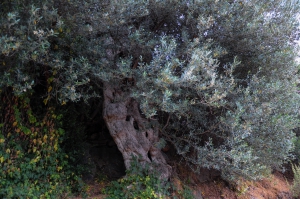
The olive tree of Mathena has been declared as monumental by the Association of Cretan Olive Municipalities as a natural monument due to shape and relief trunk, forming a cave with its adjacent rock.
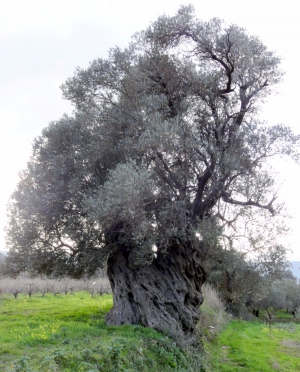
The olive tree has been declared by the Association of Cretan Olive Municipalities as a natural monument due to its relief trunk. Its variety id called hontrelia and is grafted on a rootstock of a wild olive tree. The tree belongs to the Church and at a height of 0.8m it has 4.2m diameter and 10.6m perimeter, while its base has 4.5m diameter and 12.1m perimeter.
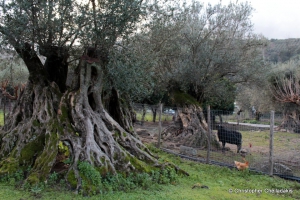
At the center of Palea Roumata in Chania there is one the officially characterized monumental olive trees in Crete. The 3000 year old olive tree is surrounded by several other very old trees as well. The perimeter is 10.50 and there is a huge hole, where the locals had hidden weapons during the Turkish Era, while in 1941 a committee against the Germans met in the tree. This is the tree where the guns that were used in the battle of Anavos were also hidden (1941).
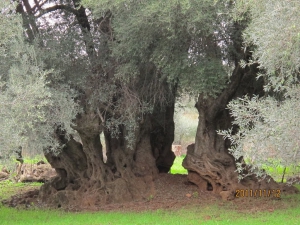
The olive tree has been declared by the Association of Cretan Olive Municipalities as a natural monument due to huge size and its location near the postminoan settlement of Kolydra. Its site is named Lakkos and hosts numerous ancient trees, with this specific tree being 3000 years old.
Also read:
- Home
 Beaches
 Nature
 Past
Past Destinations
 Highlights
 West Crete
- Central Crete
- East Crete
- Towns
- Chania Prefecture
- Chania
- Paleochora
- Kissamos
- Georgioupolis
- Chora Sfakion
- Loutro
- Rethymnon Prefecture
- Rethymnon
- Agia Galini
- Plakias
- Spili
- Anogia
- Heraklion Prefecture
- Heraklion
- Hersonissos
- Malia
- Matala
- Agia Pelagia`
- Archanes
- Kokkinos Pirgos
- Lassithi Prefecture
- Agios Nikolaos
- Elounda
- Sitia
- Ierapetra
- Makrigialos
- Palekastro
- Zakros
- Lassithi Plateau
- Get Prepared


