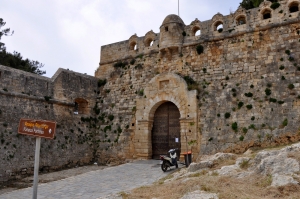
The history of Rethymno is closely connected with the successive fortifications that protected the city, from the Byzantine Castell Vecchio and the Venetian city walls to the imposing Fortezza.
The area of modern Rethymno was inhabited as early as the Late Minoan period, while the ancient city of Rhithymna later developed here. During Byzantine times, the settlement contracted and was fortified around Paleokastro Hill. This early defensive enclosure was subsequently known to the Venetians as Castell Vecchio, meaning the Old Castle.
Following the establishment of Venetian rule, Rethymno acquired particular importance because of its position between Chania and Heraklion. The Venetians developed the small bay of Mandraki, east of the hill occupied today by the Fortezza, creating a harbour for merchant vessels and naval galleys sailing along the northern coast of Crete.
The new city gradually developed around this harbour. Rethymno became the administrative centre of the surrounding district and the seat of the Venetian rector. A dynamic Greek urban community also emerged, including families of the old Byzantine aristocracy known as the Archontoromaioi. According to the census of 1583, the Greek population considerably outnumbered the Venetian community.
The earlier medieval fortifications, recorded from the beginning of the 14th century, had been damaged by earthquakes and could no longer protect the expanding city. The raid carried out by Hayreddin Barbarossa in 1538 further demonstrated the urgent need for a new defensive enclosure.
In 1540, the Venetian authorities decided to surround the city with new landward walls. Their design followed the principles of Renaissance military architecture associated with the work of the distinguished Veronese architect Michele Sanmicheli. Construction continued for approximately three decades, and the new fortifications were completed around 1570.
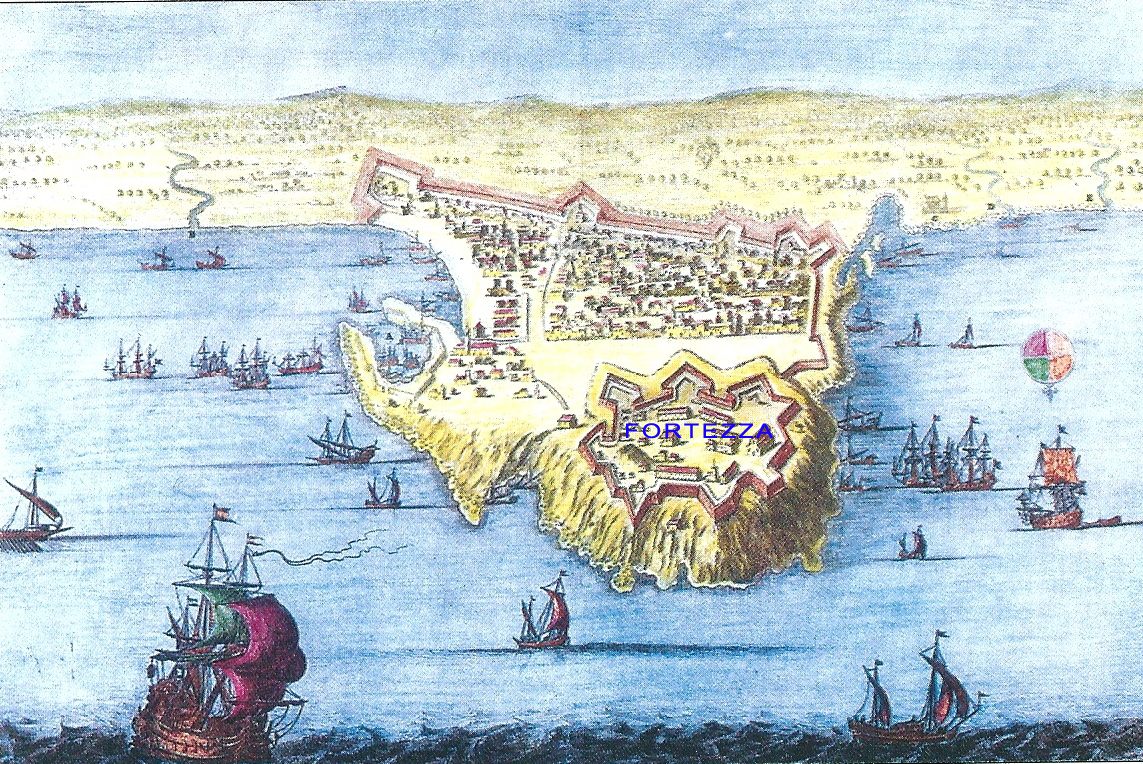
The landward wall, approximately twelve Venetian feet thick, began at the eastern sandy shore near the Sabionera or Santa Barbara Bastion and extended westwards to the foot of Paleokastro Hill. A deep defensive moat ran in front of it, while the seaward side of the city remained largely unfortified.
The enclosure had three principal entrances. The most important was the Guora Gate, also known as the Great Gate, which still survives at the beginning of Ethnikis Antistaseos Street. The Gate of the Sand stood to the east, near the Santa Barbara Bastion, while the Porta dello Squero was located on the western side, opposite the present Municipal Garden. The wall was reinforced by several bastions, including those of Agia Paraskevi and Kallergis. The Gate of Agios Athanasios was later opened near the Kallergis Bastion.
The principal weakness of the fortifications was the absence of a strong wall along the seafront. In 1571, the Ottoman corsair Uluç Ali landed with his forces, entered the city with relatively little resistance and set it on fire. The destruction demonstrated that the newly completed walls could not adequately protect the inhabitants from an organised assault.
Following the raid, the Venetians decided to construct a more powerful fortress on Paleokastro Hill. The Fortezza was founded in 1573, and its principal construction works were completed by about 1590. It was intended to provide a secure refuge for the population during an attack, although its limited size made it impossible to house the entire city permanently.
Over the following centuries, most sections of the landward walls were demolished or absorbed into the expanding modern city. The Guora Gate is their most important surviving remnant, while the Fortezza continues to dominate the skyline above the Old Town of Rethymno.