Crete’s varied landscape, soils and Mediterranean climate support an exceptionally rich flora. Wild greens and aromatic plants hold an important place in the Cretan diet, especially from autumn to spring, when rainfall renews the island’s vegetation. Not every plant found on Crete is endemic: many species grow throughout the Mediterranean, while others are found only on the island or are particularly closely associated with it.
Wild greens traditionally gathered for Cretan cooking include stamnagathi, wild chicories, golden thistle, amaranth, sow thistle and many other seasonal plants. Depending on the species, they may be served boiled with olive oil and lemon, added to pies, omelettes, salads and stews, or cooked with meat and snails. Knowing how to identify, select and combine them is part of a tradition passed down through generations.
Aromatic plants are equally important. Oregano, thyme, sage, savory, marjoram, mint, rosemary and wild fennel are widely used in cooking and herbal infusions. Many have also been used in traditional folk remedies. These traditional practices form part of Crete’s cultural heritage, but they should not be regarded as a substitute for professional medical advice.
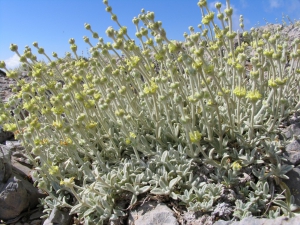
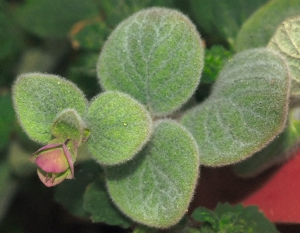
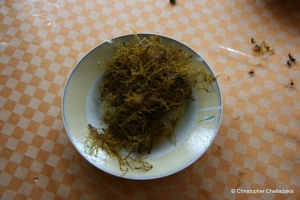
Among the island’s best-known plants are endemic dittany of Crete (Origanum dictamnus) and malotira (Sideritis syriaca), the characteristic mountain tea of Crete. Several aromatic plants are now cultivated commercially, helping to reduce the pressure caused by uncontrolled collection from wild populations.
Gathering wild plants requires knowledge and care, as some edible species resemble poisonous ones. Never consume a plant unless it has been identified with certainty, and avoid gathering near busy roads, sprayed farmland or polluted areas. Protected species and natural populations must also be respected: collect only small quantities, never uproot the plants and avoid damaging their habitat.