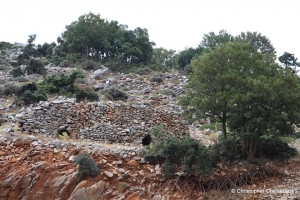
A mitato, plural mitata, is a small domed stone building found in the mountains of Crete, particularly on Mount Psiloritis and in the White Mountains. It is one of the most characteristic examples of Cretan pastoral architecture and is closely associated with the island’s livestock-farming and cheesemaking traditions.
Mitata are constructed entirely from carefully selected stones, without mortar or any other binding material. Successive courses of stone gradually project inwards until they form a stable dome. This corbelled building technique resembles the method used in several ancient domed structures, including the tholos tombs of Minoan Crete. The similarity concerns the architectural principle and does not necessarily demonstrate an uninterrupted tradition from the Minoan period.
Dry-stone construction was particularly well suited to the bare and rocky mountains of Crete, where stone was abundant and suitable timber was scarce. The thick stone walls protect the interior from wind, cold and summer heat, while maintaining a comparatively stable temperature.
Mitata traditionally served as temporary shelters for shepherds during the summer months, when their flocks were moved to the high mountain pastures. They also functioned as small cheesemaking huts, where fresh milk was processed into traditional Cretan cheeses and stored under suitable conditions. Some mitata continue to serve these purposes today.
A mitato usually forms part of a larger pastoral complex. Beside it stands a stone enclosure where sheep and goats are gathered and milked, while its interior contains a fireplace and areas for resting, cheesemaking and storage. A small opening is often left at the top of the dome to allow smoke from the fire to escape.
The name probably derives from the Latin word metatum, referring to temporary quarters or a military lodging place. During the Byzantine period, the term was associated with temporary accommodation used by travelling soldiers, messengers and officials. Today, the mitata remain living monuments of Crete’s mountain culture and pastoral heritage.