







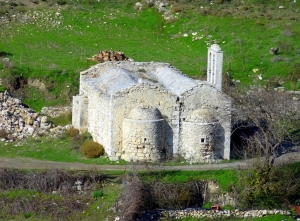
The double aisled Church of the Holy Apostles and St Peter and Paul is located at the foot of Tholi Hill, with the homonym fort, and belonged to the Venetian family of Cornaro. It was built in the 15-16th century and still hosts two arcosoliums (tomb monuments) inside and outside the church (bearing the inscription 1614).

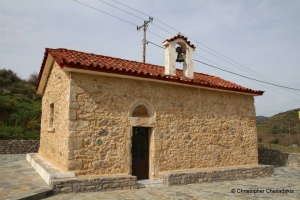
At position Bale, just before entering the village of St. Basil in southern Rethymno, we meet the Byzantine church of the Life Giving Spring (Zoodohos Pigi). The church celebrates every year on the first Friday after Easter and is built on an elevated position which makes it easily visible from all sides.

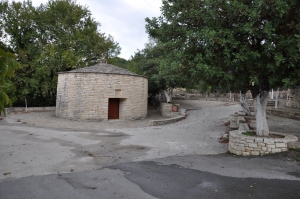
One of the most interesting religious monuments is found just north of the village Damavolou in Mylopotamos province. It is the church of Saints Constantine and Helen, which is built with the same architecture Cretans used to build the vaulted tombs and the mitata. The church is quite new, but it is worth mentioning due to its exceptional architecture.

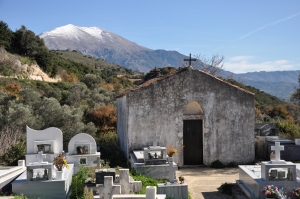
The cemeterial temple of Kalogeros, Amari province, is dedicated to Agia Marina and bears frescoes of 1225.
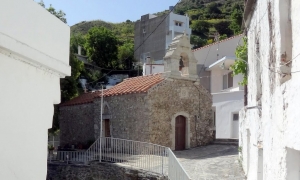
At the eastern end of the village Melambes, we meet the Byzantine church of Agia Paraskevi bearing frescoes of the 14th century, divided in two phases. The temple is built next to a spring with cool water and covered by a large plane tree; even we meet the custom that the temples next to water springs were dedicated to Saint Paraskevi, the saint patron of the eyes.

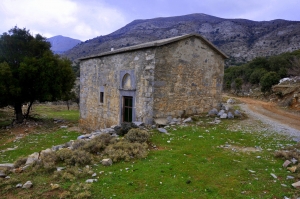
At this place operated during the Turkish Era a small male monastery dedicated to the Holy Apostles. When in 1823 Hasan Pasha attacked the Plateau from this side after having burnt Kritsa, his troops passed from here and destroyed the monastery.

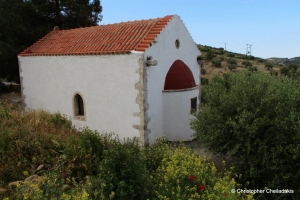
On the day of the Exaltation of the Holy Cross (September 14) celebrates the Monastery of Stavromenos located just outside the village Avgeniki, province Malevyzi, next to the picturesque settlement Vlahiana. The deserted monastery is one of the many monasteries founded in Crete during the Venetian domination and reaching their heyday till the arrival of the Turks, after which the monastery was slowly deserted. Today we meet some remains of the monastery buildings (part of the walls of monk cells), a base of a limestone-carved winepress and a trough. Around the church we see many trees, vineyards and olive groves.
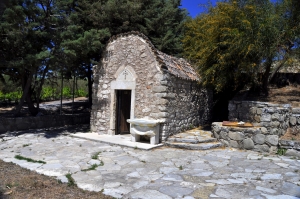
Here we meet the small church of St. Onesimus, the only one dedicated to St. Onesimus in Crete. Saint Onesimus was a slave of Phrygia who escaped from his master and went to Rome in order to meet the Apostle Paul. He is considered the patron saint of prisoners and judgers.
Also read:
- Home
 Beaches
 Nature
 Past
Past Destinations
 Highlights
 West Crete
- Central Crete
- East Crete
- Towns
- Chania Prefecture
- Chania
- Paleochora
- Kissamos
- Georgioupolis
- Chora Sfakion
- Loutro
- Rethymnon Prefecture
- Rethymnon
- Agia Galini
- Plakias
- Spili
- Anogia
- Heraklion Prefecture
- Heraklion
- Hersonissos
- Malia
- Matala
- Agia Pelagia`
- Archanes
- Kokkinos Pirgos
- Lassithi Prefecture
- Agios Nikolaos
- Elounda
- Sitia
- Ierapetra
- Makrigialos
- Palekastro
- Zakros
- Lassithi Plateau
- Get Prepared


