Crete holds a distinctive place in Greek mythology. Gods, kings, heroes and legendary creatures are associated with the island’s mountains, caves, ancient cities and shores. Cretan myths are not merely imaginary stories, but also reflect ancient religious traditions, distant historical memories and the important position that Crete once held in the Aegean world.
The birth of Zeus and the abduction of Europa
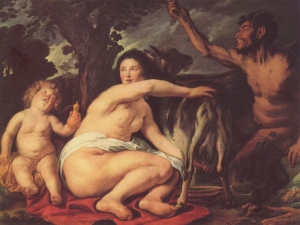
According to tradition, Zeus was born and raised in Crete, hidden from his father Cronus. Rhea gave Cronus a stone wrapped in swaddling clothes, while the Curetes clashed their shields to conceal the cries of the infant god. The Dikteon Cave and the Ideon Cave preserve the two most important Cretan traditions concerning the birthplace and upbringing of Zeus.
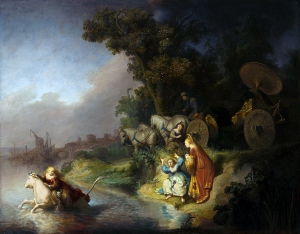
Zeus later took the form of a white bull and carried the Phoenician princess Europa to Crete. Their union produced Minos, Rhadamanthus and Sarpedon. Minos became the legendary king of Knossos and was closely associated with lawmaking, maritime power and the political strength of ancient Crete.
Minos, the Labyrinth and the Minotaur
Perhaps the best-known Cretan legend is the story of the Minotaur and Theseus. The Minotaur, a creature with the body of a man and the head of a bull, was imprisoned in the famous Labyrinth designed by Daedalus for King Minos. The Athenian hero Theseus killed the monster and found his way out with the help of Ariadne and the thread she had given him.
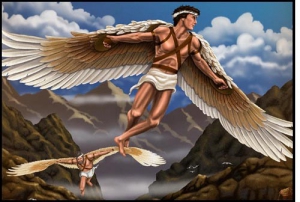
Daedalus and his son Icarus later attempted to escape from Crete using wings made of feathers and wax. Despite his father’s warnings, Icarus flew too close to the sun. The wax melted and he fell into the sea. Their story remains a timeless symbol of human ingenuity and freedom, but also of ambition that goes beyond its limits.
Talos and Idomeneus
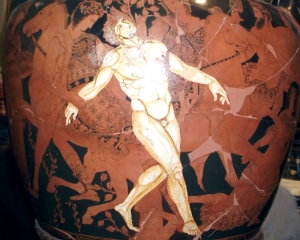
Crete was protected by Talos, a gigantic bronze guardian who patrolled the island’s coast three times every day and prevented hostile ships from approaching. Different versions describe him as a creation of Hephaestus or as a gift from Zeus to Europa. He is often symbolically presented as one of the earliest “automatons” described in mythology.
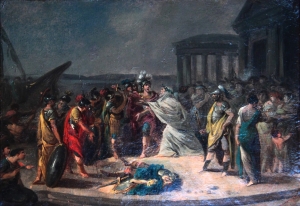
An important Cretan figure in the legends of the Trojan War was Idomeneus, grandson of Minos and king of Crete. Together with Meriones, he commanded the Cretans who joined the expedition against Troy and is portrayed in the Iliad as one of the most experienced and courageous warriors of the Achaeans.
From ancient myths to later legends
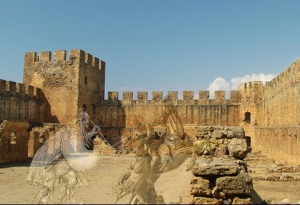
Crete’s legendary tradition did not end in antiquity. In more recent times, historical events, unusual natural phenomena and local storytelling gave rise to new legends. A characteristic example is that of the Drosoulites of Frangokastelo, the shadowy procession of mounted and armed warriors which, according to local tradition, appears on certain spring mornings near the fortress.
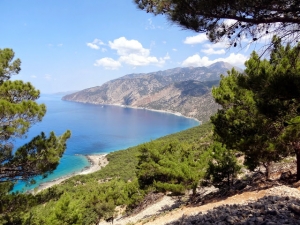
The myths of Crete connect the island’s landscape with human memory. Caves, mountains, gorges, archaeological sites and coastal locations acquire a second, symbolic dimension through these stories, revealing how people attempted to explain the world, their history and their own identity.