








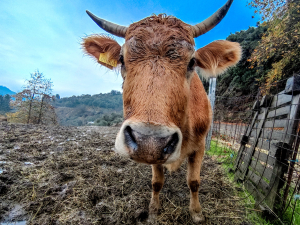
The short-horned cow of the Cretan breed today has many cows mainly in the Drakona area of the White Mountains and until recently was considered almost extinct..

The Cretan stone marten (scient. Martes foina bunites) is a nice mammal, arboreous, night owl, carnivorous and fruit-eater that lives alone (except for the mating season) in rock fissures, in tree hollows, in raptors’ abandoned nests, in desert underground galleries, in sparse forests, in bushy places and in gorges.
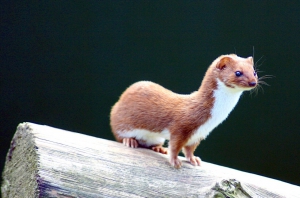
The Cretan least weasel (mustela nivalis galinthias) is an endemic subspecies of the common weasel, which is met all over the island. Other names of the animal is dwarf, pygmy or mouse weasel. Cretans also call it kalogiannou or kalogynekari (meaning nun) due to its white-striped chest, making it look like a nun.
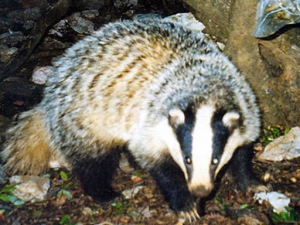
The badger of Crete or arcalos (scient. Meles meles arcalus) is an endemic subspecies of the common badger. It is a carnivorous mammal resembling a bear with short legs and relatively long body (70-95 centimeters) and short tail (15 centimeters), while it can weight up 20 kilos.
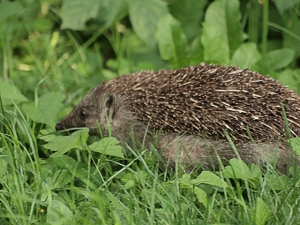
Hedgehogs are commonly met animals on the island of Crete, belonging to two different species, Erinaceus concolor and Erinaceus roumanicus. Unfortunately, they are considered a delicacy for some, and there several cases in Crete when these animals are eaten (mainly by Roma people). Lastly, the hedgehogs are considered sacred animals by the Greek Church because of the characteristic manner of mating, reminiscent of humans. Indeed, sometimes they mate face to face so as to avoid the spines on their back.
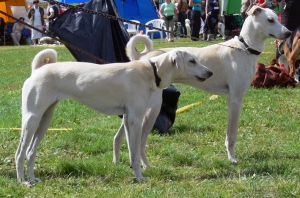
The Cretan Hound or Cretan Tracer is the oldest hunting breed of dog in Europe, with more than 4000 years of history on the island of Crete. It is believed to originate from the ancient breed of hound Basentzi in Egypt, introduced to the island’s particular conditions. By the middle of the last century, only a few purebred dogs were remaining, mostly in east Crete, but today the situation has improved considerably.
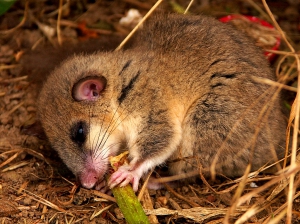
The edible dormouse (Glis glis argenteus), squirrel tailed dormouse, myoxus or fat dormouse of Crete is a subspecies of the common dormouse species, met throughout Europe and western Asia. Crete is the southernmost point where we meet this species, with the largest population being limited in Samaria National Park and some individuals being reported in Psiloritis Mount.
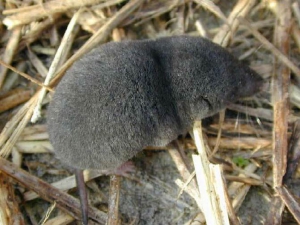
The Cretan white-toothed shrew (scient. Crocidura zimmermanni) is the only endemic mammal in Greece, found only in Crete, but it is displaced by the introduced lesser white-teethed shrew (scient. Crocidura suaveolens). Moreover, the smallest mammal of the world, the Etruscan shrew, is the third species of shrew met in Crete.
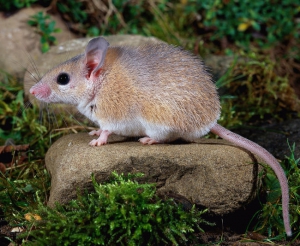
The Cretan spiny mouse (scient. Acomys minous) a threatened species of mouse endemic to Crete and Africa. It is named so, after the coarse, stiff hairs on its back and tail.
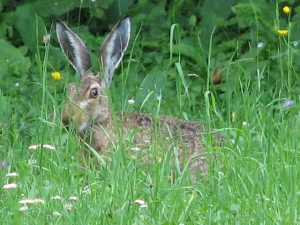
Hare (scient. Lepus europaeus) is one of the most widespread mammals throughout Europe, which also exists in large numbers throughout the island of Crete. It's a herbivorous mammal whose length can reach 55 centimeters and whose weight is approximately 2-3 kilos. Its color is hazelnut-grey to grey brown. It has long ears, its hind legs are longer than the front ones and its pads are covered with a thick coat leaving a characteristic trace on the snow.

The European rabbit (scient. Oryctolagus cuniculus) is a closely related species to hare, which has been introduced on the island of Crete by humans (many confuse that with hare). Despite the many predators on Crete, the rabbit reproduced rapidly and is now spread across the island of Crete and several smaller islets around it.
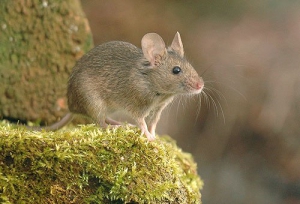
Rodents is the second largest group of mammals in Crete, after bats. Apart from the hedgehogs, the dormice, the Cretan spiny mice, which have beed described in different articles, Crete hosts the countryside wood mice (Apodemus sylvaticus), the broad-toothed field mice (Apodemus mystacinus), the cityside house mice (Mus musculus), the brown rat (Rattus norvegicus) and the black rat (Rattus rattus). Let’s look at them.
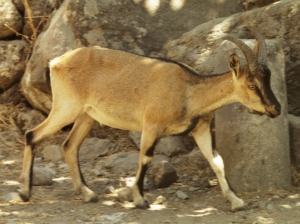
The proud Cretan wild goat (scient. Capra aegagrus creticus), also known as agrimi, wild goat, or Cretan Ibex is an endemic subspecies of wild goat, is the only species of ibex in Europe. According to the genetic characteristics, the wild goat was introduced in Crete from Asia and then came to contact with the ordinary goats on the island, while retaining many of the genetic characteristic of its Asian cousins.
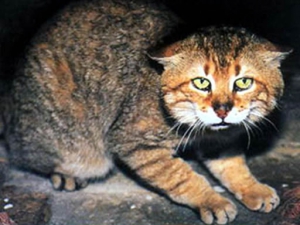
The mysterious wild cat of Crete (scient. Felis silvestris cretensis) or fourogatos is an endemic subspecies of the European wildcat. You may hear some people referring to it as the Cretan Lynx, although it’s not belonging to the same family. It is the only wild feline on the island, which is limited to a small part of Crete.
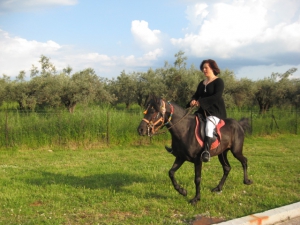
The Horse of Messara, or otherwise Georgalidiko, Giorgalidiko or Cretan horse is a domestic horse breed native of Crete, which does not exist elsewhere in the world. The breed exists on the island at least since the Preminoan Era, because a horse skeleton has been found in excavations dating back before 1700BC and, thus, it is considered the oldest breed in Europe. The Cretans call it horse of Messara because of initial breeding that in the homonym plain of Crete.
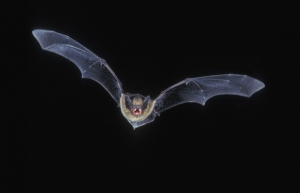
Crete apart from isolated forests and the many abandoned farmhouses, has more than 2000 caves, which increase in more than 5000 with small cavities. Thus it has always been an ideal place for flying mammals, bats, which find refuge in the forests, old houses and caves.
Also read:
- Home
 Beaches
 Nature
 Past
Past Destinations
 Highlights
 West Crete
- Central Crete
- East Crete
- Towns
- Chania Prefecture
- Chania
- Paleochora
- Kissamos
- Georgioupolis
- Chora Sfakion
- Loutro
- Rethymnon Prefecture
- Rethymnon
- Agia Galini
- Plakias
- Spili
- Anogia
- Heraklion Prefecture
- Heraklion
- Hersonissos
- Malia
- Matala
- Agia Pelagia`
- Archanes
- Kokkinos Pirgos
- Lassithi Prefecture
- Agios Nikolaos
- Elounda
- Sitia
- Ierapetra
- Makrigialos
- Palekastro
- Zakros
- Lassithi Plateau
- Get Prepared


