The Port of Hersonissos is one of Crete’s best-known tourist resorts, located about 28 km east of Heraklion, in the province of Pediada.
The area combines busy and quieter beaches, water parks, entertainment venues and important archaeological monuments. A short distance inland are the traditional villages of Ano Hersonissos, Piskopiano and Koutouloufari, which retain a very different character from the coastal resort.
A short tour of Hersonissos
Before the development of tourism, the Port of Hersonissos was a small coastal settlement serving the local fishing community and the commercial needs of the surrounding area. It gradually expanded around the old harbour and developed into one of the largest tourist centres in Crete.
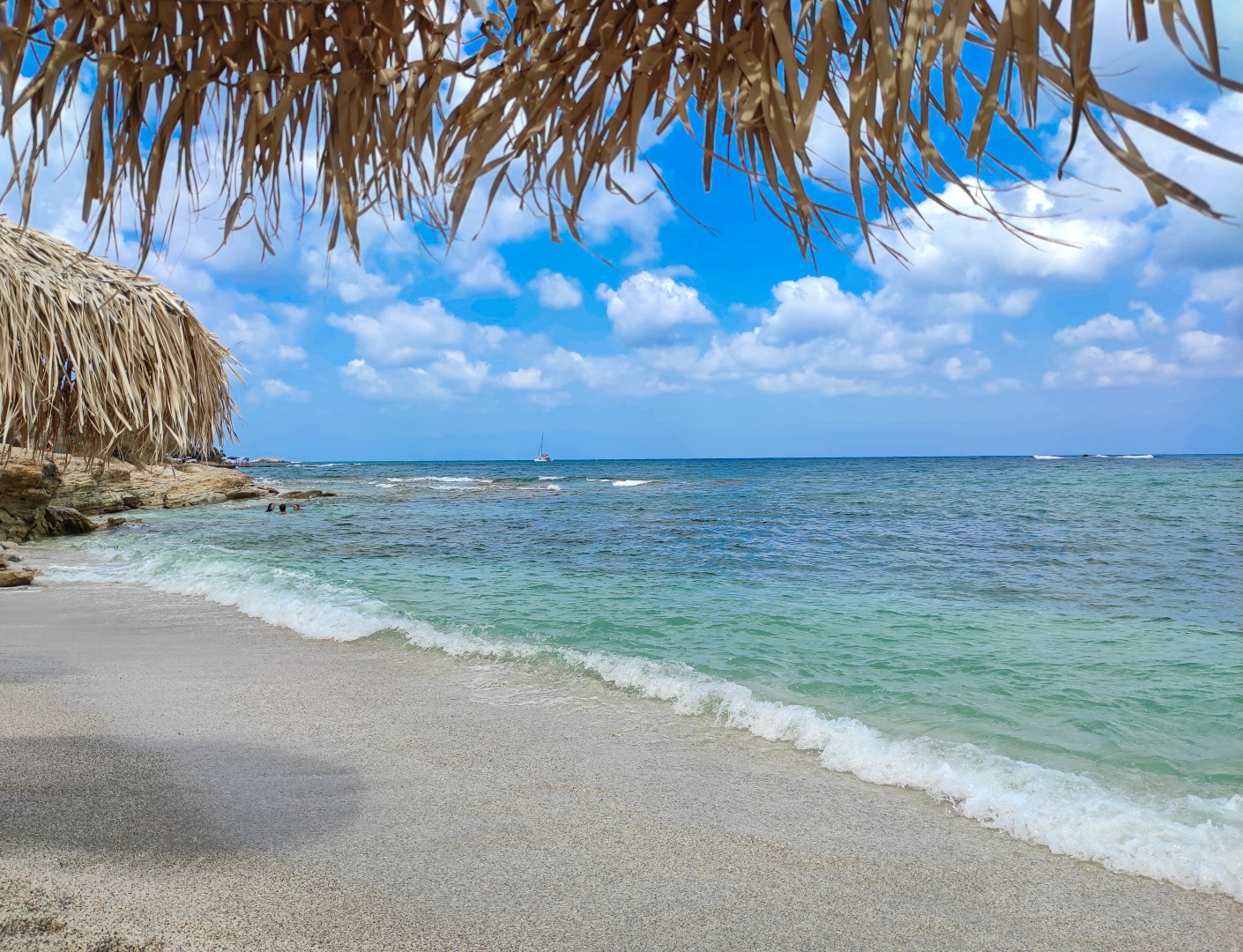
On the western side of the coastal zone is Cape Sarandaris, with the picturesque chapel of Saint George. From here begin the successive coves of Sarandaris, a series of protected bays with sandy or rocky beaches. Hotels, restaurants and cafés are found along much of the coast.
East of the coves rises Kastri Hill, beside the present harbour. Its summit preserves the ruins of an important Early Christian basilica with mosaic floors. On the eastern side of the hill stands the picturesque chapel of Agia Paraskevi, part of which is built into the rock. The site overlooks the harbour and its lighthouse.
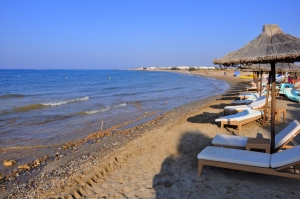
The lively seafront road begins at the harbour and is lined with shops, restaurants, cafés and nightlife venues. Directly below it stretches the central beach of Hersonissos. During the tourist season, excursion boats operate from the harbour along the surrounding coast and, according to their scheduled routes, towards the island of Dia.
Farther east are the busy beaches of eastern Hersonissos and the area’s large hotels. The buildings gradually become less dense towards Cape Drapano. Nearby is the Lychnostatis Open-Air Museum, dedicated to traditional Cretan life, vernacular architecture and old rural occupations.
History
The area has been inhabited since at least the Minoan period. Traces of Minoan settlements have been identified at Kastri and Anissaras, while the naturally sheltered harbour encouraged the continuous development of the settlement.
During the Classical and Hellenistic periods, ancient Chersonesos developed into an important harbour town. It maintained close relations with the powerful city of Lyttos and was later joined to it in a political federation. Chersonesos issued its own coins, often bearing maritime symbols that reflected its close association with trade and the sea.
Remains of earlier buildings and a possible sanctuary of Artemis Britomartis have been found at Kastri, together with coins, pottery and figurines. Sections of the ancient fortification can still be identified around the hill. A cemetery containing pottery, jewellery and coins has also been excavated in the wider area.
Chersonesos flourished particularly during the Roman period. It possessed an organised harbour, a theatre, baths, fish tanks and other public buildings. The theatre no longer survives, as much of its stone was reused in later structures. Near the seafront stands Sarakinos, a Roman building with mosaic decoration that is generally identified as a monumental fountain.
During the Early Christian period, Hersonissos remained an important urban and ecclesiastical centre. The three-aisled basilica on Kastri Hill, one of the largest in Crete, was constructed in the late 5th century over earlier buildings. Its architecture followed eastern Mediterranean models, and parts of its elaborate mosaic floors survive.
A second important Early Christian basilica has been identified about 2 km east of the harbour, at the site of the present Church of Agios Nikolaos. Some of its remains lie very close to the sea, while mosaic floors with geometric, floral and animal motifs are still preserved.
During the Ottoman period, the harbour was used for transporting products from the province of Pediada, especially olive oil and carobs. During periods of revolt, it also served as a supply point for the Cretan insurgents.