







 Vigla Cave at Keratokambos
Vigla Cave, also known as Nychteridospilios or Bat Cave, is located on the steep hill of Kerato, above Keratokambos in the province of Viannos. The name of the seaside settlement is associated with the prominent rock of Kerato and the Byzantine fortress of Vigla, as Keratokambos literally refers to the plain extending below Kerato. The cave opens on the steep eastern side of the mountain, in an area of particular geological, archaeological and historical interest.
The known passages of the cave have a total length of approximately 150 metres. Its main entrance lies several metres above the base of the cliff and is extremely narrow and difficult to approach. Beyond the small opening is a narrow, almost tube-shaped passage about 10 metres long, through which movement is possible only by crawling.
After the narrow passage, the morphology of the cave changes dramatically. The main corridor becomes considerably higher and its floor relatively level, allowing easier movement through most of the cave. The route ends at a second opening, situated much higher on the cliff and inaccessible from the outside.
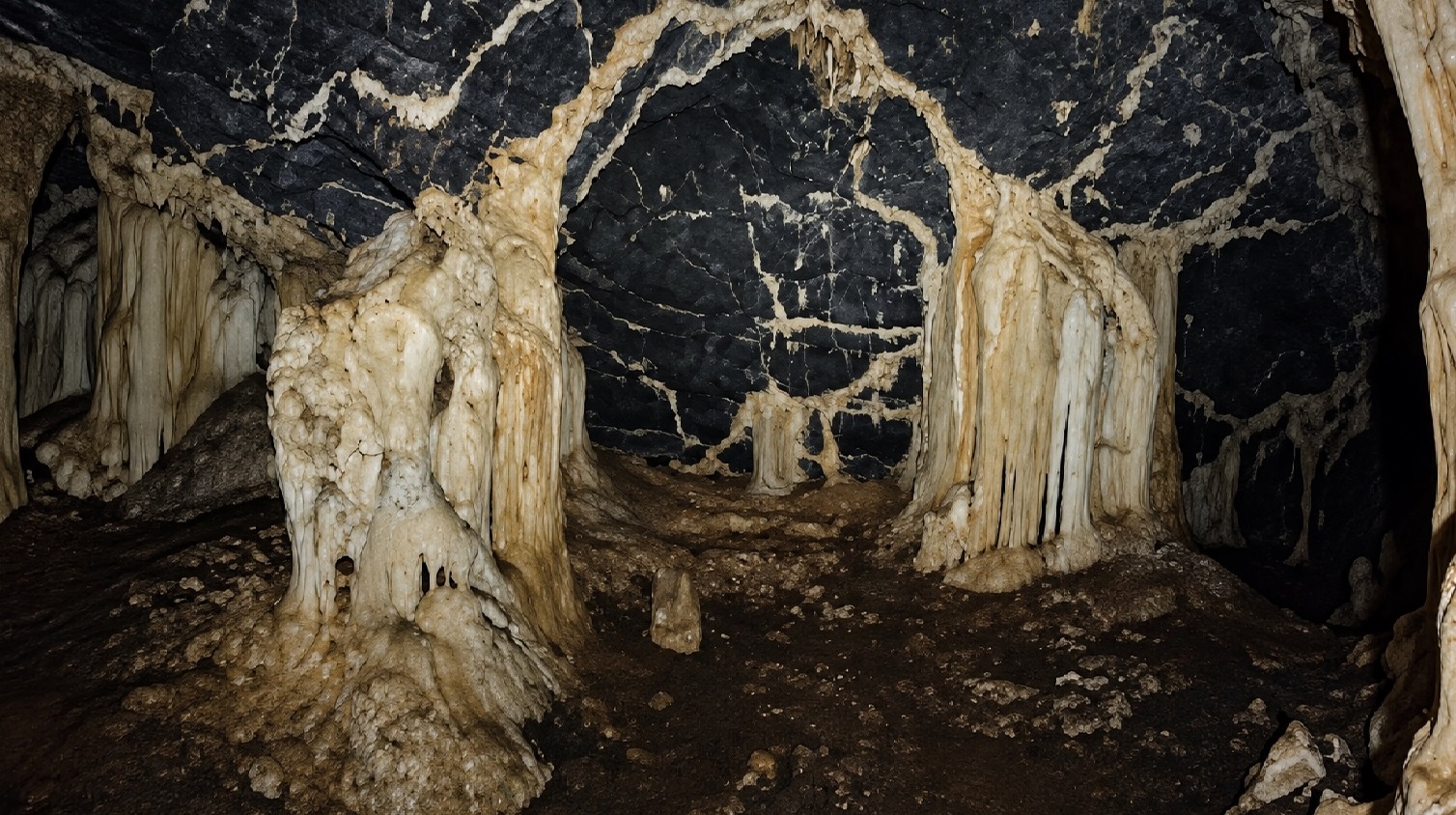
The most remarkable feature of Vigla Cave is its exceptionally rich speleothem decoration. Large columns, stalactites, stalagmites and successive deposits of calcite cover much of its interior. Particularly impressive is the sharp contrast between the extremely dark, almost black limestone walls and the brilliant white formations of the cave.
Fine striations and successive bands of colour have developed on the white stalagmitic material, creating patterns reminiscent of onyx. In several places, the columns form natural partitions and small chambers. One of these resembles the interior of a sanctuary, and it has been suggested that it may have been associated with the ritual use of the cave in antiquity.
A distinctive formation is the stalagmite known as Vrefokratousa, meaning the Virgin Mary holding the Infant Christ, because its shape resembles the Virgin embracing Jesus. In another particularly humid part of the cave, constant dripping collects water on the surface of a stalagmite. Pottery fragments have been observed around this point and may be associated with ritual practices and the collection of water.
Pottery fragments belonging to different historical periods have been identified inside the cave, indicating a long history of human presence. Its use appears to have been primarily connected with religious activities, which may have continued from antiquity until medieval times. The cave should also be considered in relation to the archaeological remains on the summit of Kerato, where human activity dates back at least to the Minoan period.
The French archaeologist and researcher Paul Faure associated the cave with later Christian worship and suggested that it may have served as a place of refuge and worship during periods when Christian communities sought isolated sanctuaries. This view, like the exact identity of the ancient cult practised here, remains an interpretation and has not been fully confirmed by systematic archaeological research.
Vigla is also an important refuge for bats, from which its alternative name derives. Deposits of guano have accumulated in several places from the colonies that periodically use the cave. Bats form an essential part of the cave ecosystem and are particularly vulnerable to human disturbance, especially during their breeding and hibernation periods.
Above the cave lie the remains of the Byzantine fortress of Vigla, which once overlooked the sea south of Viannos. The ancient city of Kerea is also believed to have occupied the same hill, although this identification has not been conclusively proven. The presence of the cave, the archaeological remains and the fortifications demonstrates the enduring importance of Kerato to the inhabitants of the region.
Vigla Cave is considered one of the most impressive caves in the former province of Viannos and one of the most significant in Heraklion Prefecture for its speleothem decoration. It is not, however, open to visitors or developed as a tourist cave. The position of its entrance on the cliff, the unstable terrain and the extremely narrow initial passage make entry dangerous.
Approaching and entering the cave should not be attempted without an experienced speleological team, suitable technical equipment and a thorough knowledge of the conditions. The makeshift wooden ladder that has occasionally been placed on the cliff cannot be considered a safe means of access. Great care is also required to prevent damage to the fragile cave formations or disturbance to the bat colonies.
Information: Christoforos Cheiladakis
Additional Info
- Location: Heraklion Prefecture
- Type: Horizontal Cave, With archaeological importance


