


Air Sports in Crete
Crete, the island associated with Daedalus and Icarus, has mountain ranges, steep slopes and open landscapes suitable for several forms of air sport. Activities practised on the island include paragliding, powered paragliding or paramotoring, aeromodelling, general aviation and, when the necessary operational and licensing arrangements are available, skydiving.
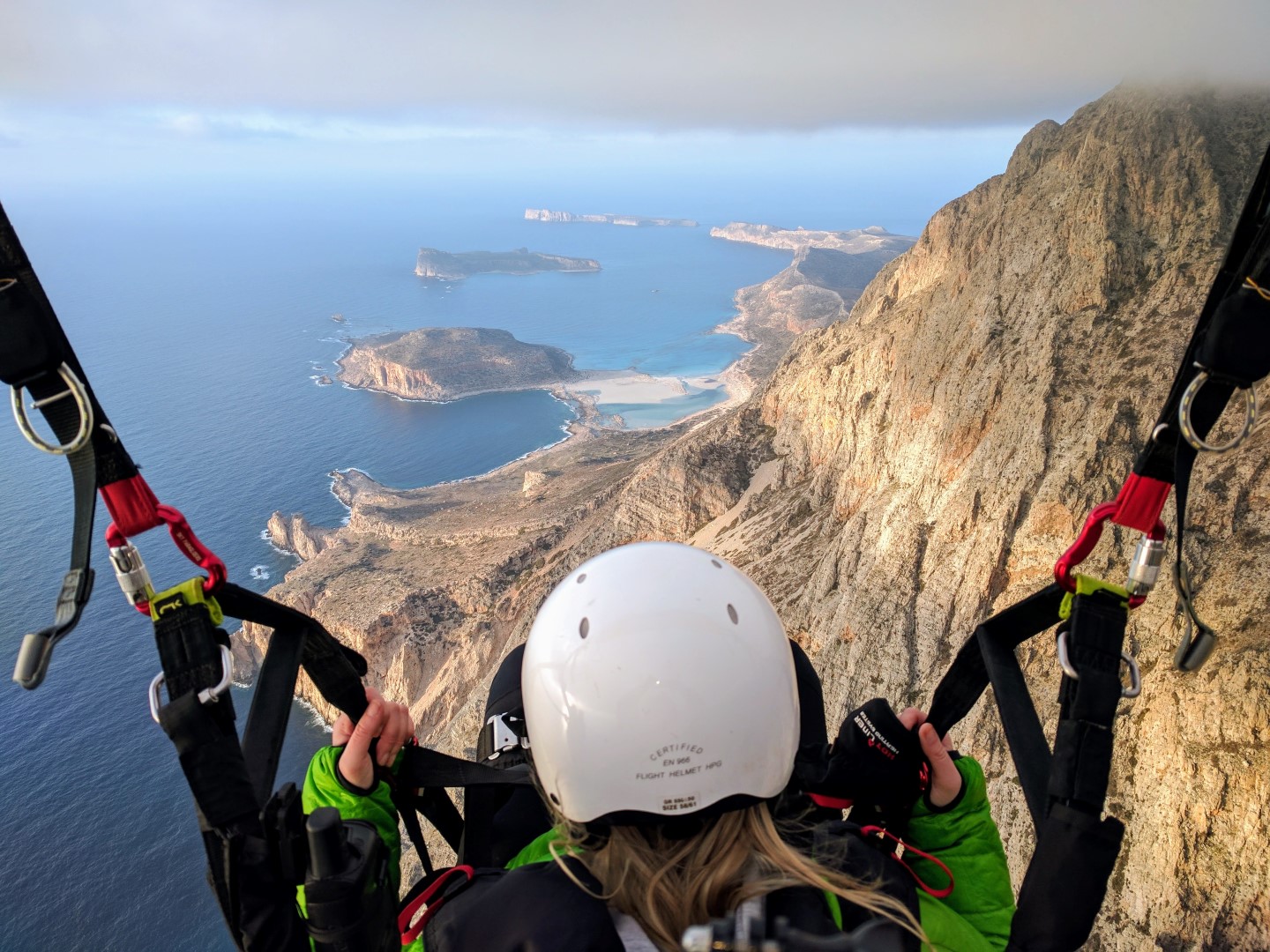
Paragliding in Crete is the most accessible air-sport experience for visitors without previous training. During a tandem flight, the passenger flies together with a suitably trained pilot, who manages the takeoff, flight and landing. Every flight depends on wind direction and strength, cloud cover, thermal activity and the overall weather conditions.
Flying areas
The slopes of Crete provide opportunities for both coastal flights and flights over the island’s interior. Established activity areas can be found in western Crete, near Chania and Falassarna, and in central Crete around Avdou. However, not every hillside is a suitable takeoff site, and flying conditions can change rapidly during the same day.
Independent pilots must obtain current information about each site, the permitted takeoff and landing areas, controlled airspace, nearby airports and any temporary restrictions. Flying close to airports, military installations or restricted areas is not permitted without the required authorisation.
Paramotoring, aeromodelling and other activities
A paramotor combines a paraglider wing with an engine carried on the pilot’s back or mounted on a wheeled frame. Unlike unpowered paragliding, it does not rely entirely on rising air currents, although wind and local weather conditions remain critical to safe operation.
Air-sport associations and aeromodelling groups also operate in Crete. Competitions, training activities and opportunities for visitor participation may change, so arrangements should be confirmed directly with a recognised club or approved training organisation. The availability of skydiving flights should not be assumed without recent confirmation from an authorised operator.
Safety
Training and flights should only be undertaken through approved schools and suitably qualified pilots. Before a tandem flight, participants should receive information about the equipment, takeoff and landing procedures, weight restrictions and any health conditions that may affect participation. A helmet and the appropriate safety equipment are essential.
A flight may be postponed or cancelled when weather conditions are unsuitable. This is a normal and important safety decision. Participants should never pressure a pilot to fly when conditions are considered unsafe. Particular care is necessary during summer, when strong thermal activity and local winds may cause rapid changes in flying conditions.