



Explore Crete

your way

Transport and Getting Around Crete

Crete is connected with mainland Greece and many European countries through its airports and ports. The island’s main air gateways are located in Heraklion, Chania and Sitia. Available flights and their frequency vary by season, with considerably more international connections operating during the main tourism period.

The largest ports are located in Heraklion and Souda near Chania, serving the principal ferry connections with Piraeus and other Greek ports. Ferry services may also operate from Sitia, Agios Nikolaos, Rethymno and Kissamos, depending on the season and the schedules announced by the shipping companies.

Along the southern and southwestern coast, smaller passenger ferries connect Chora Sfakion, Loutro, Agia Roumeli, Sougia, Paleochora and the island of Gavdos. These services are particularly important because several coastal settlements and beaches in the area are not connected to one another by road.

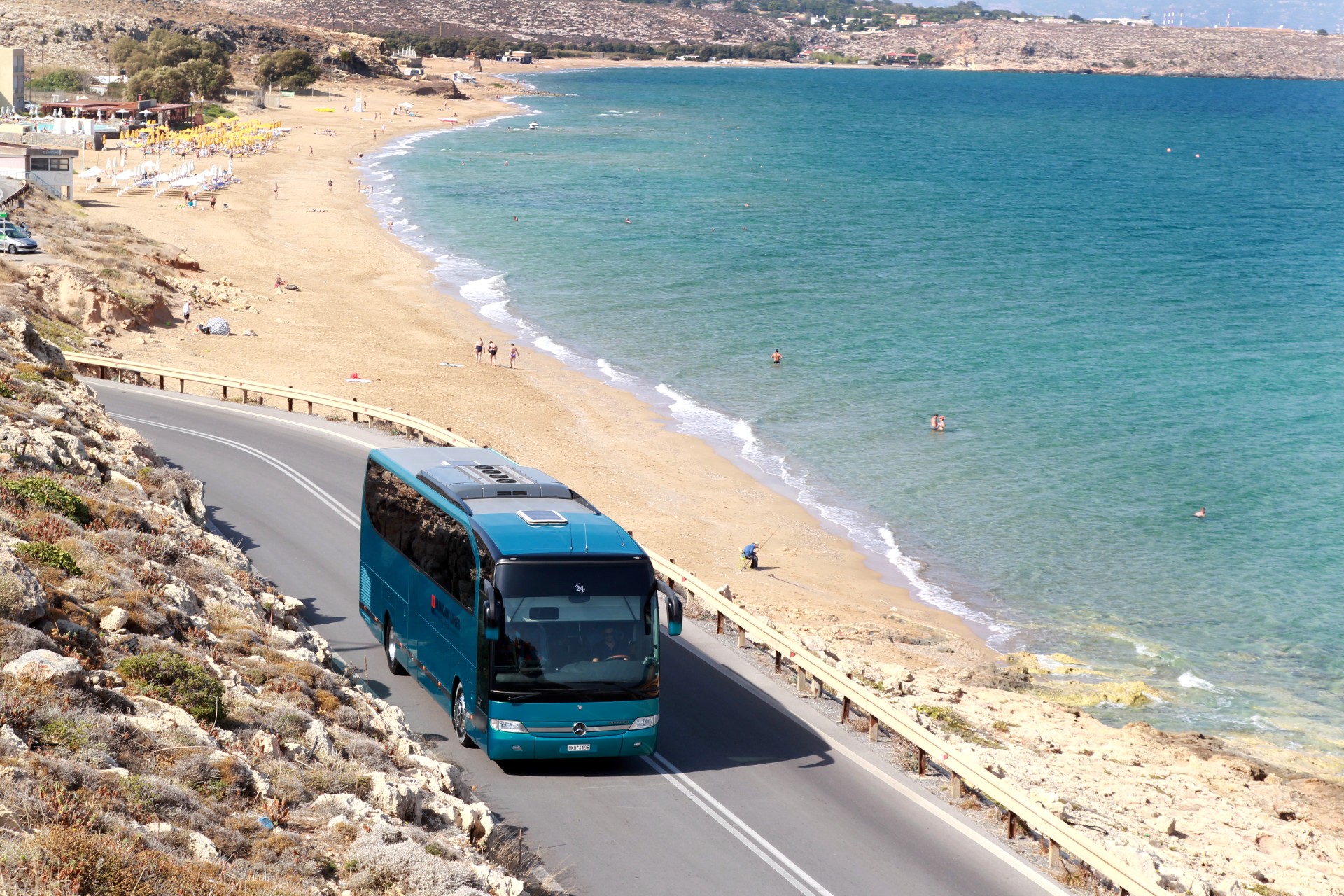
Intercity buses connect the main cities with many towns, villages, beaches and popular attractions across the island. Urban bus networks also operate in Heraklion, Chania, Rethymno and Agios Nikolaos, serving the city centres and nearby areas. Services are generally more frequent during the summer months.

Renting a car or motorcycle offers greater freedom to explore remote beaches, mountain villages, gorges and archaeological sites. However, many rural roads are narrow, winding or cross mountainous terrain, so careful driving and realistic travel-time planning are essential.

Taxis are available at airports, ports, cities and the larger tourist resorts. Before travelling by air, ferry or bus, visitors should always check the current timetable issued by the relevant operator, as routes, departure times and service frequency may change.

Car Rental and Private Transfers in Crete
Car Rental and Private Transfers in Crete

Renting a car is one of the most practical ways to explore Crete, particularly if you wish to visit remote beaches, mountain villages, gorges, monasteries and archaeological sites that are not frequently served by public transport. Car rental companies operate at the airports, ports, major cities and most tourist resorts. In addition to conventional cars, visitors can hire motorcycles, small four-wheel-drive vehicles, multi-seat vehicles and, through selected companies, campervans or motorhomes. Before collecting a vehicle, carefully check the booking conditions, insurance coverage, any required security deposit, fuel policy, mileage limits and the procedure to follow in the event of a breakdown or accident. Inspect the vehicle together with a company representative and record any existing damage before departure. If you intend to travel on unpaved roads, through remote areas or across mountainous terrain, confirm that the rental agreement permits this type of use. Hiring a four-wheel-drive vehicle does not automatically mean that off-road driving is covered. Travellers planning to take a rental vehicle on a ferry should also check whether prior permission from the rental company is required. Crete’s road network includes modern main roads as well as narrow, steep and winding rural routes. Distances may appear short on a map, but actual travelling times can be considerably longer, particularly in the mountainous interior and along the southern coast. Visitors who prefer not to drive can use taxis, pre-booked private transfers and chauffeur-driven vehicles. These services can provide transport between airports, ports, hotels, beaches, attractions and destinations that are difficult to reach by bus. For longer journeys, it is advisable to agree on the fare, pick-up point and any intermediate stops in advance.

Read more ...

Public Transport in Crete

Public Transport in Crete

Buses are the principal form of public transport in Crete, as the island has no passenger railway network. Intercity services connect the main cities with many towns, villages, airports, ports, beaches and popular visitor attractions. The most frequent connections operate between Heraklion, Chania, Rethymno, Agios Nikolaos, Ierapetra and Sitia. Bus routes also serve important archaeological sites and tourist destinations, although several of these services operate more frequently during the summer season. Heraklion and Chania have extensive urban bus networks, while local services also operate in Rethymno, Agios Nikolaos and other residential or tourist areas. Urban buses connect city centres with suburbs, airports, ports, hospitals, university facilities and nearby beaches. Public transport is a practical choice for travelling between the main cities and visiting well-known destinations. Access to remote beaches, mountain villages, gorges and less visited areas can nevertheless be limited or may require a combination of different bus services. Service frequency varies considerably according to the route and the time of year. Additional connections to beaches and tourist resorts are generally available during summer, while some services operate less frequently in winter. Visitors should therefore check the current timetable before every journey. Taxis complement the public transport network and are available at airports, ports, central bus stations, cities and larger tourist resorts. For longer or less common journeys, it is advisable to confirm the approximate fare and pick-up point in advance.

Read more ...

Also read:

Download Free Premium Joomla Templates • FREE High-quality Joomla! Designs BIGtheme.net