
Monuments of Cretan Tradition

Architecture

Architecture

The architecture of Crete reflects the island’s long history and the continuous adaptation of its inhabitants to the natural environment. From Minoan palaces and ancient cities to Byzantine churches, Venetian fortifications, Ottoman buildings and traditional rural houses, every period has left its mark on the Cretan landscape.

The major cities of Crete preserve some of the most impressive architectural works created during the Venetian and Ottoman periods. Fortresses, defensive walls, harbours, palaces, fountains, loggias, shipyards, mosques and Christian churches illustrate the economic and strategic importance of the island during previous centuries.

Traditional houses

A simpler form of architecture developed in the countryside, closely connected with daily life, agriculture and livestock farming. Traditional rural houses were generally built of local stone, with flat roofs made of wooden beams, branches and compacted earth. In many cases, the same building provided living quarters, storage areas and shelter for animals.

Characteristic interior features included the fireplace used for cooking and heating, a raised wooden platform for sleeping, built-in wall niches for household utensils and storage spaces for olive oil, wine and grain. Wealthier houses often had arched entrances, carved stone frames, internal arches and courtyards. In some towns, covered wooden balconies known as sahnisi, which became widespread during the Ottoman period, have also survived.

Traditional settlements generally follow the natural shape of the terrain. Their narrow lanes, small squares, public fountains and neighbourhoods developed gradually, without a rigid urban plan. Many villages were built in naturally protected inland locations, away from the coast, to reduce their exposure to pirate raids.

The architecture of water and wind

The limited and uneven distribution of water resources encouraged Cretans to develop ingenious structures for collecting, storing and transporting water. Throughout the island there are wells, fountains and cisterns, ranging from simple rural installations to elaborate public works in towns and villages.

Rivers and springs powered watermills, particularly in western Crete. In the drier regions of the east, numerous windmills were constructed for grinding grain, forming extensive groups of mills on exposed ridges. These structures are presented in the section on the windmills and watermills of Crete.

The island’s stone bridges and aqueducts are also of particular interest. Bridges connected villages and facilitated movement across rivers and gorges, while aqueducts supplied towns, fortresses, monasteries and agricultural areas with water. Many of these constructions remain impressive examples of durable engineering harmoniously integrated into the landscape.

Mitata and rural structures

Among the most characteristic buildings of mountainous Crete are the mitata. These circular, corbel-vaulted structures were built of dry stone without mortar. Shepherds used them as seasonal shelters and as places for producing and storing cheese, generally close to summer grazing grounds.

Other rural structures include dry-stone enclosures, threshing floors, wine presses, olive mills, storehouses, lime kilns and small countryside chapels. Built with local materials and traditional techniques, they form an integral part of Crete’s cultural landscape.

Abandonment and preservation

Social and economic change, urbanisation, natural disasters and population movements led to the abandonment of numerous villages and smaller settlements. The abandoned settlements of Crete preserve old houses, churches, paved lanes, ovens, cisterns and other structures that reveal the everyday life of earlier generations.

Although modern construction has altered many traditional settlements, numerous historic buildings and architectural ensembles have been restored. Their preservation protects not only individual monuments but also the relationship between architecture, landscape and the historical memory of Crete.

Windmills and Watermills
Windmills and Watermills

The windmills and watermills of Crete are characteristic monuments of the island’s rural and pre-industrial history. For centuries, they harnessed the power of water and wind to grind grain, process agricultural products and, in later times, pump water for the irrigation of cultivated land. The watermills of Crete Watermills were built beside rivers, springs and streams with a sufficient and relatively reliable flow. They were therefore more common in western Crete and in mountainous areas with abundant springs. Water was channelled towards the mill through canals or stone-built aqueducts and collected in a vertical reservoir. It was then released under pressure against the mill’s horizontal wheel, setting the millstones in motion. Many watermills formed complex rural installations that included the miller’s house, storehouses and auxiliary rooms. A characteristic example is the Gerontomylos watermill near Phaestus, an imposing structure equipped with two water channels and two wheels. Several old watermills across Crete have been restored, preserving valuable knowledge about their operation and their role in local society. The windmill parks of eastern Crete In the drier regions of eastern Crete, where there was not enough running water, inhabitants relied on the island’s strong and persistent winds. Windmills were usually erected on mountain passes, hills and exposed ridges. In many places they formed large groups known locally as milotopia, or windmill parks. Cretan flour mills belonged to different architectural types. The axetrocharis, also known as the one-sided mill, was permanently oriented towards the direction of the prevailing wind. The xetrocharis had a circular structure that allowed its mechanism to be adjusted according to the direction of the wind. The type selected depended on the landscape, local wind conditions and the financial means of the owner. At the northern entrance to the Lasithi Plateau stands the windmill park of Seli Ambelou, one of the most important and recognisable groups of windmills in Crete. The mills were transferred to their present location in the late 19th century from the older windmill park at Zaroma, near Potami. Another impressive group is the Galaropetra windmill park above Fourni, where a row of mills belonging to different types has survived. Similar windmill parks can be found in several parts of mountainous Mirabello, the Dikti range and the region of Sitia, illustrating the former importance of grain cultivation and milling in eastern Crete. Wind-powered water pumps The lightweight metal windmills with white sails that became the most recognisable symbol of the Lasithi Plateau served a different purpose. Rather than grinding grain, these wind-powered pumps drew water from wells to irrigate the fields. The dense network developed across the plateau during the 20th century has often been described as one of the earliest large-scale systems for harnessing wind energy. Most of these wind pumps were gradually abandoned or replaced by motorised pumps. Nevertheless, several have been restored and still recall the former appearance of the Lasithi Plateau with its numerous windmills. Decline and preservation The use of traditional mills declined sharply with the spread of internal-combustion engines, electricity and modern industrial milling. Many installations were abandoned and fell into ruin, while others were converted into houses, museums or accommodation establishments. The surviving mills are now important monuments of Cretan vernacular architecture and technological history. Their restoration helps preserve traditional knowledge concerning the management of water, wind and agricultural production.

Read more ...

Wells - Fountains - Cisterns

Wells - Fountains - Cisterns

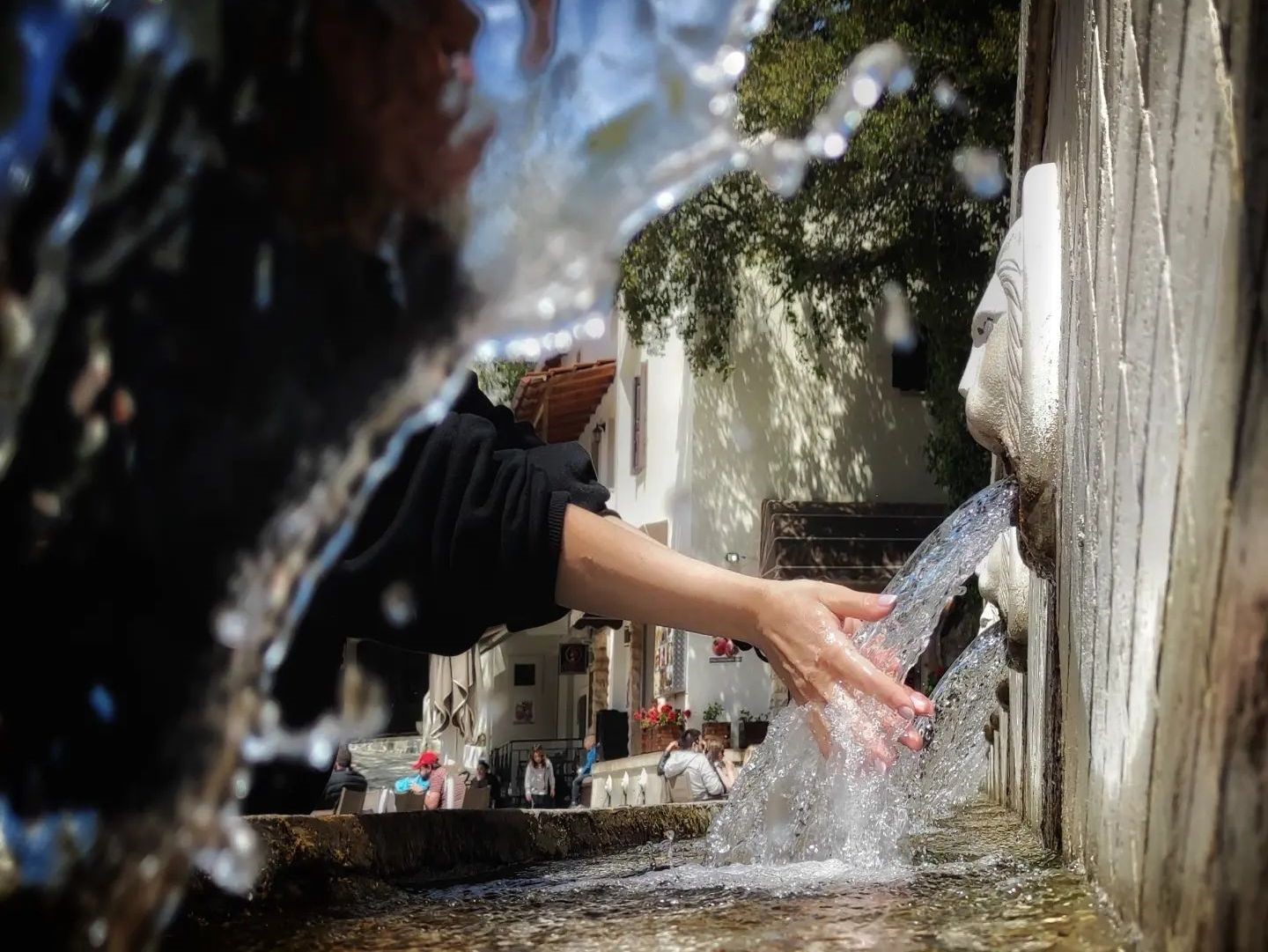
Water has always been a precious resource on Crete, particularly in areas with few natural springs and long periods of drought. To supply their settlements, cultivated fields and animals, local communities constructed wells, cisterns, fountains, troughs and other waterworks, drawing on knowledge accumulated over many generations. Wells were dug wherever underground water could be reached. Their shafts were generally lined with stone to retain the surrounding soil and protect the water. In some areas, groups of wells were created to serve the shared needs of villagers, farmers and shepherds. In the driest regions, cisterns were constructed to collect and store rainwater. Water was gathered from roofs, courtyards or specially prepared surfaces and channelled into the reservoir through stone or ceramic conduits. Cisterns were often underground or covered by vaulted roofs, helping keep the water cool and reducing evaporation. Public fountains were built beside springs, in village squares, at monasteries, at crossroads and along old routes. Besides supplying drinking water, many incorporated stone troughs for animals and basins used for washing clothes. Some were decorated with reliefs, inscriptions, arches and carved stone frames and are notable examples of vernacular, Venetian or Ottoman architecture. Village fountains were not merely water-supply structures but important centres of social life. Residents met there, exchanged news, filled their water vessels and performed everyday tasks. Numerous Cretan place names and settlement names remain associated with springs, wells and historic fountains. Many of these structures are no longer used, having been replaced by modern water-supply networks. They nevertheless remain valuable monuments of traditional architecture and bear witness to the ingenuity with which Cretan communities managed one of the island’s most essential natural resources.

Read more ...

Abandoned Settlements

Abandoned Settlements

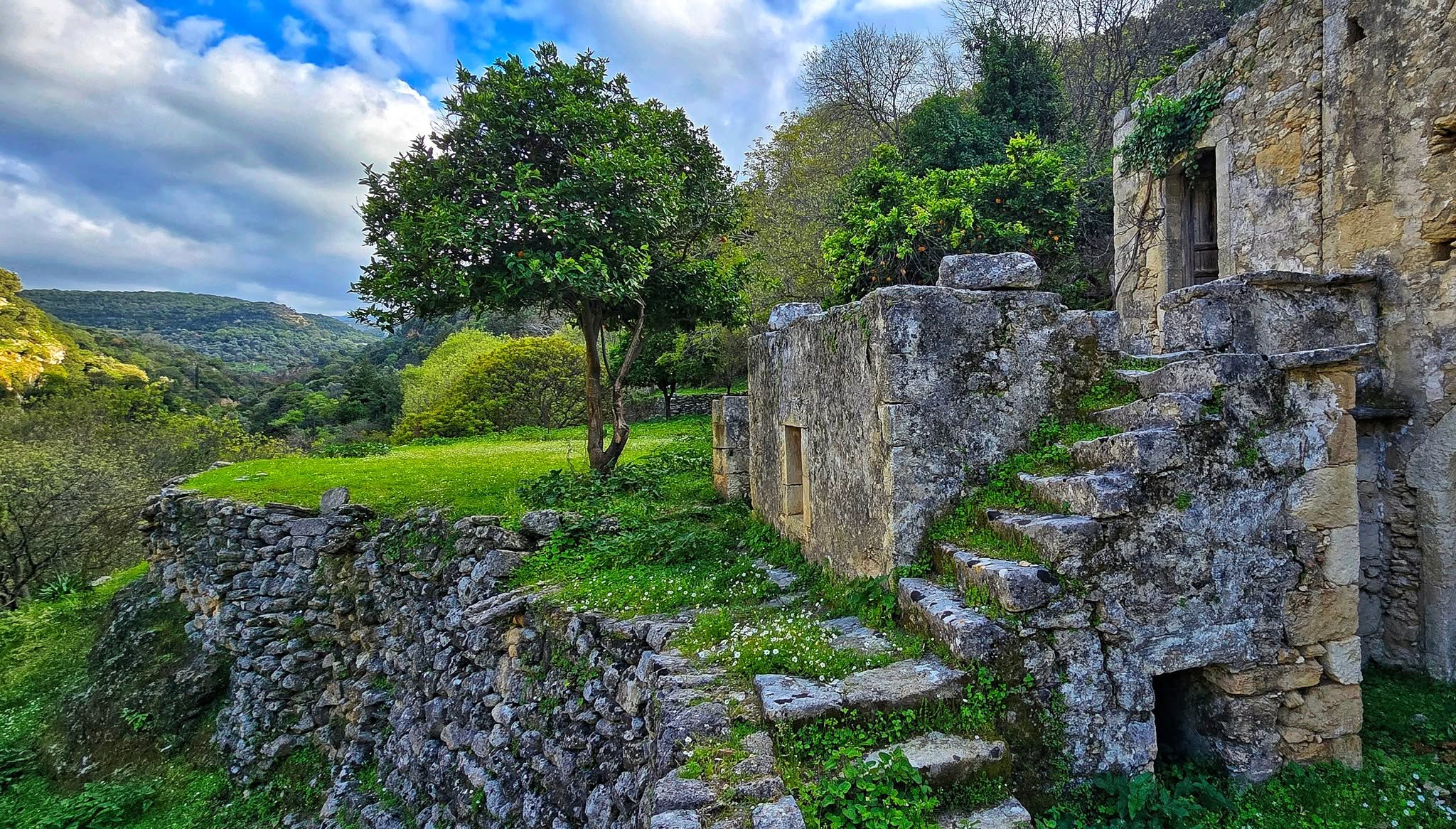
Across Crete, ruined villages, small settlements and isolated rural hamlets can be found in places that were gradually or suddenly abandoned. Migration to larger villages and cities, economic and social changes, water shortages, difficult access, natural disasters and particular historical events were among the reasons that led to their decline. In several cases, residents left their ancestral homes and established new settlements in safer or more accessible locations. Elsewhere, abandonment occurred gradually as younger generations moved to urban centres or coastal areas in search of employment and better living conditions. Ruined houses, stone gateways, cobbled lanes, cisterns, wells, wine presses and small churches still preserve traces of the communities that once lived there. Many of these places retain characteristic examples of Cretan vernacular architecture and reveal how rural settlements were traditionally organised. The abandoned settlements of Crete are more than collections of ruins. They are valuable records of the island’s social history, population movements and the profound changes that transformed the Cretan countryside over the last centuries.

Read more ...

Bridges and aqueducts

Bridges and aqueducts

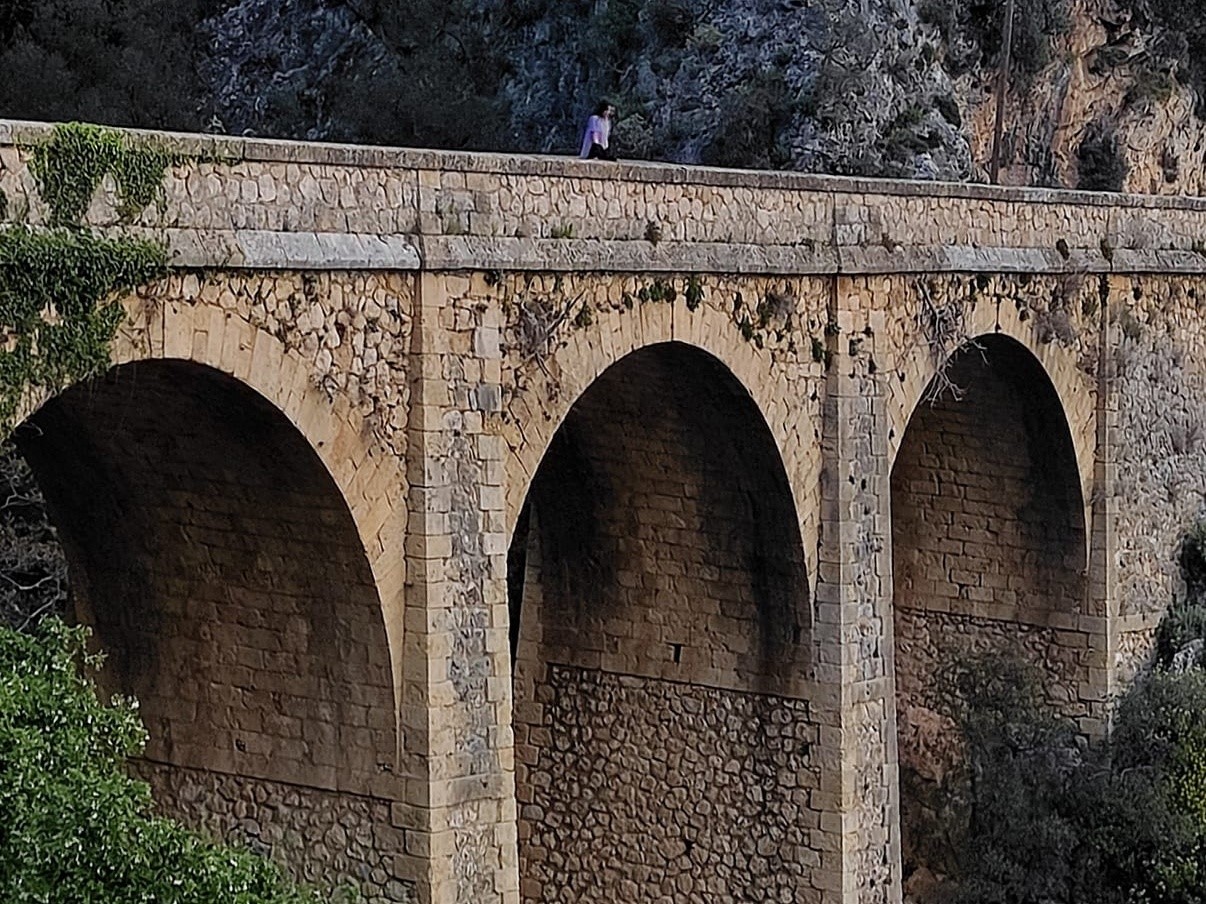
Although Crete has few large rivers with a continuous flow, numerous historic bridges, arches and aqueducts survive across the island. These engineering works were constructed to provide safe passage over rivers, streams and gorges, as well as to carry water to towns, villages, monasteries and cultivated areas. One of the best-known examples is the impressive Preveli Bridge, which crosses the Megalos Potamos River. Of particular archaeological importance is the Ancient Bridge of Eleftherna, distinguished by its triangular opening constructed with the corbelled building technique. Another important monument is the Elliniki Kamara at Vrysses in Apokoronas. Alongside the larger bridges, smaller single-arched stone structures survive in many parts of Crete, once connecting villages, old roads, watermills and agricultural areas. The Morosini Aqueduct and the other water-supply works of the Venetian period are equally remarkable. Stone water bridges, channels and tunnels carried water over long distances and across valleys, streams and uneven terrain. Their carefully constructed masonry and remarkable durability demonstrate the advanced engineering knowledge of their builders.

Read more ...

Mitata

Mitata

A mitato, plural mitata, is a small domed stone building found in the mountains of Crete, particularly on Mount Psiloritis and in the White Mountains. It is one of the most characteristic examples of Cretan pastoral architecture and is closely associated with the island’s livestock-farming and cheesemaking traditions. Mitata are constructed entirely from carefully selected stones, without mortar or any other binding material. Successive courses of stone gradually project inwards until they form a stable dome. This corbelled building technique resembles the method used in several ancient domed structures, including the tholos tombs of Minoan Crete. The similarity concerns the architectural principle and does not necessarily demonstrate an uninterrupted tradition from the Minoan period. Dry-stone construction was particularly well suited to the bare and rocky mountains of Crete, where stone was abundant and suitable timber was scarce. The thick stone walls protect the interior from wind, cold and summer heat, while maintaining a comparatively stable temperature. Mitata traditionally served as temporary shelters for shepherds during the summer months, when their flocks were moved to the high mountain pastures. They also functioned as small cheesemaking huts, where fresh milk was processed into traditional Cretan cheeses and stored under suitable conditions. Some mitata continue to serve these purposes today. A mitato usually forms part of a larger pastoral complex. Beside it stands a stone enclosure where sheep and goats are gathered and milked, while its interior contains a fireplace and areas for resting, cheesemaking and storage. A small opening is often left at the top of the dome to allow smoke from the fire to escape. The name probably derives from the Latin word metatum, referring to temporary quarters or a military lodging place. During the Byzantine period, the term was associated with temporary accommodation used by travelling soldiers, messengers and officials. Today, the mitata remain living monuments of Crete’s mountain culture and pastoral heritage. [widgetkit id=2066]

Read more ...

Download Free Premium Joomla Templates • FREE High-quality Joomla! Designs BIGtheme.net