



Greek Orthodox

Crete

Religion in Crete

Crete’s Orthodox tradition has its roots in the early centuries of Christianity. The Acts of the Apostles records that the ship carrying the Apostle Paul to Rome reached Kali Limenes, or Fair Havens, on the island’s southern coast. Local tradition associates a small cave near the present chapel with his stay. Church tradition honours his companion Titus as the first bishop of Crete and links his ministry to Gortyn.

Christians faced periods of persecution in the early centuries of their faith. In Crete, this history is remembered in the tradition of the Ten Holy Martyrs of Gortyn. Following the agreement reached at Milan in AD 313, Christians could worship freely in the Roman Empire. Gortyn became an important ecclesiastical centre in the centuries that followed. The remains of its early Christian basilicas, together with those at Hersonissos, Elounda and Sougia, show how widely Christianity had spread across the island by this period.

Over time, religious life took different forms. In the Asterousia Mountains and around Katholiko on the Akrotiri Peninsula, caves and small chapels bear witness to a tradition of hermit life. Established monasteries became places of worship, and some also served as centres of learning and manuscript copying. Some played a part in Cretan uprisings, as Arkadi Monastery did in the revolt of 1866.

The Cretan School of icon painting flourished under Venetian rule. In Candia, today’s Heraklion, painters worked in a setting where Byzantine tradition met the art of the Western Renaissance. Among the artists associated with this period were Michael Damaskinos and Doménikos Theotokópoulos, later known as El Greco. Damaskinos’s icons at Saint Catherine of the Sinaites and El Greco’s paintings at the Historical Museum of Crete offer two ways to explore the art of that era.

Today, the Church of Crete is semi-autonomous and under the ecclesiastical jurisdiction of the Ecumenical Patriarchate. Religious traditions remain part of island life through village services, pilgrimages and local feast days. A saint’s feast often brings people together at church and, after the service, for a shared meal or a gathering in the village square.
Religious Monuments
Religious Monuments

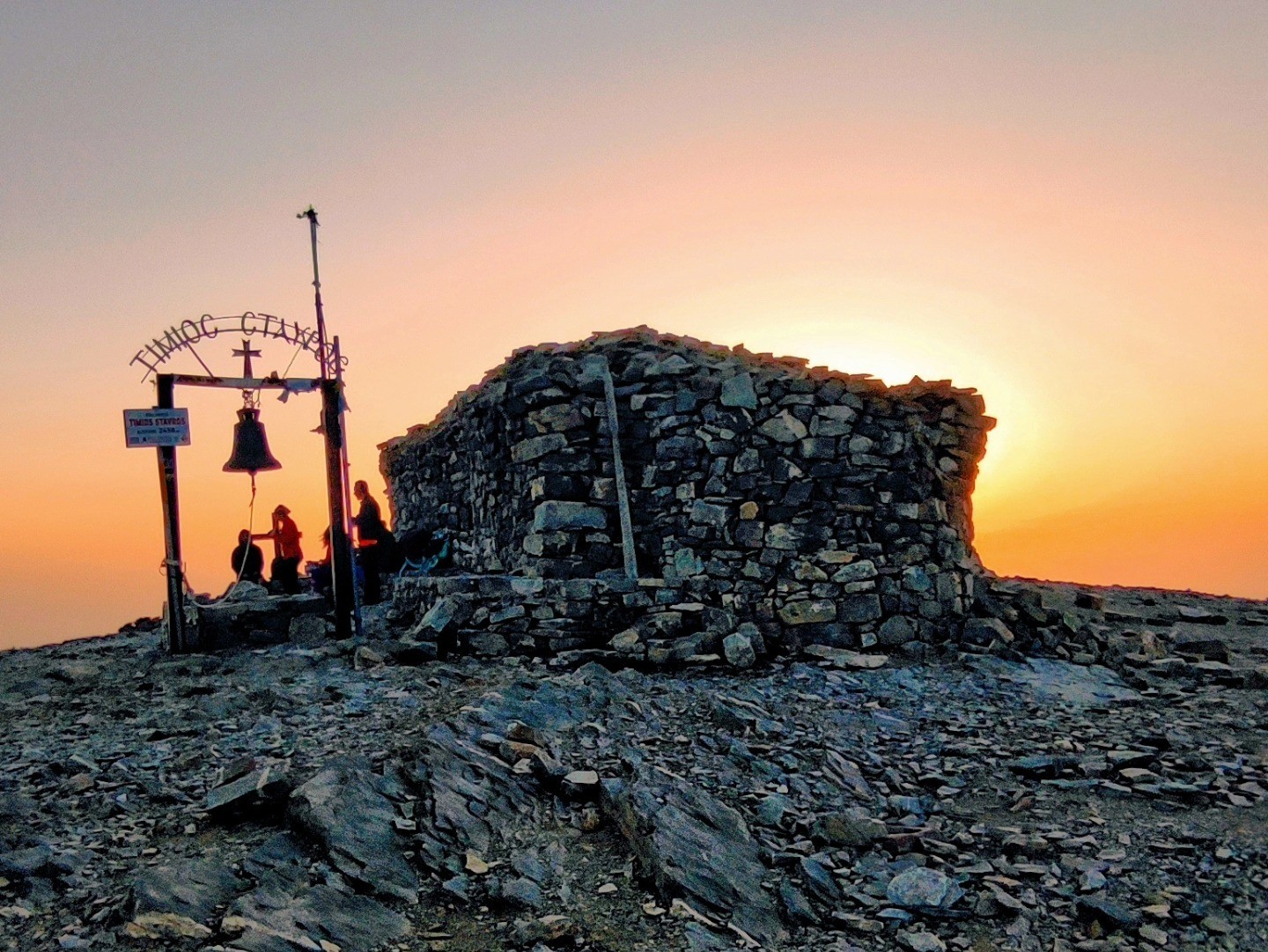
Hundreds of inactive monasteries, isolated monastic sites and old hermitages are scattered across Crete, from fertile plains and mountain villages to the island’s most inaccessible coasts. Many are now important religious and architectural monuments, even when only the central church, a few cells or parts of the former fortifications survive. The arrival of Saint John the Hermit in Crete contributed to the development of a remarkable ascetic tradition that continues to the present day. Hermits withdrew to the island’s most remote locations and formed small ascetic communities, some of which later developed into organised monasteries. A characteristic example is Katholiko Monastery on the Akrotiri Peninsula, where hermits lived in caves and natural shelters in the rugged landscape. Important monastic communities also developed on the isolated peninsulas of Gramvousa and Rodopos. The most extensive centre of ascetic life in Crete developed in the inaccessible Asterousia Mountains. Caves, small churches and hermitages formed a unique monastic landscape stretching from Agios Nikitas Monastery and Koudoumas Monastery to Cape Lithino. Notable religious sites include the Church of Saint Anthony at Agiofarago, the Cave of Saint Anthony near Koudoumas and the Monastery of Saint John near Kapetaniana. Contact between the hermits was often very limited. According to tradition, those living in Agiofarago Gorge and Martsalo Gorge gathered once a year at Goumenospilios Cave to discover who had survived. In eastern Crete, particularly in the mountainous province of Mirabello, another extensive network of small monasteries and hermitages developed. Some were so small that they accommodated only one monk or a tiny brotherhood. Crete’s inactive monasteries preserve valuable evidence of the island’s religious life, local architecture and regional history. Even where the monastic buildings have fallen into ruin, their churches are often still used on the feast day of their patron saint and remain closely connected with the traditions of nearby villages.

Read more ...

Monasteries

Monasteries

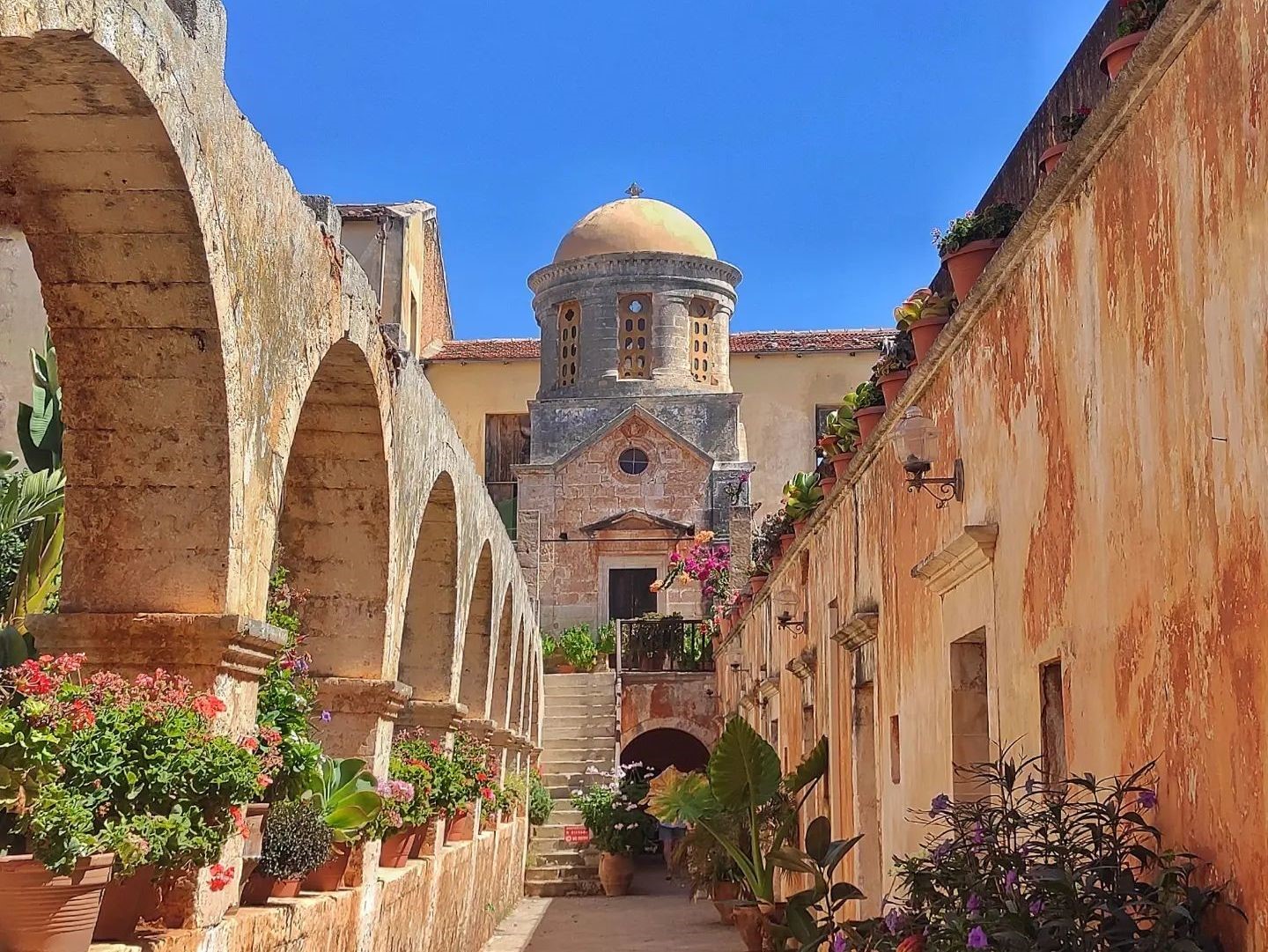
The monasteries of Crete form an inseparable part of the island’s history, architecture and spiritual tradition. Many were founded during the Byzantine or Venetian periods, while some developed into important centres of education, icon painting and resistance against foreign occupation. Some monasteries stand on fertile plains and near settlements, while others occupy isolated coasts, gorges and inaccessible mountain locations. Despite repeated destruction, looting and revolutions, many remain active and preserve valuable relics, icons, frescoes and outstanding examples of ecclesiastical architecture. Monasteries of Chania The Akrotiri Peninsula hosts some of the most important monastic monuments of western Crete. The imposing Agia Triada Tzagaroli Monastery is distinguished by its Renaissance architecture and long agricultural tradition. Nearby stands the fortified Gouverneto Monastery, from where a trail descends to the historic Katholiko Monastery, one of the oldest organised hermitic centres in Crete. On the western coast, Chrysoskalitissa Monastery rises dramatically above the sea near Elafonissi. Other important monasteries include Gonia Odigitria Monastery at Kolymbari and Chrysopigi Monastery, known for its environmental work and organic farming. Monasteries of Rethymno The best-known monastery of Rethymno is the historic Arkadi Monastery, a symbol of sacrifice and freedom due to the Holocaust of 1866. On the southern coast, the monasteries of Preveli played an important role in the Cretan struggles and in rescuing Allied soldiers during the Second World War. Near Rethymno town stands the restored Agia Irini Monastery. Further east are Arsaniou Monastery and Profitis Ilias Monastery at Roustika. The hinterland of Mylopotamos also hosts Vossako Monastery, Halepa Monastery, Diskouri Monastery and Attali Monastery near Bali. Monasteries of Heraklion The countryside of Heraklion contains a remarkable number of historic monasteries. Among the oldest are Agarathos Monastery and Paliani Monastery. On the southern slopes of Psiloritis stand Vrontissi Monastery and Kalyviani Monastery. Other notable monasteries are Agios Georgios Epanosifis Monastery, Gorgolainis Monastery, Agios Panteleimon Monastery at Fodele, Odigitria Monastery near the Asterousia Mountains and the fortified Apezanes Monastery. In Malevizi are Savvathiana Monastery, Rodia Monastery and Pantanassa Monastery. Other important foundations include Agia Fotini Monastery, Kera Kardiotissa Monastery, Agia Irini Monastery near Kroussonas, Agii Pantes Monastery and Agia Marina Monastery at Voni. Monasteries of Lassithi At the eastern edge of Crete stands the historic Toplou Monastery, one of the island’s most powerful monasteries. On the southern coast, beside the Pervolakia Gorge, is Kapsas Monastery, while west of Sitia stands Faneromeni Monastery of Sitia. Near Ierapetra are Faneromeni Monastery of Gournia and Exakousti Monastery. On the Lassithi Plateau, the most notable foundations are Vidiani Monastery and Kroustallenia Monastery. The province of Mirabello is home to Areti Monastery, Kremasta Monastery, Koufi Petra Monastery and Kardamoutsa Monastery. At the northern entrance of the Selinari Gorge stands Agios Georgios Selinaris Monastery, one of eastern Crete’s best-known pilgrimage sites.

Read more ...

Religious Customs

Religious Customs

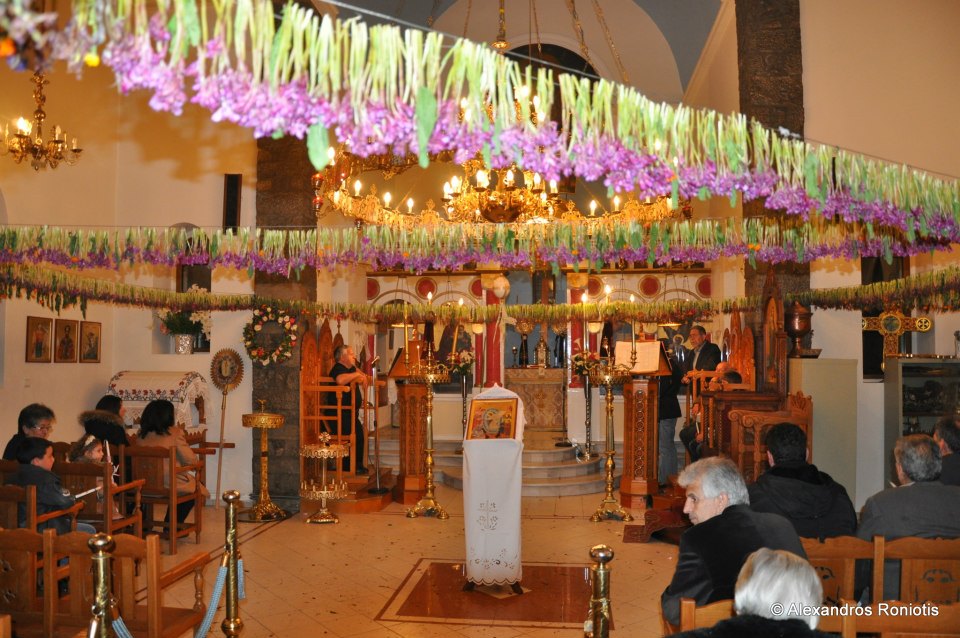
As elsewhere in Greece, numerous local religious festivals, known as panigyria, are organised in the villages and towns of Crete on the feast days of Orthodox Christian saints, particularly during the summer. Besides their religious and pilgrimage significance, these festivals bring local communities together and help preserve the island’s customs and traditions. After the Divine Liturgy and other religious ceremonies, the celebration often moves to the village square, where music and dancing continue until the early hours of the morning. One of Crete’s most remarkable religious customs is the reenactment of the Nativity on Christmas Eve inside Marathokefala Cave, with people and animals creating the atmosphere of a living Nativity scene. At Marmaketo on the Lassithi Plateau, local tradition holds that the dried wild orchids used to decorate the Epitaphios on Good Friday are kept in the church and bloom again during the feast of Saint John the Theologian on 8 May. At Agios Thomas and in parts of the Asterousia Mountains, churches are encircled with waxed cords to keep evil away, perpetuating beliefs with ancient roots. Carnival is celebrated enthusiastically throughout Crete, with dozens of customs whose origins reach far into the past. The Apokrigiomata festivities at Gergeri, the Carnival Mask of Sivas, the Camel custom and many other traditional performances have been revived in recent years as local communities seek to preserve their intangible cultural heritage. Customs intended to bring healing or protection to the faithful also remain alive. In Sfakia, worshippers offer small human-shaped figures made of dough to Saint Anthony in the hope of being cured of illness. On Psiloritis, human-shaped loaves known as lazaropsoma are offered during memorial services. In the past, during the feast of Agia Pelagia, worshippers buried aching parts of their bodies in the sand of Agia Pelagia Beach, believing that this would bring relief. At Saint Fanourios at Ahlade, visitors pass through an opening in the rock and leave clothes or personal belongings on a sacred terebinth tree as an offering for health and protection. Some of Crete’s most distinctive customs are observed during Easter. They include the auction of the Cross, the passing of sheep beneath the flower-decorated Epitaphios, the burning of Judas on a large bonfire, carrying the Holy Light home in silence and placing red eggs on graves. At Asi Gonia and Karoti in the Rethymno region, shepherds bring their flocks to the church on the feast of Saint George to receive the priest’s blessing. The animals are then milked and the milk is distributed among the worshippers. The Klidonas custom is celebrated on 24 June, the feast of the Nativity of Saint John the Baptist, with bonfires and traditional divination rituals. On the feast of the Transfiguration of Christ, worshippers offer the first or ripest grapes at church so that their vineyards may be blessed. On the same day, at Afendis Peak in the Dikti Mountains, some pilgrims search the soil around the church for old coins regarded as powerful talismans. On 3 November, the feast of Saint George “Methystis”, meaning “the one who makes people drunk”, the barrels containing the year’s new wine are traditionally opened.

Read more ...

Frescoed Churches

Frescoed Churches

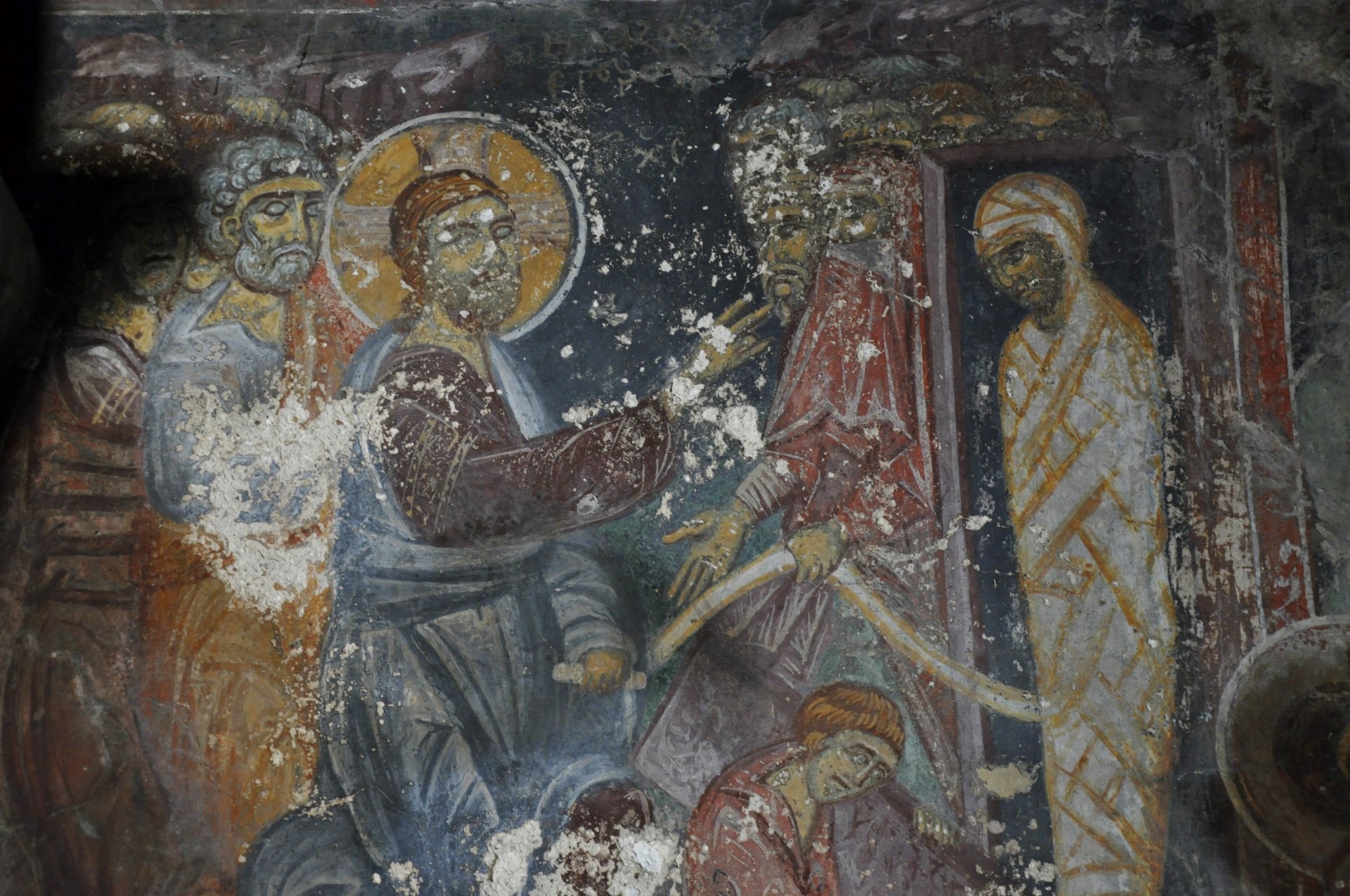
Crete can rightly be described as a vast Byzantine park, with hundreds of churches adorned with remarkable frescoes. Most of these paintings date from the period of Venetian rule, when Byzantine religious tradition continued to flourish on the island and gradually incorporated artistic influences from the West. Together, these monuments illustrate the development of ecclesiastical painting from the early Byzantine period to the renowned Cretan School of icon painting. Entire regions of Crete, particularly the historical provinces of Kissamos, Selino and Pediada, preserve an exceptionally large number of frescoed churches. Many are small, single-nave rural chapels whose modest exterior gives little indication of the artistic treasures preserved inside. Their walls portray scenes from the life of Christ and the Virgin Mary, figures of saints and hierarchs, representations of the Last Judgement and, occasionally, rare episodes associated with the saint to whom each church is dedicated. Fewer frescoed churches survive in areas such as the former province of Temenos, around Candia, where prolonged warfare, repeated destruction and the great Ottoman siege of the city caused extensive damage to religious monuments and settlements. Elsewhere, frescoes survived beneath layers of plaster or limewash, which sometimes protected them from deliberate destruction, smoke, humidity and the passage of time. The scale of this artistic heritage is impressive. In the Topographical Catalogue of the Frescoed Churches of Crete, compiled by the Italian archaeologist and researcher Giuseppe Gerola in the early 20th century, more than 800 frescoed churches are recorded. Many remain scattered throughout the Cretan countryside, forming one of the richest collections of medieval ecclesiastical painting in the Mediterranean.

Read more ...

Early Christian monuments

Early Christian monuments

The ruins of Crete’s early Christian basilicas show how Christian worship was organised on the island in the early Byzantine centuries. Many of these churches had a central nave and two side aisles, separated by rows of columns, with the nave leading towards the sanctuary. Even where only the foundations survive, you can still make out the layout and get a sense of the building’s scale. Gortyn, an important ecclesiastical centre at the time, preserves two distinct monuments. Near the village of Mitropoli are the remains of the large basilica and its baptistery. Elsewhere, within the archaeological site of Gortyn, stands the church known as Saint Titus. Similar monuments survive across the island, from Almyrida and Panormo to Hersonissos and Elounda. In the basilica at Sougia, the mosaic floors still show geometric patterns and animal figures, giving a glimpse of what these churches looked like when they were still in use.

Read more ...

Saints and Church Figures of Crete

Saints and Church Figures of Crete

Many places in Crete still preserve the memory of the island’s saints and church figures. The Acts of the Apostles records that the ship taking the Apostle Paul to Rome reached Kali Limenes, where a church now commemorates him. Church tradition links his companion, the Apostle Titus, the first bishop of Crete, with Gortyn. Saint Eumenius was one of the later bishops of Gortyn. The area also preserves the memory of the Holy Ten Martyrs, after whom the village of Agioi Deka is named. At ancient Raukos, the church and hermitage of Saint Myron are associated with the life of another bishop of Crete. In the Asterousia Mountains, local ascetic tradition links Saint Kosmas the Hermit with Avvakospilio Cave, west of Koudoumas Monastery. Centuries later, the brothers Parthenios and Eumenios Charitakis from Pitsidia re-established Koudoumas Monastery in the late 19th century. Another Eumenios was born in Ethia in the Asterousia Mountains in 1931. Saint Eumenios the New (Saridakis) served as a priest at the Hospital for Infectious Diseases in Athens, where he ministered to people with Hansen’s disease. In western Crete, Saint John the Stranger, who came from Sivas in the Messara Plain, is associated with Panagia Antifonitria at Myriokefala. Saint John the Hermit belongs to a separate ascetic tradition associated with the Monastery of the Holy Fathers at Azogyres and Katholiko Monastery on the Akrotiri Peninsula near Chania. According to local tradition, Saint Gerasimos of Kefalonia lived as a hermit in a cave at Modi before settling in the Ionian Islands. The church dedicated to him at Aroni also keeps alive the memory of his time in the Chania area. The island’s church history also includes scholars and figures of the Latin Church. At the Monastery of the Three Hierarchs at Lousoudi, the monk Joseph Filagris is remembered for his work studying and copying manuscripts. In Neapolis, local tradition associates the Franciscan friar Peter Philargis with the Monastery of Saint Anthony at Fraro. The Council of Pisa elected him in 1409 during the Western Schism, and he took the name Alexander V. The Roman Catholic Church lists him as an antipope.

Read more ...

Ecclesiastical Museums and Collections

Ecclesiastical Museums and Collections

A painted icon on a wooden panel shows how Crete’s painters worked. An embroidered vestment or a handwritten Gospel book reveals the care that went into making objects for worship. In Crete’s ecclesiastical museums and collections, these objects tell the story of the churches and monasteries and of the people who made and preserved them. In Heraklion, the panel icons of Michael Damaskinos are among the highlights of the Museum of Christian Art at Saint Catherine of Sinai. In Chania, the Byzantine and Post-Byzantine Collection is housed in the former church of San Salvatore and displays mosaics, wall paintings and icons from the region. At the Ecclesiastical Museum of Rethymno, the old clock from the cathedral bell tower is displayed alongside vestments and liturgical vessels. It is a reminder of how closely the church was woven into the city’s daily life. Monasteries often display their treasures where they were once used or kept. At Toplou Monastery, near Sitia, Ioannis Kornaros’s icon “Great Art Thou, O Lord” illustrates the prayer of the Great Blessing of the Waters in a series of small painted scenes. The monastery also holds a collection of engravings. At Arkadi Monastery, icons, vestments and manuscripts are displayed alongside objects from the uprising of 1866. At Preveli Monastery, the collection brings together objects from daily life at the monastery and its dependencies. In the Chania region, the collections at Gonia Monastery in Kolymvari, Agia Triada Tzagarolon Monastery on the Akrotiri Peninsula and Chrysopigi Monastery preserve icons, books and other objects from monastic life. In the Messara Plain, the museum at Kalyviani Monastery displays icons and vestments alongside woven textiles, everyday objects and material from the monastery’s former printing workshop.

Read more ...

Download Free Premium Joomla Templates • FREE High-quality Joomla! Designs BIGtheme.net