




Greek Orthodox

Crete

Religion

  • Since the early Christian years, Crete became a cradle of Orthodox Christianity. This is reflected on the hundreds of religious monuments on the island. Even the struggles for liberation, in most cases, started from the monastic communities.

    Religious tradition is very intense in all areas of Crete and is present in everyday life of the Cretans. Crete has an autonomous Archbishopric, separate from the rest of Greece. With thousands of places of worship and dozens of monasteries that have played a special role in the consolidation of Christianity and the struggle against the invaders, Crete is an ideal religious and historic destination.

    Since the early Christian times, when Paul the Apostle visited Crete and preached the new religion for two years, the Christian tradition developed through the centuries. Remote places of monastic self-exile, traces of early Christian basilicas, cavernous chapels and painted Byzantine churches are found everywhere on Crete.

    Many monasteries played an important historical role during the struggles of the Cretans for liberation. Moreover, Cretan iconography flourished especially in the Venetian Era, with El Greco and Michael Damascenus being the most important representatives.

    Before continuing his journey to Rome, Paul the Apostle, stayed two years in Crete to preach Christianity. This was the starting point for a century-long ascetic tradition, which is still vivid and alive. Before leaving to Rome, his follower Titus, was announced the first bishop of Crete.

    The new forbidden religion started spreading slowly around the island. Especially after the issuance of the Edict of Milan in 313 AD, which permanently established religious tolerance for Christianity within the Roman Empire, the first monumental temples were constructed.

    According to tradition, Paul the Apostle lived for two years in a small cave at Kali Limenes, which is open to visitors.
  • The first basilicas, temples of a specific architectural type, were founded in the 4th century AD. Their remnants are still awe-inspiring due to their size and imposing appearance.

    In Crete about 80 basilicas have been identified. This number indicates economic well-being, since the construction of such large monuments was very expensive. Gortys, Crete's capital till the Arab rule, hosted the largest of those, dedicated to Saint Titus. Its remains are located near the village Mitropoli, while there is a smaller basilica within the archaeological site of Gortys, also dedicated to Saint Titus.

    Apart from the basilicas of Gortys, the visitors can see ruins of similar religious monuments at Hersonissos, Fragokastelo, Elounda, Almyrida, Panormos, Goulediana, Sougia, Eleftherna and other parts of Crete.

  • Paul the Apostle left a great legacy for the future preachers of the Christian faith. His replacement, Saint Titus, soon became widely known for his prominent personality. Today his skull is stored in the imposing church of Saint Titus in Heraklion.

    Another important religious figure, who is considered the founder of asceticism on the island, was Saint John the Hermit. John arrived in Crete with 98 other hermits from Egypt and lived in caves, at the site where Azogyres Monastery is located today. Later, he lived alone in caves of Marathokefala and Akrotiri Cape, where a rich ascetic tradition was developed.

    Another bishop of Crete, Saint Myron from Rafkos, is celebrated with a splendor in the village Agios Mironas. Holy water gushes in the cave where he lived. Last, during the empire of Decius, ten Christians were beheaded for their faith in Christ. Today, the village Agii Deka (“Ten Saints” in Greek) is built on the site where the martyrs lost their lives.

    Pope Alexander V (1409-1410), given name Peter Philagris, came from Crete.

  • The arrival of St. John the Hermit in Crete was the beginning of a great ascetic tradition that continues to the present day. Hundreds of hermits secluded in the most remote parts of the island, forming ascetic communities that later evolved to thriving monasteries.

    A special sample of hermitage is the Catholic Monastery at Akrotiri Cape in the caves of which hermits lived their monastic life away, from worldly pleasures. Equally important were the religious sites of the secluded peninsulas Gramvousa and Rodopos, where several small monasteries developed.

    The greatest hermitage of all was the naturally isolated, and impassable range of Asterousia in southern Heraklion. Hundreds of caves from Saint Nikitas to Cape Lithino still host hermits. The Relations between them were so limited that in Agiofarago and Martsalo they gathered only once a year, in cave Goumenospilio and counted how many of them survived each year.

    In eastern Crete, the north province of Mirabello is the largest field of asceticism with dozens of small monastic establishments. Here hermits built small monasteries, where they usually lived alone.

  • In Crete there are more than 800 churches adorned with wonderful frescoes, which depict the evolution of ecclesiastical art from the early Byzantine times to the Cretan School of Painting during the Venetian Era. There are some specific areas with an impressive number of such temples.

    Apart from the great religious center of Mirabello, the area of Avdou and Episkopi by Heraklio boasts a large number of monuments of outstanding artistic and religious significance. The region that can be characterized as the largest hagiographic park site in Crete includes the provinces Selino and Kissamos. It hosts dozens of chapels bearing frescoes, painted by prominent artists of their time.

    Magnificent samples of hagiography and ecclesiastical architecture are located in many other parts of Crete. One of the most famous monuments is Panagia Kera in Kritsa, while other important temples are Saint Nicolas in Kyriakosellia, Panagia in Meronas, Varsamonero, Panagia Kera Eleousa in Kitharida and more.

  • During the transition from the worship of Roman deities to Christianity, many of the previous habits were incorporated into the new religion. Devotional caves and Minoan peak sanctuaries continued to serve the worship of Twelve Olympians and were later adapted to the Roman religion, before transforming to Christian temples.

    Caves in steep cliffs and canyons are still used as places of worship. In canyons, temples are usually dedicated to Saint Anthony, such as in the gorges of Patsos, Agiofarago, Samaria, Platania, Gallos, Kotsifos. Other well-known cavernous chapels are Saint Anthony at Koudoumas, Hagia Sophia in Topolia, Agia Dynami in Argyroupoli, Saint John by Kapetaniana, Panagia Kera Spiliotissa inAgios Thomas, Saint John the Hermit at Akrotiri and Marathokefala, Panagia Arkoudiotissa at Gouverneto, Saint Andrew at Finokalias, Panagia Spiliotissa in Houdetsi, Santa Fotini in Avdou, and more.

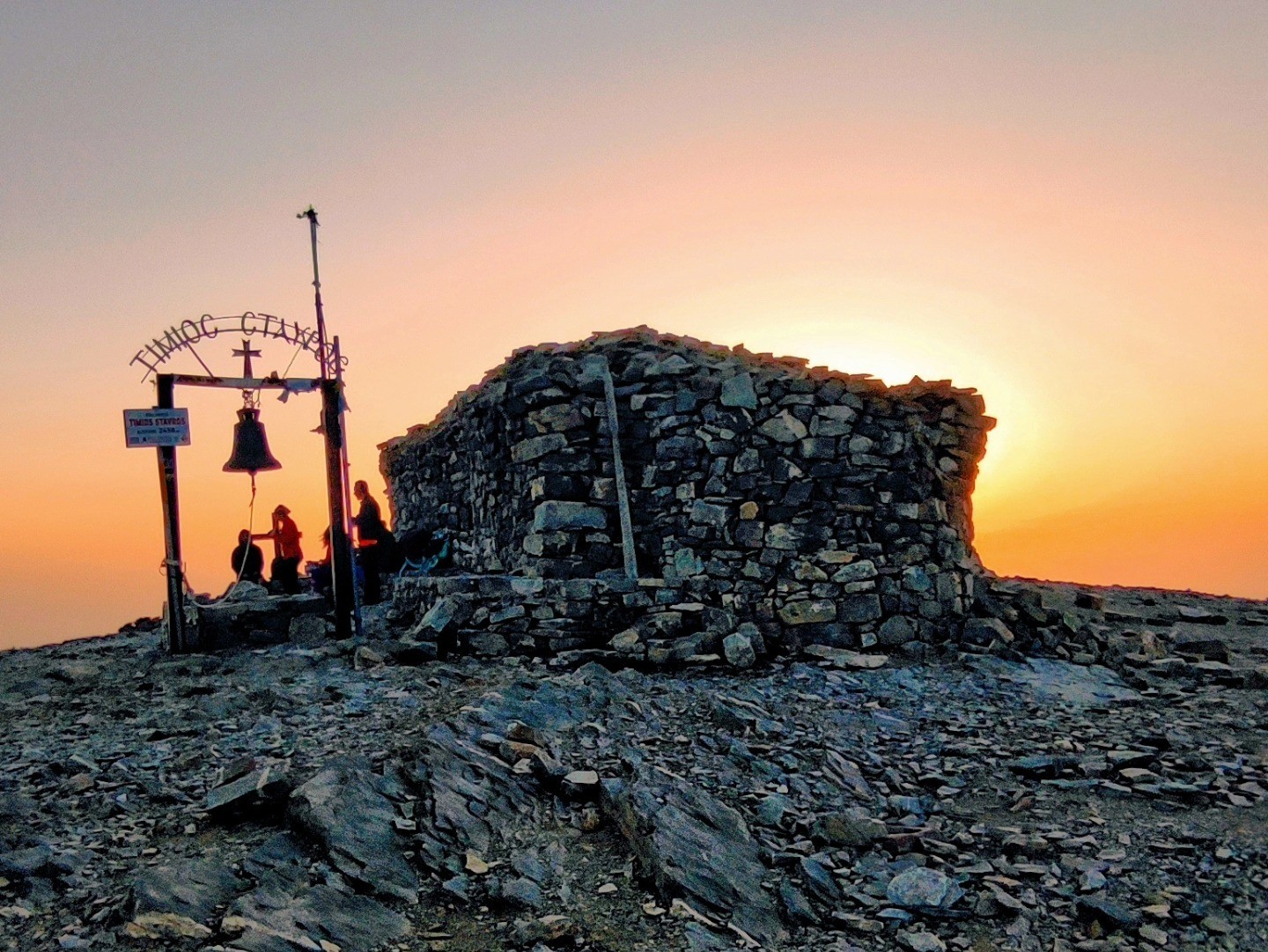
    Today, temples have been built on the site of former Minoan peak sanctuaries and serve Orthodox Christianity. Most of them are dedicated to the Holy Cross or the Prophet Elijah. The churches of Christ at the sacred mountain of the Minoans, Youchtas, the Holy Cross on the highest peak of Crete and at Kofinas, Saint Panteleimon at the site of ancient Rizinia, All Saints at Vrisinas and more are very impressive.

  • On the occasion of the feast of Saints of the Orthodox Christian calendar, many local feasts are organized in villages and towns of Crete, especially in August.

    The feasts, along with religious and worship importance, contribute to the preservation of customs and traditions and to the social interaction of among the local communities. After the festivities in the temples, locals gather at the central squares of the villages and celebrate with music and dance till the early morning hours.

    One of the most important religious traditions in Crete is the celebration of Christmas Mass in a real manger in the cave Marathokefala. Also during the festival of Saint John the Theologian at Marmaketo, on Lassithi plateau, the dried orchids of the epitaph bloom again. In Agios Thomas and on the Asterousia range ancient habits revive; temples and houses are surrounded with waxed ropes, to keep evil spirits away.

    Ancient customs for curing patients are still alive. In Sfakia patients devote dough dolls to Saint Anthony to cure their illnesses and in Psiloritis they devote human shaped breads, lazaropsoma, during memorial services. During the celebration of Agia Pelagia, patients bury their aching legs or hands in the sand of the beach. In Achlade clothes are put on the sacred turpentine tree of Saint Fanourios.

    Apart from the common Easter customs in Greece, Crete has some special local traditions to show. These include the auction of the Cross, the blessing of sheep under the epitaph, the burning of Judas, the transferring of the Holy Light at home while keeping silent and leaving red eggs on graves.

    There are more customs, such as Klidonas, celebrated on the day of Saint John the Baptist in late June. During the feast of the Transfiguration of Christ, pilgrims devote the first grapes of the season to bless their vineyards, while on the same day at the top of the peak Afendis of range Dikti, participants try to find coins in the soil around the church. On 3rd November, on the celebration day of Saint George “Methystis” (methystis, one who makes you drunk) barrels with wine are first opened.

    The Villages Asi Gonia and Karoti at Rethymnon host the celebration of Saint George. Sheep are milked before the priest and milk is shared to the congregation.

  • Visitors of Crete have the opportunity to admire collections of ecclesiastical art in numerous museums and open exhibitions around the island. Very old icons, priestly vestments, manuscripts, seals and books are some common exhibits.

    Well organized ecclesiastical collections are housed in the Byzantine Museum of Chania, the Ecclesiastical Museum of Rethymnon and the Byzantine Collection of Heraklion hosted in the Basilica of Saint Catherine of Sinai.

    Important monasteries often house folklore or religious museums with very interesting exhibits. Such collections include the monasteries of Arkadi, Toplou, Tzagaroli, Gonia, Chrysopigi, Preveli, Kalyviani and the Ecclesiastical Museum of Roustika.

Religious Monuments

Religious Monuments

Hundreds of inactive monasteries, isolated monastic sites and old hermitages are scattered across Crete, from fertile plains and mountain villages to the island’s most inaccessible coasts. Many are now important religious and architectural monuments, even when only the central church, a few cells or parts of the former fortifications survive. The arrival of Saint John the Hermit in Crete contributed to the development of a remarkable ascetic tradition that continues to the present day. Hermits withdrew to the island’s most remote locations and formed small ascetic communities, some of which later developed into organised monasteries. A characteristic example is Katholiko Monastery on the Akrotiri Peninsula, where hermits lived in caves and natural shelters in the rugged landscape. Important monastic communities also developed on the isolated peninsulas of Gramvousa and Rodopos. The most extensive centre of ascetic life in Crete developed in the inaccessible Asterousia Mountains. Caves, small churches and hermitages formed a unique monastic landscape stretching from Agios Nikitas Monastery and Koudoumas Monastery to Cape Lithino. Notable religious sites include the Church of Saint Anthony at Agiofarago, the Cave of Saint Anthony near Koudoumas and the Monastery of Saint John near Kapetaniana. Contact between the hermits was often very limited. According to tradition, those living in Agiofarago Gorge and Martsalo Gorge gathered once a year at Goumenospilios Cave to discover who had survived. In eastern Crete, particularly in the mountainous province of Mirabello, another extensive network of small monasteries and hermitages developed. Some were so small that they accommodated only one monk or a tiny brotherhood. Crete’s inactive monasteries preserve valuable evidence of the island’s religious life, local architecture and regional history. Even where the monastic buildings have fallen into ruin, their churches are often still used on the feast day of their patron saint and remain closely connected with the traditions of nearby villages.

Read more ...

Monasteries

Monasteries

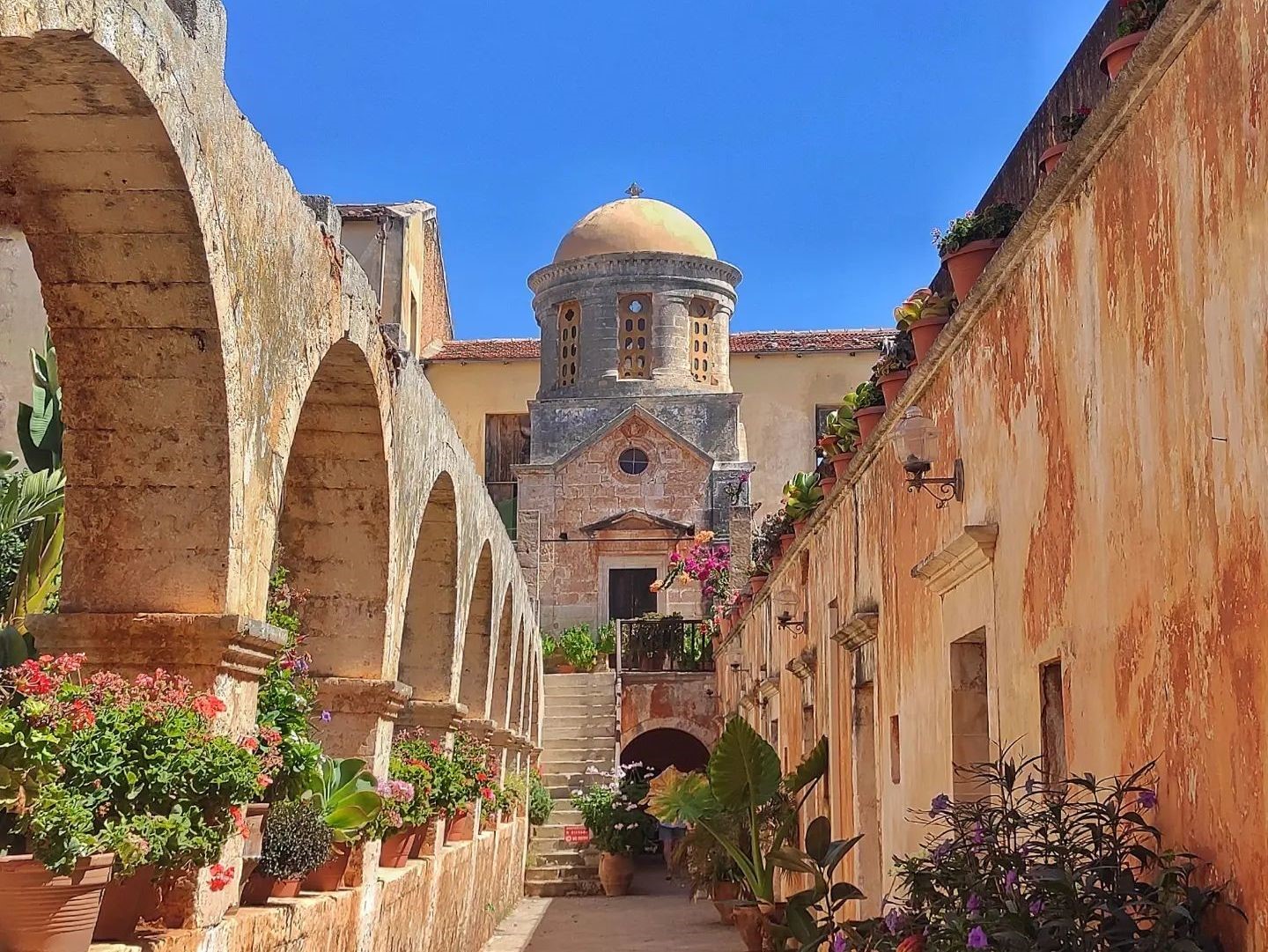
The monasteries of Crete form an inseparable part of the island’s history, architecture and spiritual tradition. Many were founded during the Byzantine or Venetian periods, while some developed into important centres of education, icon painting and resistance against foreign occupation. Some monasteries stand on fertile plains and near settlements, while others occupy isolated coasts, gorges and inaccessible mountain locations. Despite repeated destruction, looting and revolutions, many remain active and preserve valuable relics, icons, frescoes and outstanding examples of ecclesiastical architecture. Monasteries of Chania The Akrotiri Peninsula hosts some of the most important monastic monuments of western Crete. The imposing Agia Triada Tzagaroli Monastery is distinguished by its Renaissance architecture and long agricultural tradition. Nearby stands the fortified Gouverneto Monastery, from where a trail descends to the historic Katholiko Monastery, one of the oldest organised hermitic centres in Crete. On the western coast, Chrysoskalitissa Monastery rises dramatically above the sea near Elafonissi. Other important monasteries include Gonia Odigitria Monastery at Kolymbari and Chrysopigi Monastery, known for its environmental work and organic farming. Monasteries of Rethymno The best-known monastery of Rethymno is the historic Arkadi Monastery, a symbol of sacrifice and freedom due to the Holocaust of 1866. On the southern coast, the monasteries of Preveli played an important role in the Cretan struggles and in rescuing Allied soldiers during the Second World War. Near Rethymno town stands the restored Agia Irini Monastery. Further east are Arsaniou Monastery and Profitis Ilias Monastery at Roustika. The hinterland of Mylopotamos also hosts Vossako Monastery, Halepa Monastery, Diskouri Monastery and Attali Monastery near Bali. Monasteries of Heraklion The countryside of Heraklion contains a remarkable number of historic monasteries. Among the oldest are Agarathos Monastery and Paliani Monastery. On the southern slopes of Psiloritis stand Vrontissi Monastery and Kalyviani Monastery. Other notable monasteries are Agios Georgios Epanosifis Monastery, Gorgolainis Monastery, Agios Panteleimon Monastery at Fodele, Odigitria Monastery near the Asterousia Mountains and the fortified Apezanes Monastery. In Malevizi are Savvathiana Monastery, Rodia Monastery and Pantanassa Monastery. Other important foundations include Agia Fotini Monastery, Kera Kardiotissa Monastery, Agia Irini Monastery near Kroussonas, Agii Pantes Monastery and Agia Marina Monastery at Voni. Monasteries of Lassithi At the eastern edge of Crete stands the historic Toplou Monastery, one of the island’s most powerful monasteries. On the southern coast, beside the Pervolakia Gorge, is Kapsas Monastery, while west of Sitia stands Faneromeni Monastery of Sitia. Near Ierapetra are Faneromeni Monastery of Gournia and Exakousti Monastery. On the Lassithi Plateau, the most notable foundations are Vidiani Monastery and Kroustallenia Monastery. The province of Mirabello is home to Areti Monastery, Kremasta Monastery, Koufi Petra Monastery and Kardamoutsa Monastery. At the northern entrance of the Selinari Gorge stands Agios Georgios Selinaris Monastery, one of eastern Crete’s best-known pilgrimage sites.

Read more ...

Religious Customs

Religious Customs

As elsewhere in Greece, numerous local religious festivals, known as panigyria, are organised in the villages and towns of Crete on the feast days of Orthodox Christian saints, particularly during the summer. Besides their religious and pilgrimage significance, these festivals bring local communities together and help preserve the island’s customs and traditions. After the Divine Liturgy and other religious ceremonies, the celebration often moves to the village square, where music and dancing continue until the early hours of the morning. One of Crete’s most remarkable religious customs is the reenactment of the Nativity on Christmas Eve inside Marathokefala Cave, with people and animals creating the atmosphere of a living Nativity scene. At Marmaketo on the Lassithi Plateau, local tradition holds that the dried wild orchids used to decorate the Epitaphios on Good Friday are kept in the church and bloom again during the feast of Saint John the Theologian on 8 May. At Agios Thomas and in parts of the Asterousia Mountains, churches are encircled with waxed cords to keep evil away, perpetuating beliefs with ancient roots. Carnival is celebrated enthusiastically throughout Crete, with dozens of customs whose origins reach far into the past. The Apokrigiomata festivities at Gergeri, the Carnival Mask of Sivas, the Camel custom and many other traditional performances have been revived in recent years as local communities seek to preserve their intangible cultural heritage. Customs intended to bring healing or protection to the faithful also remain alive. In Sfakia, worshippers offer small human-shaped figures made of dough to Saint Anthony in the hope of being cured of illness. On Psiloritis, human-shaped loaves known as lazaropsoma are offered during memorial services. In the past, during the feast of Agia Pelagia, worshippers buried aching parts of their bodies in the sand of Agia Pelagia Beach, believing that this would bring relief. At Saint Fanourios at Ahlade, visitors pass through an opening in the rock and leave clothes or personal belongings on a sacred terebinth tree as an offering for health and protection. Some of Crete’s most distinctive customs are observed during Easter. They include the auction of the Cross, the passing of sheep beneath the flower-decorated Epitaphios, the burning of Judas on a large bonfire, carrying the Holy Light home in silence and placing red eggs on graves. At Asi Gonia and Karoti in the Rethymno region, shepherds bring their flocks to the church on the feast of Saint George to receive the priest’s blessing. The animals are then milked and the milk is distributed among the worshippers. The Klidonas custom is celebrated on 24 June, the feast of the Nativity of Saint John the Baptist, with bonfires and traditional divination rituals. On the feast of the Transfiguration of Christ, worshippers offer the first or ripest grapes at church so that their vineyards may be blessed. On the same day, at Afendis Peak in the Dikti Mountains, some pilgrims search the soil around the church for old coins regarded as powerful talismans. On 3 November, the feast of Saint George “Methystis”, meaning “the one who makes people drunk”, the barrels containing the year’s new wine are traditionally opened.

Read more ...

Frescoed Churches

Frescoed Churches

Crete can rightly be described as a vast Byzantine park, with hundreds of churches adorned with remarkable frescoes. Most of these paintings date from the period of Venetian rule, when Byzantine religious tradition continued to flourish on the island and gradually incorporated artistic influences from the West. Together, these monuments illustrate the development of ecclesiastical painting from the early Byzantine period to the renowned Cretan School of icon painting. Entire regions of Crete, particularly the historical provinces of Kissamos, Selino and Pediada, preserve an exceptionally large number of frescoed churches. Many are small, single-nave rural chapels whose modest exterior gives little indication of the artistic treasures preserved inside. Their walls portray scenes from the life of Christ and the Virgin Mary, figures of saints and hierarchs, representations of the Last Judgement and, occasionally, rare episodes associated with the saint to whom each church is dedicated. Fewer frescoed churches survive in areas such as the former province of Temenos, around Candia, where prolonged warfare, repeated destruction and the great Ottoman siege of the city caused extensive damage to religious monuments and settlements. Elsewhere, frescoes survived beneath layers of plaster or limewash, which sometimes protected them from deliberate destruction, smoke, humidity and the passage of time. The scale of this artistic heritage is impressive. In the Topographical Catalogue of the Frescoed Churches of Crete, compiled by the Italian archaeologist and researcher Giuseppe Gerola in the early 20th century, more than 800 frescoed churches are recorded. Many remain scattered throughout the Cretan countryside, forming one of the richest collections of medieval ecclesiastical painting in the Mediterranean.

Read more ...

Also read:

Download Free Premium Joomla Templates • FREE High-quality Joomla! Designs BIGtheme.net