Explore Cretan

Flora

Splashes of Colors

Since Crete drifted away from the rest body of Greece
a unique flora has evolved with a large number of endemic plants.

Ancient Olive Trees | Sacred Trees | The Cretan Date Palm | Protected Junipers

Cretan Species

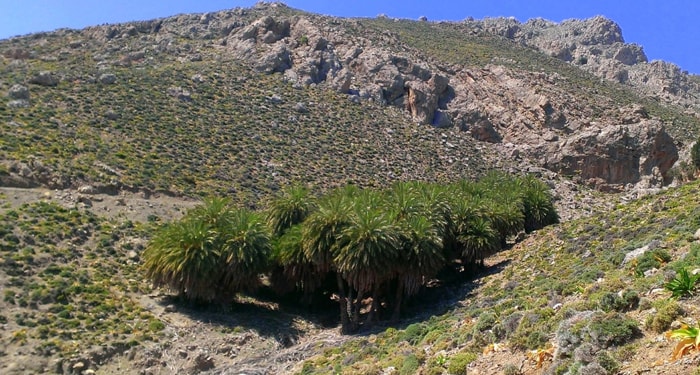
Date Palm

Explore

Protected Species

Junipers

Explore

Dendrolatry Remnants

Sacred Trees

Explore

Flora

The flora of Crete is remarkably diverse, reflecting the island’s geographical isolation, rugged terrain and varied climatic conditions. From sandy shores and dry scrubland to gorges, forests and mountain summits, its contrasting landscapes provide habitats for approximately 1,800 plant species and subspecies.

Today’s flora also reflects Crete’s long geological history. The island served as a refuge for plants that survived from earlier periods, while its isolation encouraged the evolution of new species. This botanical richness is not confined to forests and lush landscapes: low Mediterranean scrub, rocky slopes and cliff crevices also support a significant variety of plants.

Endemic plants, found nowhere else but Crete, hold a special place in its flora. The White Mountains, other mountain areas and small islets support plants with very restricted distributions. Some are narrow endemics, confined to a single mountain range, a small area or just a few locations.

Orchids, wild tulips and many other wildflowers bring colour to the Cretan landscape. The red Cretan tulip (Tulipa doerfleri) is particularly notable, with characteristic populations on the Gious Kambos Plateau in Rethymnon. Different tulip species also occur in the White Mountains, the Dikti Mountains and the Gramvousa Peninsula.

Crete is also known for its aromatic plants and herbs, including dittany, Cretan mountain tea, oregano and thyme. Many are associated with local food and traditional plant uses, while some, such as dittany, are endemic to the island.

Spring offers many opportunities to discover the island’s flora, but flowering takes place at different seasons and elevations. Protecting natural habitats and avoiding the collection of rare plants help preserve this botanical richness.

Monumental Trees

Monumental Trees

The monumental trees of Crete stand out for their size, great age, unusual form or connections with local history and traditions. Ancient plane trees, olive trees, oaks and other trees are landmarks in villages, monasteries and archaeological sites. Some have been officially designated protected natural monuments, while others hold particular significance for local communities. Among the characteristic examples is the evergreen plane tree of ancient Gortyn, associated with the myth of the union of Zeus and Europa and the birth of Minos. Another notable example is the large hawthorn at the archaeological site of Zominthos, which has been designated a natural monument. Other trees are associated with historical events, local stories and religious traditions, including the Madalenis oak at Korfes, the plane tree of the Five Virgins at ancient Lappa and the Ismael oak at Mathia. Impressive plane trees can also be found at Krasi, Vlatos and the monasteries of Saint George Gorgolainis, Saint John at Gionas and the Holy Fathers at Azogyres. The value of these trees extends beyond their appearance and the stories associated with them. Their cavities, bark and branches provide shelter for other organisms. Preserving them requires care both for the trees themselves and for the ground around their trunks and roots.

Read more ...

Tulips

Tulips

The wild tulips of Crete are a characteristic feature of the island’s spring flora. They grow on rocky slopes, plateaus and cultivated land, with flowering times varying according to the species, elevation and weather conditions. The Cretan tulip (Tulipa cretica) occurs in various parts of the island, while the red Cretan tulip (Tulipa doerfleri) is particularly associated with the Gious Kambos Plateau in Rethymnon. Tulipa goulimyi occurs in western Crete, while the rock tulip (Tulipa saxatilis) grows at various locations across the island. The tulips of the Omalos Plateau, also known in botanical literature as Tulipa bakeri, deserve special mention. Their taxonomic treatment varies between sources: some recognise them separately, while others include them within Tulipa saxatilis. Not all tulips found on Crete are endemic to the island. Their conservation depends on protecting the places where they grow and, for some populations, maintaining low-impact farming practices. Deep ploughing can destroy their bulbs, while picking flowers and digging up plants put additional pressure on wild populations. The best way to enjoy them is to observe and photograph them in their natural surroundings.

Read more ...

Cretan bellflower

Cretan bellflower

1 1 1 1 1 1 1 1 1 1 Rating 4.50 (2 Votes)
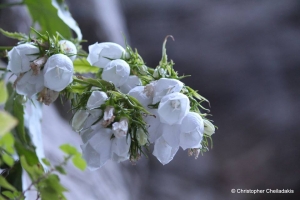
The Cretan bellflower (Campanula Cretica) is one of the most beautiful wild flowers of Crete and at the same time is one of the most rare and endangered endemic plants on the island. Despite the fact Greece is home to 70 bellflower species, making Greece as the country with the largest variety, this is met only in a small geographical area of the White Mountains, mainly Samaria Gorge, and elsewhere in the world.

Read more ...

Download Free Premium Joomla Templates • FREE High-quality Joomla! Designs BIGtheme.net