



Θαυμάσιο λαογραφικό μουσείο που στεγάζεται εντός του μοναστηριού. Η είσοδός του είναι γεμάτη από λογιώ λογιώ λουλούδια που προϊδεάζουν θετικά τον επισκέπτη και τον γεμίζουν ομορφιά πριν ακόμα εισέλθει στο εσωτερικό του μουσείου. Μέσα στις αίθουσες του μουσείου συναντάμε μια τεράστια πραγματικά συλλογή από κάθε είδος εργαλείο που χρησίμευε στους αγρότες και κτηνοτρόφους των περασμένων δεκαετιών.
At an altitude of 705m, between the village Ano Moulia and the ruined village of Raftis, at a point that controls the valley of Messara, in 1866, Avni Pasha built a large Koules for controlling the passage to Messara and to protect Raftis, which was a Muslim village.
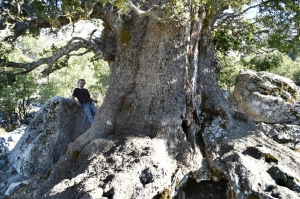
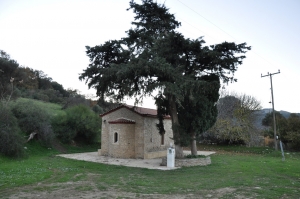
At the western village of Sitia province, Lastros we meet the church of Panagia Myrtidiotissa at position Sygomalia. The chapel celebrates every year on September 24th and is one of the few called "Myrtidiotissa" in Crete. The church is located at an idyllic countryside location overlooking the sea and the village of Lastros. The area is covered by maquis vegetation of wild olive, oak, locust trees and brushwood.
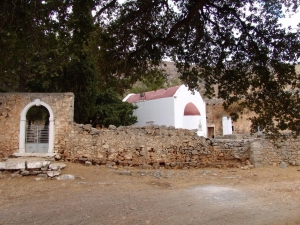
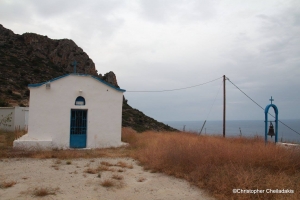
Between Loutro Sfakion and the famous beach of Glyka Nera, at Perlovakia, we meet the white brushed chapel of the Holy Cross (Timios Stavros) where a big feast takes place on September 14th every year.
Το μικρό οροπέδιο της Μονοκαράς βρίσκεται στο όρος Ορνό, σε υψόμετρο περίπου 750μ. Η πρόσβαση γίνεται με χωματόδρομους από τα χωριά της Τουρλωτής και της Σφάκας. Στο οροπέδιο υπάρχει ο γραφικός ναός του Τιμίου Σταυρού και πολλοί μαγατζέδες, δηλαδή σπιτάκια ντόπιων, στα οποία διαμένουν τους θερινούς μήνες όταν απασχολούνται στις μικρές καλλιέργειες
Στο ειδυλλιακό προάστιο των Χανίων Περιβόλια υπήρχε μέχρι την Κατοχή η πολυτελέστατη έπαυλη του Μουσταφά Ναϊλί Πασά, γνωστού με το όνομα Γκιριτλής (=Κρητικός), την οποία γκρέμισαν οι Γερμανοί για να χρησιμοποιήσουν τα υλικά της για το χτίσιμο των δικών τους οικημάτων.
The Byzantine church of Agia Paraskevi at village Siva is a small single-nave church with a dome. Remarkable are the frescoes dating from the early 14th century, and there are parts of wall paintings of older periods.
Between the villages Aroni and Argoulide at Cape Akrotiri we meet the double-aisled church of Saints Artemios and Paraskevi. This Byzantine church has been built in two phases with the right aisle belonging to Agia Paraskevi probably being the oldest. Between the two doors of the temple there is an old well for the collection of rainwater and there is a carved stone trough in bedrock. The construction of the temple dates back from the 14th century, a few years after the nearby Byzantine church of Saint George (only 25 meters away).