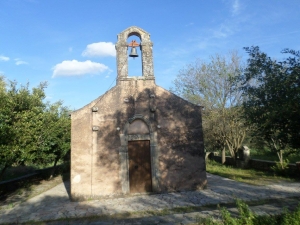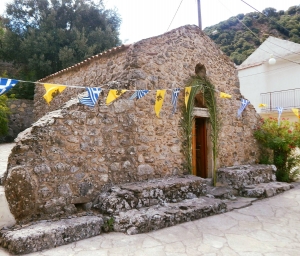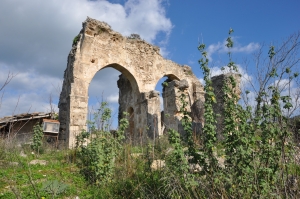




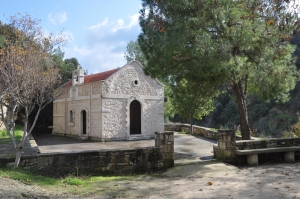
At the highest point of the deserted village Kato Astrakoi we still see the imposing temple of Saint George Vourvoulitis, which unfortunately is now dilapidated. The temple was built on the site of an early Christian Basilica. Next to the church, at the point where we see currently the pipes for the irrigation of the surrounding fields, there was the spring of "holy water of Saint George".
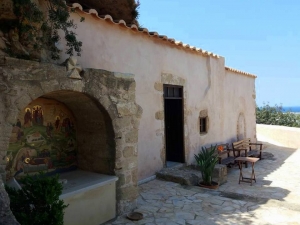
The cavernous church of Saint John Xenos or Hermit is located in position Kavousi, in the region of Platanos village and has amazing view of the fertile valley of Falassarna. The chapel hosts a tomb where, according to the local tradition, was buried Saint John the Hermit, but his bones were later moved to Corfu and the church of Ai-Kyr Yannis in Tsourouniana.
The Lighthouse of Agii Pantes is located in the small island Mikronisi or Fanari opposite the town of Agios Nikolaos, Lassithi. Next to the modern lighthouse there are the buildings used by the scouts of Agios Nikolaos in the past and today they are deserted.
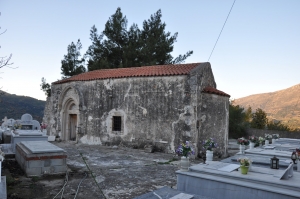
Στο κέντρο του χωριού Οψιγιάς βρίσκουμε τον κοιμητηριακό ναό του Αγίου Γεωργίου που έχει ένα πολύ ενδιαφέρον θύρωμα. Ο ναός που χρονολογείται στον 15ο αιώνα φέρει ίχνη τοιχογραφιών.
Η μονή της Αγίας Παρασκευής βρίσκεται έξω από το χωριό Φουρνή και σήμερα έχει εγκαταλειφθεί. Ο μικρός ναός είναι μονόχωρος και η ίδρυση της μονής τοποθετείται πριν το 1615. Δίπλα υπάρχουν ελάχιστα ερείπια από τα κτίρια του μοναστηριού.
Στο κοιμητήριο των Λουσακιών βρίσκεται ο βυζαντινός ναός του Αγίου Πολύκαρπου, του Αγίου Χαράλαμπου και του Αγίου Νικολάου. Ο ναός είναι σταυροειδής με ένα μπροστινό νάρθηκα. Στο εσωτερικό του φέρει ίχνη από τοιχογραφίες της Ενετοκρατίας.
The church of Saint Anthony is a single- vaulted temple with a simple semicircular arch. Around the church and in all directions you will see the abandoned monastic complex.
The temple of St. John the Theologian is a single-room vaulted temple with dimensions of 11,20 x 4,46 meters. There are no documents for justifying its exact date, however according to the analysis of its murals it should be built around the first half of the 14th century attributed to the hagiographer Ioannis Pagomenos.