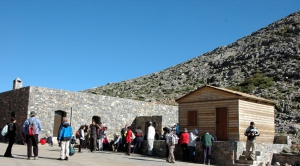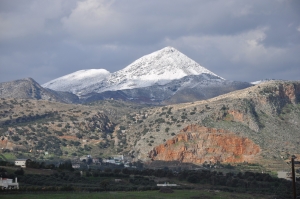



Το οροπέδιο της Νίδας είναι ένα από τα μεγαλύτερα της Κρήτης και βρίσκεται σε υψόμετρο 1400 μέτρων, στην καρδιά του Ψηλορείτη (Ίδη). Οι κορυφές των τριγύρω βουνών είναι χιονισμένες έως τις αρχές του καλοκαιριού, δημιουργώντας ένα υπέροχο τοπίο. Το όνομα του προέρχεται από τις λέξεις «Στην Ίδα», που σημαίνει «στον Ψηλορείτη».
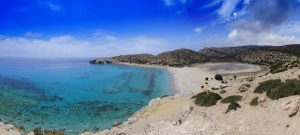
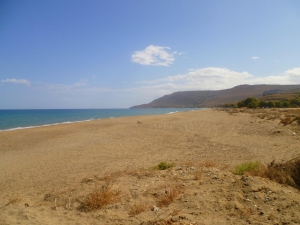
Στη παραλία δεν υπάρχει καμιά υποδομή, παρά μια μικρή ταβέρνα (και μια δεύτερη στα δυτικά). Ο Περιστερές έχει βότσαλο, άμμο και αρκετά σημεία με βράχια. Επίσης, είναι πολύ πιθανόν να βρείτε γυμνιστές και κατασκηνωτές, που μένουν κάτω από τις μεγάλες χαρουπιές της παραλίας.
Οι Κάτω Γούβες είναι ένα τουριστικό θέρετρο που βρίσκεται 18 χλμ ανατολικά του Ηρακλείου, βόρεια από το μικρό βουνό Έδερη. Στη πεδιάδα των Κάτω Γουβών παλαιότερα οι κάτοικοι του χωριού Άνω Γουβών καλλιεργούσαν λαχανικά, ελιές και σιτηρά. Η ονομασία των Γουβών προέρχεται από τη λέξη γούβα, που ήταν ο λάκκος μέσα στον οποίο φυλάσσονταν τα σιτηρά.
The cave of Kournas is located at position Keratides, west of Kournas village, and is one of the most beautiful caves in Chania prefecture. Descending into the main room is a bit tedious, but the rich cave décor with beautiful colors and formations will excite anybody.
The old town of Rethymnon is a preserved Renaissance city that bears elements from both the Venetian and the Ottoman Era. In the old town there we meet the street markets of Arkadi and Antistaseos Streets. Above the old town we meet the imposing fortress of Fortezza that once protected Rethymnon. The picturesque narrow alleys housemany restaurants and taverns with traditional music.
Madé (or Madés) is a small coastal village located near Ligaria, 20km northwest of Heraklion and 1.5km east of Ligaria beach. It is located near the northernmost edge of the Gulf of Heraklion, which called Cape Bourouni of Rogdia. To get this far from Heraklion, drive in the highway to Chania and take the exit of Ligaria. Just after 1.5km you will see a sign for Madé.
The legendary olive tree in Azorias is located 1km south of the village Kavoussi and very close to the homonymous archaeological site of Azorias. This olive tree is a natural monument; it is the oldest olive tree in the world! Indeed, it is grafted on a rootstock of a wild olive tree, making it the oldest sample of grafting in the world.