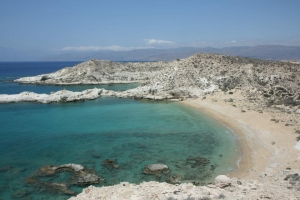
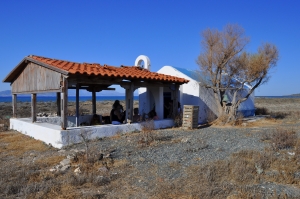
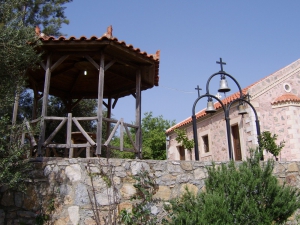
The church of Agios Nikolaos is located on the northern side of the island Chrissi, at the site where Tyrian purple was produced and graves are located. It dates back to the 13th century, although it has undergone more recent interventions. The temple is built on the site of an ancient building.
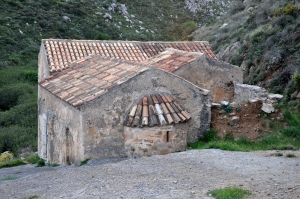
Near the village Galifa, province Pediada, survives the two-aisled church of Agia Paraskevi and Agios Panteleimon. The temple dates back to the 13th century and bears great frescoes of a provincial painter, in very good condition.
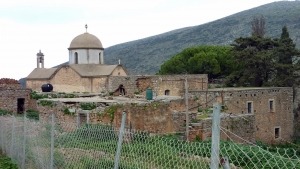
The monastery of Xera Xyla is located in the province of Mirabello, near the village Kourounes. The central temple is dedicated to Saint George and today is uninhabited. The complex consists of the domed church of St. George, surrounded by several fortress-like cells and a two-storey building.
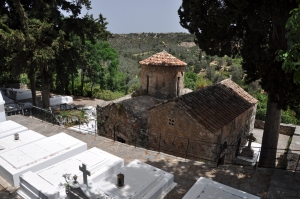
The double church of the Transfiguration of Christ the Saviour and Saint John stands in the cemetery of Ancient Eleftherna, in a lush location near a freshwater spring. The original church was constructed in the late 12th century over the remains of an Early Christian basilica.
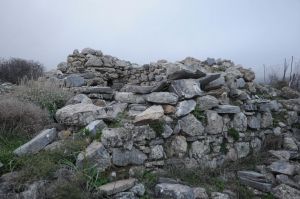
Древний город Элирос находился в юго-западной части Крита, в районе сегодняшней деревни Родовани, на холме Кефала. На табличках, обнаруженных здесь, была расшифрована надпись «слава городу Элирон», которая и подтвердила предположение археологов о месторасположении древнего города Элирос.
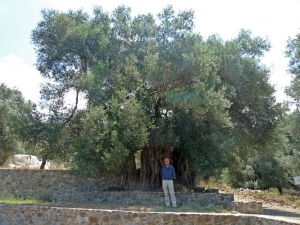
Η ελιά του Αγίου Γεωργίου είναι μια από τις πολλές αρχαίες ελιές της περιοχής Ανισαράκι και Βαρδαλιανά κοντά στην Κάντανο, η οποία όμως έχει ανακηρυχτεί ως μνημειακή από τον Σύνδεσμο Ελαιοκομικών Δήμων Κρήτης.
Монастырь Калергис или Калерис находится к юго-востоку от деревни Смари, примерно в 35 км на восток от Ираклиона и в 4 км на север от Кастелли. Монастырь стоит среди лесов, в гористой местности, где есть много холмов.