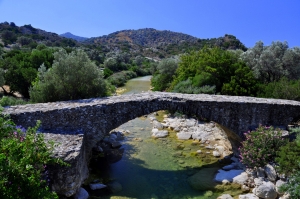
Ένα όμορφο κι άγνωστο πέτρινο γεφύρι με ένα τόξο που γεφυρώνει τις δύο όχθες του Πλατύ Ποταμού ανάμεσα στα χωριά Ορνέ και Αγία Παρασκευή, η οποία κάποτε συνέδεε την επαρχία του Αγίου Βασιλείου με την επαρχία Αμαρίου.
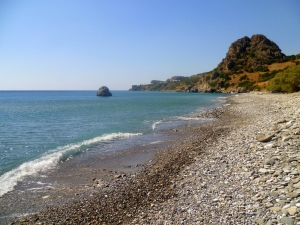
Kastri is located 72km southeast of Heraklion, in the sheltered bay of Keratokambos. It is the biggest of the two settlements of the region (the second is Keratokambos), which are now united. In recent years Kastri has faced a considerable development, mainly because the surrounding beaches are a magnet for visitors.
Ο ναός της Παναγίας Γοργοεπήκοου βρίσκεται στην επικράτεια του χωριού Πηγαϊδάκια, κοντά στην αρχή του ρέματος που καταλήγει στην παραλία της Καραβόβρυσης στους Καλούς Λιμένες.
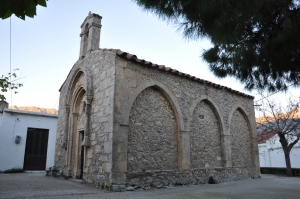
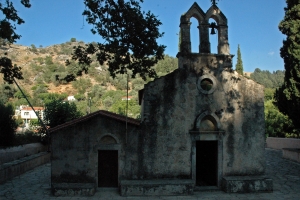
The church of the Archangel Michael is located in the center of the village Monastiraki (Amari province) and is a single-nave vaulted church of the 14th century. The south side is adorned with three arches and the entrance bears superimposed Gothic arches. The frescoes have not survived in good condition (only the representation of the Conception of Mary is still visible), while the bell bears an inscription with the date 1601.
This part of the E4 is one of the easiest you can find in Crete as it is entirely through paved and dirt roads (in fair condition). As it is quite long, you can explore it by car, but we suggest thinking of cycling. The route offers good views to the olive groves of Pediada province.
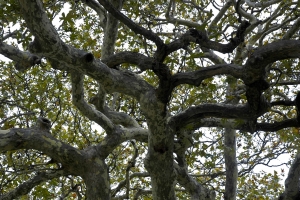
The surrounding area of the old and deserted monastery Kaloeidena near Ano Meros is dominated by rich vegetation of plane trees, watered by a large water spring. But the tree that stands out is the plane tree of Kaloeidena just above the spring as it is the oldest of all the trees that surround the monastery, but it is also the most impressive tree of the whole region and can be listed to the monumental trees in Crete.
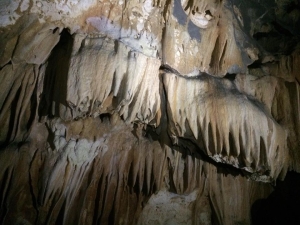
Η Φανταξοσπηλιάρα (η σπηλιά που ζουν φανταξά δήλ. φαντάσματα), Σπηλιάρα, Γρά Σπηλιά ή Μεταξόσπηλιος βρίσκεται δίπλα στο λατομείο του Λατζιμά Ρεθύμνου. Η σπηλιά ήταν παλιά κοίτη ποταμού, που σήμερα δεν έχει νερό. Το μήκος του φτάνει τα 230m και το βάθος του τα 11m.
The church of Agios Georgios is located at Therisso, Chania province. It is a double-nave church dating from 1555, with the second aisle dedicated to Saint Charalambos. The walls are adorned with very interesting frescoes.