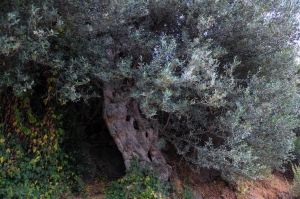
Η Ελιά της Μαθαίνας έχει χαρακτηριστεί ως μνημειακή από το Σύνδεσμο Ελαιοκομικών Δήμων Κρήτης λόγω του σχήματος και του ανάγλυφου κορμού της, που με τον διπλανό της βράχο σχηματίζει μεγάλη σπηλαίωση.
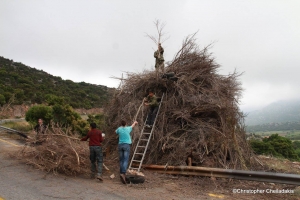
Στα περισσότερα χωριά της Κρήτης την ημέρα του Μεγάλου Σαββάτου γίνονται οι ετοιμασίες για την φουνάρα του Ιούδα. Φουνάρα στο γλωσσικό ιδίωμα της Κρήτης σημαίνει μεγάλη φωτιά και είναι η φωτιά που συμβολικά καίει κάθε χρόνο τον προδότη του Ιησού Χριστού, Ιούδα.
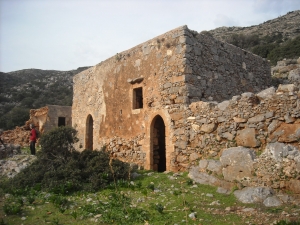
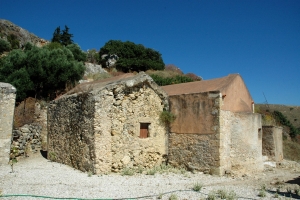
Το άγνωστο στους πολλούς μοναστήρι του Αγίου Αντωνίου στο Ακρωτήρι, έρημο σήμερα, βρίσκεται κοντά στη Μονή Γουβερνέτου, από όπου ξεκινάει το μονοπάτι. Το μοναστηριακό συγκρότημα με το σπηλαιώδη ναό του Αγίου Αντωνίου ήταν εξαίσιας αρχιτεκτονικής, αλλά σήμερα υπομένει την εγκατάλειψη και έχει αφεθεί στα χέρια των βοσκών που το χρησιμοποιούν ως στάνη!
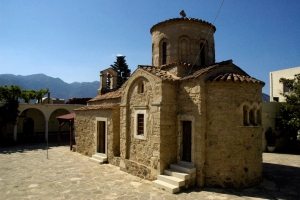
When the Mediterranean suffered from the raids of the pirates, the monks of the seaside monastery of Saint George at Menies decided to migrate to a more secure location. Thus they chose the site where we meet today the scenic cemeterial church of the Monastery of Gonia Odigitrias, dedicated to St. George (14th century).
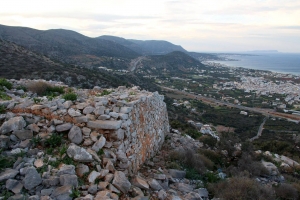
South of Malia rises a small mountain which locals call Kouledes. Its name is taken after the Turkish fortresses (koule) built by the Ottomans to control the fertile plain of Malia. The Turkish forts of Malia had eye contact so as to communicate in case of emergency. Although they have almost been completely destroyed, the existence of so many fortresses in such close distance indicated how important the plane of Malia and the surrounding passages were for the Ottomans.
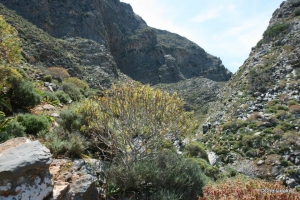
The unknown gorge of Kouroukoulos starts from the deserted village Agalianos at the province of Merambelo, Lasithi prefecture. West of Kouroukoulos, there is the Gorge Patsopoulos.
Монастырь Андифонитрии в местечке Мириокефала в горной части Крита был основан в 1100 году монахом-пустынником Святым Иоанном. Сегодня в хорошей сохранности главный храм монастыря, крестово купольной архитектуры.