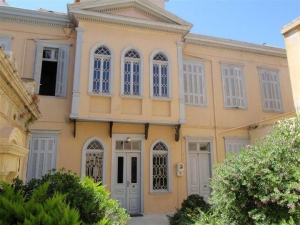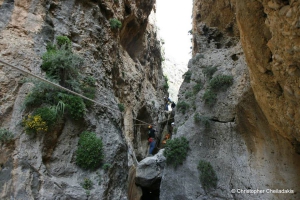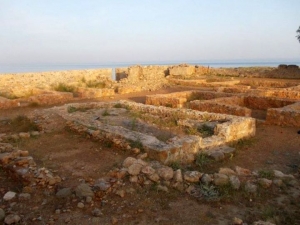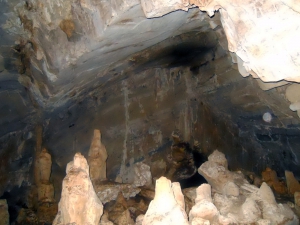




Замок Селино, в Палеохора муниципалитета Ханья был основан венецианцами. Форт имел практически квадратную форму. Он был оснащен двумя башнями на южной стороне и одной на севере. Как и во всех фортах, здесь были места для расположения войск, жилье военного начальства, маленькая церковь и емкости для сбора воды. Эти две башни видны еще сегодня среди развалин замка Селино.
At the suburb Tria Monastiria of Rethymnon city, just opposite the entrance of the Municipal Cemetery of the city, we meet a ruined stone building with a small church on its roof, in a really beautiful grove.
Ο Θεριοσπηλιός είναι ένα μικρό σπήλαιο στη θέση Χυλόφτες – Θεριό, βορειοδυτικά από το Καβούσι Ιεράπετρας σε υψόμετρο 50μ., πάνω σε απότομη πλαγιά. Ο επισκέπτης μπορεί να φτάσει από το Καβούσι με χωματόδρομο και 5' περπάτημα.
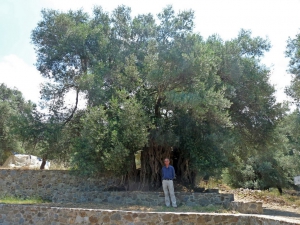
The olive tree of Saint George is one of the many ancient olive trees in the areas Anisaraki and Vardaliana near Kandanos village. It has been declared as a memorial by the Association of Cretan Olive Municipalities due to its flattened shape and textured trunk.
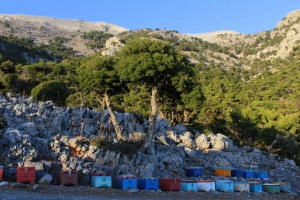
The pine grove of Pefkias is the densest wood in Psiloritis Mount (denser than the forest of Rouvas) and apart from the great pines that dominate the area, you will also meet cypress and oak trees. In Pefkias, you will meet many bee hives as it is one of the most important areas in the prefecture of Heraklion for apiaries after the forests of the province of Viannos.
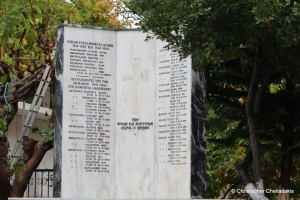
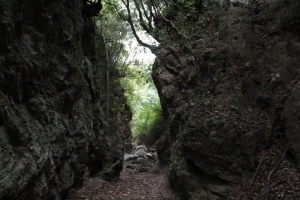
The martyr village Kakopetros at Kissamos province is one of the most beautiful and green villages of the prefecture of Chania. Like all the villages of the area it consists of many distinct neighborhoods (Tsichliana, Seli, Micheliana, Berethiana, Metohi, Sholio, Papadiana, Chatziana, Ganiana, Kotsyfiana and Pontikou Platanos. The neighborhoods of the village are crossed by the rugged canyon Kakopetros.
Согласно общему мнению, монастырь был основан в 1702 году. Находится на север от города Ираклион в 17 км, в районе Педиадос, в деревне Анополи, из-за чего в народе называется Анаполеос.
The olive tree has been declared by the Association of Cretan Olive Municipalities as a natural monument due to its size, shape and relief trunk. The name of the site is Gre Ele which means Old Olive and refers to this tree. Its variety is throumboelia and is grafted on a rootstock of a wild olive tree. It is estimated to have been planted in 650-500BC and is located very close to the archaeological site of Eleftherna.