








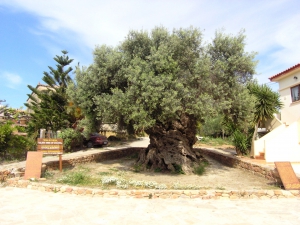
The olive tree has been declared by the Association of Cretan Olive Municipalities as a natural monument because of its shape and the exceptional aesthetics of its relied truck, reminiscent of exceptional woodwork.

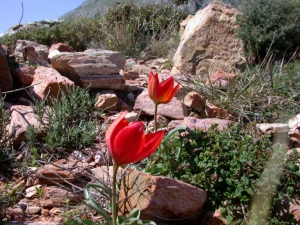
The red tulip of Goulimis (Tulipa goulimyi) is extremely rare in Crete, as the only confirmed population is limited to a very small area of the peninsula Gramvousa. The population of Crete has shrunk too much, mainly because of the cultivation and tourism. Other less endangered populations are found on Kythera, Antikythera and South Peloponnese.
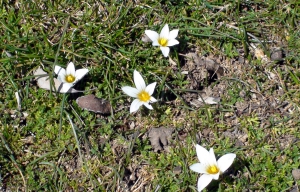
The Cretan tulip (Tulipa cretica) is the most prevalent type of tulip on Crete, which is endemic to Crete. It grows in areas with low vegetation, rocky slopes and plains, from sea level up to 2000m.

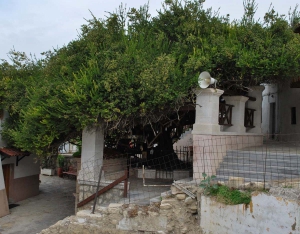
Paliani Monastery is one of the oldest monasteries in Crete and it has as a trademark a very old myrtle tree (Myrtus communis). This specific myrtle is considered sacred (Holy Myrtle) and is honored on September 24. Inside the trunk of the Holy Myrtle, as they say, is believed to be the icon of Panagia Mirtidiotissa (Virgin Mary of Myrtle).


